
’Dire Situation These Species Are Facing:’ Court Oks Partial Approval Of Injunction For Columbia/Snake River Dam/Salmon Protection Operations

The U.S. District Court in Oregon Wednesday (Feb. 25) partially approved a preliminary injunction — requested last year by conservation groups, tribes and the state of Oregon — that would make small changes in how federal dams are operated for salmon and steelhead protections on the Columbia and Snake rivers.

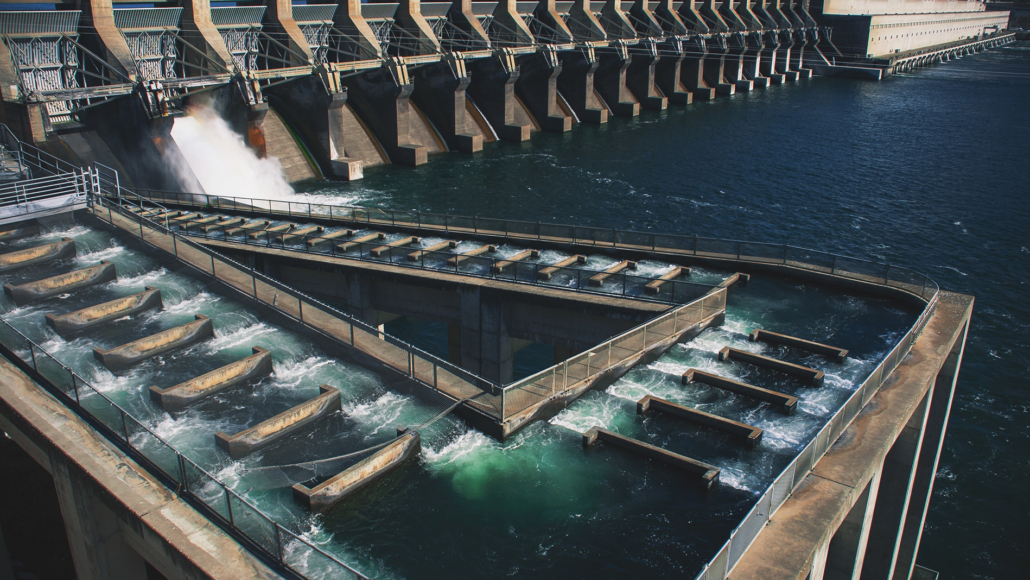
Beginning this spring, more water will be spilled at eight federal dams on the two rivers during spring, summer and fall/winter to aid the safe passage of juvenile salmon and steelhead, sending more of the fish over the dam rather than through turbines.


In addition, the court ordered the federal dam operators to maintain reservoir operating levels at minimum operating pools, just as the reservoirs were operated last year. Lower reservoir levels helps speed juveniles through the slow-moving pools. Both measures the court said are “narrowly tailored and essentially maintains the status quo.”

However, the need for the injunction was evident in that federal defendants had planned to reduce, not increase, spill this year, and they had planned to raise reservoirs to a higher level than last year, in contrast to the lower reservoir levels proposed by plaintiffs, according to the court’s reading of the draft federal 2026 Fish Operating Plan.

Recognizing the importance of Columbia River basin salmon to people living in the Northwest, U.S. District Court Judge Michael H. Simon, in his decision and order, wrote of salmon that it is “one of the foundational symbols of the West, a critical recreational, cultural, and economic driver for Western states, and the beating heart and guaranteed resource protected by treaties with several Native American tribes.” He added that salmon are disappearing from the landscape.

“The Court recognizes the dire situation these species are facing. … It appears that the 2020 BiOp and 2020 FEIS follow this disappointing history of avoidance and manipulation instead of sincere efforts at solving the problem and genuinely remediating the harm,” Simon wrote.

“Given the current record, it is reasonable to conclude that the listed species’ prognosis is as bad as – or worse than – it has ever been,” Simon wrote.

Asked for a stay in his Feb. 25 decision by federal defendants until they can appeal, Simon said no, it is unlikely that the defendants would win a motion for a stay in an appeals court.

Not granted by the court were infrastructure repair and maintenance projects at some dams, and non-operational changes proposed by plaintiffs, such as moving double-crested cormorants from the Astoria-Megler Bridge downstream to East Sand Island, collection and transportation of steelhead kelt in the lower Snake River, maximizing trap and haul of adult sockeye, an endangered species under the federal Endangered Species Act, at Lower Granite Dam (these are all in the works, anyway, Simon wrote), as well as removing passage barriers slowing the migration of Tucannon River spring Chinook.

Some 13 species of salmon and steelhead in the Columbia/Snake river systems are listed under the ESA.

“The changes to the hydropower system ordered by the court today are immediate and reasonable steps to prevent salmon extinction,” said Earthjustice Attorney Amanda Goodin. “Salmon need help now, and we’re encouraged the court has granted immediate, commonsense relief that will help protect imperiled Northwest salmon and steelhead.”

The preliminary injunction decision and order this week by Simon is the latest in the over 20-year battle between conservationists and Columbia and Snake river dam operators in federal court. Litigation began with the 2004 biological opinion governing operations of the federal hydropower system and has continued with the latest being a challenge to the 2000 BiOp completed by NOAA Fisheries, and the Environmental Impact Statement and Record of Decision completed in a National Environmental Policy Act review by the U.S. Army Corp of Engineers.

Plaintiffs in the injunction had argued that all of this relief is required while the 2020 BiOp is being litigated in order to keep the listed species from sliding into extinction.

“For decades, the battle for the life of threatened and endangered salmon and steelhead has not been fought at the end of a hook and line, nor in the woven threads of a fishing net, nor even based on the appetites of sea lions, avian predators, or killer whales,” Simon wrote in his decision. “Instead, the greatest battle has been waged in the courts.”

In his decision, Simon also tipped his hand on the outcome of the 2020 BiOp challenge, saying that the plaintiffs are likely to succeed on their underlying challenge to the BiOp, and thus are likely to succeed on their challenge to the 2020 ROD that relies heavily on that 2020 BiOp.

He listed three reasons:

— First, the BiOp’s jeopardy analysis improperly considered the environmental baseline, resulting in a flawed analytic approach that is both impermissibly comparative and unacceptably limited in its evaluation of the Proposed Action’s anticipated impacts.

— Second, the BiOp’s jeopardy analysis impermissibly relies on uncertain benefits.

— Third, the BiOp does not properly account for climate change in its jeopardy analysis.

— Fourth, the BiOp fails properly to engage in a recovery analysis as required by the ESA.

“This case has a long history of failed BiOps, Court intervention and monitoring, and Federal Defendants’ attempts to “manipulate” variables and engage in “sleight of hand” conduct to avoid making hard decisions and face the consequences of its actions,” Simon wrote in his decision. “It appears that the 2020 BiOp and 2020 FEIS follow this disappointing history of government avoidance and manipulation instead of sincere efforts at solving the problem and genuinely remediating the harm.

He added that the federal defendants have shown in the draft 2026 Fish Operating Plan that they plan to make significant changes to dam operations in the wrong direction.

“It proposes spill below the level proposed in the 2020 BiOp, changing its position about the benefits of spill and altering how the dams have been operated over the last several years to the detriment of the listed species,” Simon said.

“This ruling establishes dam operations similar to those over the past five years, with some modest adjustments in spill and reservoir elevations to reduce the harm to migrating salmon and steelhead,” said Oregon Gov. Tina Kotek in a statement.  “Recent preliminary analysis by the Northwest Power and Conservation Council indicates this will have modest impacts on power generation, our ability to meet peak demand, and our region’s overall ability to maintain a reliable, affordable power system.”

Although the Public Power Council, which represents community-owned electric utilities in the Northwest, approved of the court’s decision on infrastructure improvements and maintenance and non-operational measures at dams, it said that the ruling will still have significant implications for hydropower generation, grid reliability, increased greenhouse gas emissions and higher costs for Northwest communities.

“PPC is disappointed that the court adopted a sweeping operational injunction that will materially affect the region’s clean hydropower system and the millions of people who depend on it,” said Scott Simms, PPC’s CEO and Executive Director. “The Columbia River system already operates under some of the most protective fish measures in the nation, and public power utilities have invested billions of dollars over decades to support salmon recovery while producing reliable and affordable electricity.”

Federal defendants and others have claimed that the preliminary injunction operations will lead to power shortages, blackouts, and risks to human health, said Tanya Riordan, policy and advocacy director for the Save Our wild Salmon Coalition.  “Yet their own science and studies from regional experts, including the Northwest Power and Conservation Council show otherwise.”

She pointed out that Simon said in his decision that the evidence provided by the federal defendants challenging the benefits of spill to salmon “primarily was created for this litigation and is contrary to the scientific evidence in the record.”

“The Court-ordered operations are similar to previous operations over the past five years with some modest adjustments in spill to reduce the harm to migrating salmon and steelhead,” she said. “The court order will mitigate near term salmon and steelhead extinction, while also ensuring continued reliable, affordable, energy across the region.”

The Inland Ports and Navigation Group opposes the preliminary injunction decision because it could cause significant safety issues with river traffic.

IPNG Co-Chair Leslie Druffel said that “Adjustments to spill levels, flow regimes, or reservoir elevations can have significant safety implications for barge and passenger vessels transiting locks and dams. Real-time operational flexibility is essential to protecting river users and the communities that depend on this critical infrastructure.”

The eight lock and dam projects provide essential navigation access for inland ports in Idaho, Oregon, and Washington, enabling the efficient movement of grain and other commodities to global markets via the Columbia-Snake River system. Barging is the most efficient and lowest-emission transportation option for Northwest agriculture and commerce because it reduces truck and rail congestion, enhances transportation safety, and is most protective of the environment, IPNG said.

The Washington Association of Wheat Growers said the court ruling will increase the risk of harm to infrastructure, listed species and public safety while failing to provide substantiated evidence that there will be benefits to listed salmon and steelhead.

“We believe the court order to increase spill and lower reservoir elevations is simply manipulating the river system in a way that will appease environmental activists, but in the long term, threaten the overall viability of the Columbia-Snake River System,” said Executive Director of the Washington Association of Wheat Growers, Michelle Hennings.

The organization said that the river system provides nearly 15,000 wheat industry-related jobs, that over 60 percent of Washington wheat exports use the river, which allows the region to lead the country in developing strong international trade relationships.

The preliminary injunction would likely not have been needed if the federal government had not altered course and reneged on a Biden-era Memorandum of Understanding between plaintiffs and the U.S. government, according to court documents.

The MOU, signed in December 2023, known as the Resilient Columbia Basin Agreement (RCBA), was to be effective through 2028 and was designed to restore Columbia River basin salmon and steelhead runs to “healthy and abundant levels.” Simon had approved a stay in the original and long-running lawsuit that challenged NOAA Fisheries’ 2020 biological opinion and U.S. Army Corps of Engineers’ Environmental Impact Statement and Record of Decision as long as the agreement was in place.

However, the Trump Administration on June 12, 2025 revoked the agreement and notified the partners in the MOU in a June 24 letter. Plaintiffs in the case went back to the U.S. District Court in Oregon to ask the court to lift the stay and resume the court case that had been on pause for nearly two years.

“Because the federal government threw out a comprehensive plan that would have restored the Columbia Basin while investing in the region, returning to court is the only tool we have left to prevent the collapse of imperiled salmon and steelhead populations,” said Mike Leahy, senior director of wildlife, hunting and fishing policy for the National Wildlife Federation. “While these emergency measures are implemented, we’ll keep our eye on our long-term goal of helping the Tribes and the states restore Snake River salmon for the generations to come.”

The request for the preliminary injunction was filed by plaintiffs Oct. 14, 2025.Plaintiffs are the National Wildlife Federation, American Rivers, Pacific Coast Federation of Fishermen’s Associations, Institute for Fisheries Resources, Sierra Club, Idaho Rivers United, Northwest Sportfishing Industry Association, NW Energy Coalition, Columbia RiverKeeper and the Idaho Conservation League.

Defendants are the U.S. Army Corps of Engineers, Bureau of Reclamation and NOAA Fisheries.

More reaction by Plaintiffs:

“The hydropower interests that convinced Trump to break the Resilient Columbia Basin Agreement got what they wanted,” said Miles Johnson, Legal Director for Columbia Riverkeeper. “Because of their actions, today’s ruling is necessary to protect fish and fishing in the Columbia River — and it will not disrupt energy production or reliability in the Northwest.”

“This court decision secures badly needed improvements to hydropower operations to protect the Columbia Basin’s iconic salmon and steelhead runs that are essential to Tribal cultures and our Northwest heritage,” said Sierra Club Snake/Columbia River Salmon Campaign Director Bill Arthur. “We can avoid extinction and restore healthy salmon runs while making long-term investments to provide ample, reliable, affordable energy for the region. Since the Trump administration reneged on the Resilient Columbia Basin agreement, we are seeking other ways to achieve these goals. This court decision helps protect salmon and keeps us on that path.”

“These are the immediate and decisive actions we need to help prevent salmon and steelhead extinction,” said Idaho Rivers United Conservation Director Nick Kunath. “The court recognizes that we must listen the advice that fisheries managers and scientists have been sharing for decades before it’s too late.”

“These emergency measures required by the Court of the federal government will help prevent salmon extinction while we continue our work with others in the region toward a comprehensive solution to restore the Columbia Basin,” said Northwest Sportfishing Industry Association Policy Director Liz Hamilton. “These emergency measures granted by the court will increase survival for the young salmon leaving the river next year and provide hope for those whose livelihoods and culture depend on Columbia River Fisheries.”

“There’s no surprise that the federal government’s decision to walk away from a comprehensive agreement, without any alternative plan, resulted in a serious setback for the Northwest,” said Idaho Conservation League Salmon Program Senior Associate Abbie Abramovich. “These emergency measures offer wild Columbia and Snake River salmon populations a much-needed lifeline.”

“We absolutely can have clean energy and restored salmon runs, and today’s ruling is an important step in the right direction,” said NW Energy Coalition Regional and State Policy Director Zachariah Baker. “The ruling helps protect salmon, while the region continues to collaborate on the comprehensive, strategic solutions envisioned in the Resilient Columbia Basin Agreement the administration withdrew from, including how to ensure abundant, affordable, and reliable clean energy across the Northwest.”

More Public Power Council

“We appreciate that the court recognized the need for operational flexibility and declined to impose several far-reaching measures that are better addressed through long-term policy and congressional processes rather than a preliminary injunction,” Simms said.

The court adopted some of PPC and other Defendant Intervenor’s recommendations that may reduce some of the harm caused by the preliminary injunction. Specifically, the court ordered reservoir elevations in-line with 2025 operating levels, which provide a larger operating range than what the Plaintiffs requested, accepted PPC’s proposal to adopt the 2025 Fish Operations Plan spill regime at Ice Harbor and John Day during the summer, and rejected the Plaintiffs’ proposals to require infrastructure repair and maintenance projects, study Minimum Operational Pool reservoir levels, and conduct a range of additional non-operational conservation measures.

“Those limited acknowledgments, however, do not offset the broader impacts this decision could have on the region’s power supply, transmission operations, greenhouse gas emissions, and customer costs,” Simms noted.

PPC emphasized that public power utilities remain committed to a balanced approach that advances salmon recovery, maintains reliable electricity, and protects affordability for Northwest families and businesses.

“For years, PPC and its members have supported collaborative, science-based solutions outside the courtroom – including a strong and undeniable track record of investments in habitat, hatcheries, predation management, and improved system operations,” Simms said. “Lasting progress for fish and communities will come from durable regional agreements and congressional direction, not from repeated litigation cycles.”

PPC will continue working with the federal action agencies, regional partners, and policymakers to evaluate the operational, reliability, and financial impacts of the injunction and next legal steps, including potential appellate review.

“Our focus now is ensuring that the region can implement this order in a way that protects electric reliability and affordability while continuing to support fish recovery,” Simms said. “Public power utilities will remain engaged in the legal process and in regional collaboration to pursue solutions that work for salmon, communities, and the Northwest economy.”

Simon’s Feb. 25 Opinion and Order is here: 2.25.26-or-d.-ct-pi-opinion.pdf For background, see:

— CBB, February 13, 2026, Judge Asks Parties In Columbia River Salmon Case To Produce Revised Proposed Preliminary Injunction Feb. 20, Color-Code Agreements, Judge Asks Parties In Columbia River Salmon Case To Produce Revised Proposed Preliminary Injunction Feb. 20, Color-Code Agreements – Columbia Basin Bulletin

— CBB, January 9, 2026, Judge Sets Oral Arguments Over Preliminary Injunction Request That Would Alter Columbia/Snake Dam Operations For Salmon, Steelhead, Judge Sets Oral Arguments Over Preliminary Injunction Request That Would Alter Columbia/Snake Dam Operations For Salmon, Steelhead – Columbia Basin Bulletin

— CBB, December 19, 2025, Over 30 Briefs Filed In Federal Court Opposing Request For More Spill For Fish, Lower Reservoirs At Columbia/Snake River Dams, Over 30 Briefs Filed In Federal Court Opposing Request For More Spill For Fish, Lower Reservoirs At Columbia/Snake River Dams – Columbia Basin Bulletin

— CBB, November 5, 2025, More Briefings Filed In Support Of Injunction Calling For Operational Changes At Columbia/Snake Dams To Protect Salmon, Steelhead, More Briefings Filed In Support Of Injunction Calling For Operational Changes At Columbia/Snake Dams To Protect Salmon, Steelhead – Columbia Basin Bulletin

— CBB, Oct. 19, 2025, Judge Denies Feds’ Request To Put Salmon BiOp Case On Hold Due To Shutdown, Plaintiffs Seek Changes To Dam Operations To Aid Fish, Judge Denies Feds’ Request To Put Salmon BiOp Case On Hold Due To Shutdown, Plaintiffs Seek Changes To Dam Operations To Aid Fish – Columbia Basin Bulletin

— CBB, September 26, 2015, Judge Sets Schedule For Continuing Litigation Over Columbia River Basin Salmon Recovery; Motions, Briefs Oct. 8 To Jan. 22, 2026, Judge Sets Schedule For Continuing Litigation Over Columbia River Basin Salmon Recovery; Motions, Briefs Oct. 8 To Jan. 22, 2026 – Columbia Basin Bulletin

— CBB, September 14, 2025, Plaintiffs Return To Federal Court To Continue Legal Battle Over Columbia Basin Salmon Recovery, Judge Lifts Stay, Plaintiffs Return To Federal Court To Continue Legal Battle Over Columbia Basin Salmon Recovery, Judge Lifts Stay – Columbia Basin Bulletin

— CBB, June 13, 2025, Trump Rescinds Biden’s Executive Order Aimed At Restoring Columbia Basin Salmon, Steelhead Runs, https://columbiabasinbulletin.org/trump-rescinds-bidens-executive-order-aimed-at-restoring-columbia-basin-salmon-steelhead-runs/

More news from CBB: