Environmental DNA: Washington Takes On First-Of-Its-Kind Effort To Use E-DNA To Conduct Aquatic Species Census For Every River
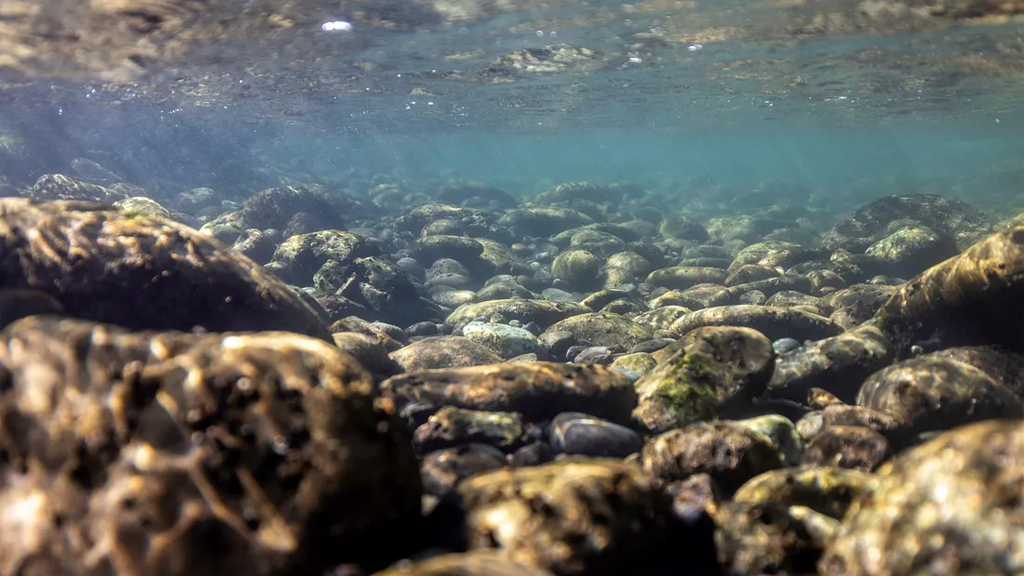
Above photo: A view of the cold and incredibly clear waters of the Dungeness River (WDFW photo). Despite the clear appearance, there are millions of fragments of genetic material from all walks of life suspended in this water.
Washington Department of Fish and Wildlife scientists are using environmental DNA (eDNA) to take an unprecedented look at what lives in the state’s rivers, with the goal of conducting a census of every major river and drainage in Washington over the next seven years.
The project, called the Aquatic Biodiversity Study, is the first of its kind in the Pacific Northwest — and possibly the entire country — to use eDNA for a comprehensive, ongoing survey of an entire state’s native resident freshwater species.
“This is the most comprehensive aquatic biodiversity study using eDNA technology ever implemented in Washington,” said Marie Winkowski, WDFW’s native freshwater fish and shellfish specialist.
Beyond its scale, Winkowski notes, this landmark effort “is revolutionizing how wildlife agencies monitor native freshwater fish, shellfish, and invertebrate populations across vast landscapes, creating a more sustainable model for managing at-risk species and those of greatest conservation need.”
WDFW scientists have already surveyed Washington’s Dungeness, Elwha, Yakima, Naches, Wenatchee, Willapa, and Skokomish river systems. Each watershed offers a different mix of habitats — from alpine-fed snowmelt rivers to slow, meandering coastal streams — and each has its own community of species, some of which have never been documented in those waters before.
“We’re getting a level of detail about aquatic biodiversity that was simply not possible before,” said Vince Butitta, one of two WDFW leads of the study. “This technology lets us detect not just fish, but shellfish, freshwater invertebrates, amphibians, and even signs of animals that live near rivers, such as beavers, snakes, loons, ducks, and others.”
“A single sample in just one river has helped us detect hundreds of species,” adds Butitta. “Now imagine thousands of samples across the entire state. When you put them together, it really creates a mosaic of information of entire river systems. It’s an incredibly efficient system.”
Every living thing leaves behind microscopic genetic material in its environment — biological material like skin cells, mucus, eggs, and waste, all containing DNA. Scientists refer to this as “environmental DNA.” In rivers, these fragments are carried by the current. In a process called metabarcoding, scientists filter water samples, capture those eDNA fragments, and identify the species that shed them.
Unlike traditional surveys, which can require a lot of time and effort to physically catch and identify animals, eDNA samples are collected quickly by a small team of scientific technicians, all without disturbing the species being studied. It can also detect species that are rare, elusive, or have low populations — species that might otherwise be missed.
For fish and wildlife managers, this study represents a leap forward towards freshwater conservation efforts. Washington’s State Wildlife Action Plan (SWAP) lists more than 30 freshwater native aquatic species of greatest conservation need, from lamprey and freshwater mussels to amphibians like the cascade torrent salamander and the Oregon spotted frog. For many of these species, there are large gaps in basic knowledge, such as where they occur or how abundant they are.
“For some species, we haven’t had updated range data in decades,” said Skylar Wolf, WDFW’s aquatic eDNA co-lead. “With eDNA, we can close those basic knowledge gaps and start building a clearer picture to guide future work and conservation actions”.
On a recent late summer morning along the Dungeness River, a WDFW field team unloaded their gear near a shaded bend where crystal clear water fanned over smooth gravel. The centerpiece of their setup was a pivoting tripod system with a long boom arm — a piece of equipment that could easily be mistaken for an audio recording rig. But instead of a microphone, the boom suspended a siphon connected to a sealed housing containing a water filter.
Once in place, the team let the river current do the work. Enough water was drawn through the filter to capture an invisible record of every living thing that had recently been upstream. The filter, now coated with microscopic traces of DNA, was carefully removed with sterile gloves, placed into a clean, labeled bag, and sealed for transport to the lab.
At each site, the team collected several samples: a control sample using laboratory-grade deionized water, to ensure no contamination from equipment; and multiple field samples or “replicates” at upstream and downstream locations, to cover different habitats across the site.
Alongside the DNA collection, the scientists recorded water temperature, flow rate, turbidity, pH, and river width at multiple points. This environmental data helps researchers interpret the DNA results in the context of habitat conditions.
Once the filters arrive at the lab, the DNA is extracted and analyzed through a scientific process called metabarcoding. Specialized software matches the genetic sequences to known species in reference databases. The analysis produces a list of species at that site at that moment in time — a molecular snapshot of the river’s biodiversity.
The implications are enormous. These surveys will allow WDFW to identify where species of greatest conservation need and species of greatest information need are found, detect changes in species distribution over time, understand habitat associations and species interactions, and provide baseline data for future restoration or management work.
And because DNA can be archived, these samples can be re-analyzed decades later with improved technology to answer new questions — or detect species that are currently unknown to science.
“This work not only helps management decisions today, but has important long-term value,” Butitta said. “We’re creating a record that future scientists will be able to revisit 10, 20, even 50 years from now to see how ecosystems have changed.”
While eDNA has been used in targeted studies, WDFW’s Aquatic Biodiversity Study is the first to apply it statewide in a systematic, ongoing way to native resident freshwater species. That comprehensive scope makes it a model for other states looking to implement conservation actions recommended in their SWAPs.
In Washington, the study is already helping to reveal the hidden complexity of rivers and the species that depend on them. Over time, it will allow managers to track shifts in biodiversity due to climate change, habitat restoration, and other environmental pressures.
“It’s a little bit ‘Ghostbusters’ with the gear we use,” Wolf said with a laugh, “but what we’re doing has very real consequences for conservation. The more we know about what’s in our streams and rivers, the better equipped we are to protect these resources.”