
WDFW’s Moose Monitoring Project In Northeast Washington Enters Third Year, Goal Is 80 Collared Cows On The Landscape

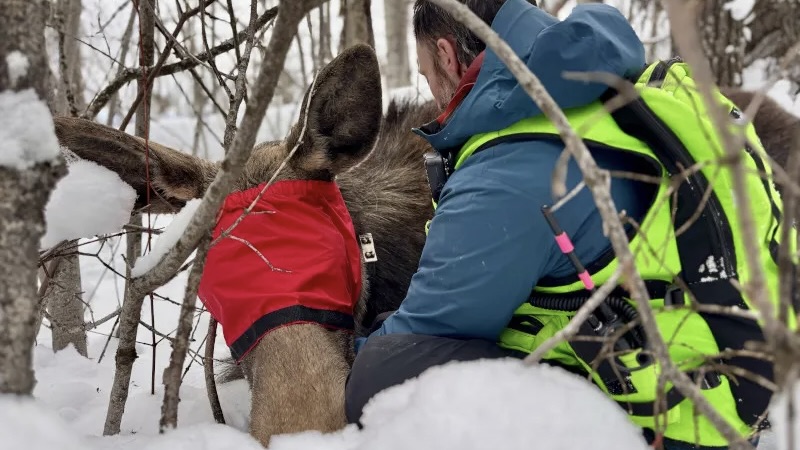
Above photo: A WDFW biologist holds the head of a moose during capture and collaring operations in February of 2025.

The Washington Department of Fish and Wildlife’s multi-year moose monitoring project is now entering its third winter. Warmer winters, changing habitat, increased parasites, and predation impacts raise questions about the status and trajectory of Washington’s moose population.


For most of the last century, moose have been relatively rare in northeast Washington, with the first documented moose sighting dating back to around 1929 when a hunter photographed a bull moose in Ferry County. In the 1950s, biologists began finding shed antlers and carcasses in the Selkirk Mountains of Pend Oreille County. By the early 1970s, a small but stable population of about 60 moose had established in the region, which eventually grew to significant numbers by the 2010s.

“For decades, WDFW has relied on aerial surveys to monitor moose,” said Samantha Bundick, ungulate specialist with WDFW. “While useful, those surveys depend on weather and snow conditions, and in some recent winters could not be flown at all. As winters become milder, those challenges are expected to increase.”

During the first two winters of the project, 2024 and 2025, WDFW biologists and veterinarians successfully captured and GPS-collared 39 adult female moose, nearly halfway toward the department’s goal of 80 collared cows on the landscape. This year, starting in late January of 2026, team members are hoping to capture and collar the remaining 41 required to reach that goal.

Each collar records locations throughout the day and night, allowing biologists to see how individual moose use the landscape across seasons and years. Instead of a brief snapshot, collars show where a moose spends the winter, how far she travels to find food, when she shifts into summer range, and how her movements change over time. When a collar signals that a moose has stopped moving for an extended amount of time, which indicates the animal has died, biologists can investigate and learn what caused the mortality — information that is difficult to obtain through other methods.

“Most wildlife surveys are a challenge because you can’t count every animal on the landscape,” said Bundick. “Collars let us follow individual animals through time and understand what happens between surveys.”

This information is especially important for moose in northeast Washington. Moose are cold-adapted animals that can struggle with heat, parasites such as winter ticks, and changes in habitat quality. Predators can have a greater impact when cow moose enter winter in poor condition or calves are born weaker due to those factors.

By tracking moose home ranges year after year, biologists can begin to connect these factors and better understand survival and recruitment across the landscape. Over time, those individual stories combine into a clearer picture of population trend.

Field crews will continue collaring and monitoring efforts during winter 2026. While the collars themselves are temporary, the information they provide will help guide future management decisions and ensure Washington’s moose remain part of the landscape for years to come.
2026 is the final year of collaring for this project. After that, the collared moose will be monitored for six years.

© Copyright 1997- 2026 Columbia Basin Bulletin. All rights reserved.