
Plaintiffs In Columbia Basin Salmon BiOp Case Counter Federal Defendants Motion To Dismiss, Argue Northwest Power Act Does Not Apply

In a strongly-worded rebuttal to a December motion to dismiss by federal defendants in U.S. District Court, plaintiffs challenging the operation and maintenance of the Columbia/Snake river hydroelectric system of dams questioned why, after 24 years and eight complaints since 2001, that the federal government is now moving to dismiss the case for lack of subject matter jurisdiction.


On Jan. 19, 2021, the National Wildlife Federation and others challenged both the 2020 NOAA Fisheries’ Biological Opinion on the impacts of federal dams on salmon and steelhead, and the 2020 Columbia River federal dam operators’ National Environmental Policy Act assessment and the resulting Record of Decision. This is the eighth time since 2001 that the plaintiffs have challenged a Columbia/Snake BiOp in Oregon’s U.S. District Court.

Federal defendants in the case filed the Motion to Dismiss in mid-December 2025 just as plaintiffs proposed a preliminary injunction calling for changes to Snake and Columbia river federal dam operations aimed at protecting endangered salmon and steelhead. The Bonneville Power Administration said the actions would lower the amount of electricity that could be generated by the dams, costing the region more for electricity, while also resulting in higher releases of carbon dioxide when making up for those losses.

Federal defendants in the case are NOAA Fisheries, the U.S. Army Corps of Engineers and the Bureau of Reclamation.
Plaintiffs in the case with NWF are American Rivers, Pacific Coast Federation of Fishermen’s Associations, Institute for Fisheries Resources, Sierra Club, Idaho Rivers United, Northwest Sportfishing Industry Association, NW Energy Coalition, Columbia RiverKeeper and the Idaho Conservation League.

BPA argued that the plaintiffs don’t have jurisdiction in U.S. District Court because it is unlawful to challenge a BPA decision in the lower court, although such a challenge can be argued in the Ninth Circuit Court of Appeals.

“Twenty-four years and eight supplemental complaints after this case commenced in 2001—and thirty-one years after the Ninth Circuit Court of Appeals issued the controlling opinion on jurisdiction—Federal Defendants have moved to dismiss this case for lack of subject matter jurisdiction, claiming that the jurisdictional provision of the Pacific Northwest Electric Planning and Conservation Act (“Northwest Power Act”), 16 U.S.C. § 839f(e)(5), compels dismissal of all claims against all Federal Defendants,” NWF responded to BPA’s claim in its Jan. 15 filing in opposition to the federal defendants’ Motion to Dismiss for Lack of Jurisdiction.

NWF wrote that BPA is the only federal agency to which the jurisdictional provisions of the Northwest Power Act apply, but the federal power marketing agency is neither named as a defendant nor are any of its final actions challenged in the Eighth Supplemental Complaint. The Motion to Dismiss, according to NWF, relies on the federal defendants saying that the Columbia River System Operations ROD is a “joint decision,” although it “plainly contains three separate final agency decisions.” Those are a BiOp, a NEPA assessment and a final EIS/ROD.

“Subject matter jurisdiction does not hang on so slender a thread,” NWF concluded.
BPA had said in December that the actions of the Corps and Bureau are “inextricably intertwined with Bonneville’s final action and decision” and that the “Court cannot adjudicate claims over NMFS’s Biological Opinion without attacking an essential ingredient of Bonneville’s decision, rendering those claims subject to the Northwest Power Act’s exclusive review provision.”

“‘Careful Pleading’ cannot overcome the Northwest Power Act’s jurisdictional barrier,” BPA said of plaintiff’s choice not to include the agency in the lawsuit.

–See CBB, December 19, 2025, Over 30 Briefs Filed In Federal Court Opposing Request For More Spill For Fish, Lower Reservoirs At Columbia/Snake River Dams, Over 30 Briefs Filed In Federal Court Opposing Request For More Spill For Fish, Lower Reservoirs At Columbia/Snake River Dams – Columbia Basin Bulletin

Some 13 species of salmon and steelhead in the rivers are listed as threatened or endangered under the federal Endangered Species Act. Columbia Basin salmon and steelhead, particularly those that return to the Snake River to spawn, persist at dangerously low abundance and many continue to decline toward extinction, plaintiffs had said in its 2021 challenge of the BiOp.

In their challenge to the BiOp in 2021, plaintiffs asked the judge to vacate the EIS and remand it back to the Corps and Bureau of Reclamation, and order NOAA to vacate and set aside the 2020 BiOp and accompanying incidental take statement and permits and “enjoin NOAA to notify the Action Agencies of these actions.”

NWF said in its Jan. 15, 2026 filing in opposition to the federal defendants’ Motion to Dismiss for Lack of Jurisdiction that it has “long understood that the Ninth Circuit has exclusive jurisdiction over Northwest Power Act claims against BPA” and that is why those claims against BPA have been raised in the Appeals Court already.

“Yet Federal Defendants’ motion seeks dismissal of all claims (none of which arise under the Northwest Power Act or other power statutes) against all Federal Defendants (none of which are BPA),” the filing says. It goes on to acknowledge that it is plaintiffs’ burden to establish subject matter jurisdiction, as NWF “has done for the past quarter century, NWF has met that burden here.”

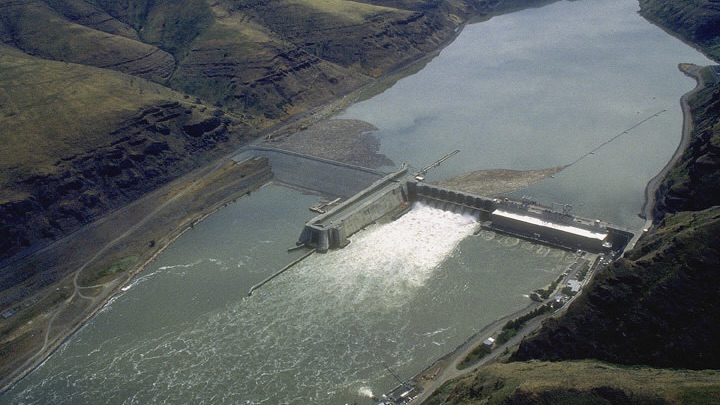
Each federal agency has a distinct role in operating the Columbia River system of federal dams, NWF says. The Corps and the Bureau develop operating requirements for their individual projects, with the Corps operating dams in the lower Columbia and lower Snake rivers. BOR operates storage projects, including Hungry Horse in Montana and Chief Joseph and Grand Coulee dams in the upper Columbia.
The Corps “is responsible for system [Flood Risk Management] in the basin, maintaining navigation locks and channels to accommodate river passage, producing hydropower, maintaining recreation facilities, and operating fish passage facilities.”

The storage projects adjust and regulate the river’s flow, providing system-wide and local flood risk protection for downstream communities, such as Portland, Oregon, as well as flow augmentation and cold water releases that benefit salmon and steelhead, NWF said.
On the other hand, BPA does not manage or operate any dams or storage projects. “Instead, BPA ‘markets and distributes power generated at the Federal dams on the Columbia River and its tributaries,’” NWF said, adding that BPA’s “marketing and sales decisions are entirely separate from the Columbia River system operations.”

The power marketing agency is also responsible to use its funds to “protect, mitigate, and enhance fish and wildlife to the extent affected by the development and operation” of the Columbia River federal system of dams.

“Not all challenges that indirectly impact BPA invoke the Northwest Power Act’s Exclusive Jurisdiction Provision” in which only the Ninth Circuit Court of Appeals would have jurisdiction, NWF said.

The Court of Appeals wrote (included in the NWF brief): “[J]urisdiction under the Act does not turn on the legal theory underlying a suit… Instead jurisdiction arises because the actions of a particular agency are being challenged and because of the nature of the agency action at issue. The proper inquiry focuses on the agency being attacked and whether the factual basis for that attack is an agency action authorized by the Act.”

According to NWF, the agencies targeted in its 2001 challenge of the 2000 BiOp, EIS and ROD do not include BPA, nor are there claims challenging an agency action authorized by the Northwest Power Act.

“In the wake of these cases, NWF has consistently followed the course set by the courts: it has filed its ESA and other claims against NMFS, the Corps, and Reclamation in this Court and filed a Petition for Review of BPA’s action in the Ninth Circuit. This division has worked smoothly for over 30 years, allowing the claims in this Court to proceed while those against BPA in the Ninth Circuit are stayed until there is cause to litigate them (which has not yet been necessary),” NWF said.

The state of Oregon also filed its opposition to the federal defendants’ Motion to Dismiss, saying:
“Defendants’ motion is written as if the coordination of the Corps, BOR, and BPA in the management of the hydropower system is entirely new with the issuance of the 2020 Biological Opinion (“BiOp”) and Record of Decision (“ROD”). Not so. That has long been the case. The Northwest Power Act preexists the listing of the species at issue in this case. And, critically, several Ninth Circuit and district court authorities—in very similar circumstances—have expressly directed that cases like this one proceed exactly as—and in the court in which—it was brought.”

The proposed preliminary injunction with its emergency measures would likely not have been needed if the federal government had not altered course and reneged on a Biden-era Memorandum of Understanding between plaintiffs and the U.S. government, according to court documents.

The MOU, signed in December 2023, known as the Resilient Columbia Basin Agreement (RCBA), was to be effective through 2028 and was designed to restore Columbia River basin salmon and steelhead runs to “healthy and abundant levels.”

Oregon District Court Judge Michael H. Simon had approved a stay in the original and long-running lawsuit that challenged NOAA Fisheries’ 2020 biological opinion and U.S. Army Corps of Engineers’ Environmental Impact Statement and Record of Decision as long as the agreement was in place. However, the Trump Administration on June 12, 2025 revoked the agreement and notified the partners in the MOU in a June 24 letter. Plaintiffs in the case went back to the U.S. District Court in Oregon to ask the court to lift the stay and resume the court case that had been on pause for nearly two years.

For background, see:
— CBB, December 19, 2025, Over 30 Briefs Filed In Federal Court Opposing Request For More Spill For Fish, Lower Reservoirs At Columbia/Snake River Dams, Over 30 Briefs Filed In Federal Court Opposing Request For More Spill For Fish, Lower Reservoirs At Columbia/Snake River Dams – Columbia Basin Bulletin

— CBB, November 22, 2025, Plaintiffs In Salmon BiOp Case Seek To Dismiss Two-Year Old Idaho Request That Judge Rule Out Dam Breaching As Remedy, Plaintiffs In Salmon BiOp Case Seek To Dismiss Two-Year Old Idaho Request That Judge Rule Out Dam Breaching As Remedy – Columbia Basin Bulletin

— CBB, Oct. 19, 2025, Judge Denies Feds’ Request To Put Salmon BiOp Case On Hold Due To Shutdown, Plaintiffs Seek Changes To Dam Operations To Aid Fish, Judge Denies Feds’ Request To Put Salmon BiOp Case On Hold Due To Shutdown, Plaintiffs Seek Changes To Dam Operations To Aid Fish – Columbia Basin Bulletin

— CBB, September 26, 2015, Judge Sets Schedule For Continuing Litigation Over Columbia River Basin Salmon Recovery; Motions, Briefs Oct. 8 To Jan. 22, 2026, Judge Sets Schedule For Continuing Litigation Over Columbia River Basin Salmon Recovery; Motions, Briefs Oct. 8 To Jan. 22, 2026 – Columbia Basin Bulletin

— CBB, September 14, 2025, Plaintiffs Return To Federal Court To Continue Legal Battle Over Columbia Basin Salmon Recovery, Judge Lifts Stay, Plaintiffs Return To Federal Court To Continue Legal Battle Over Columbia Basin Salmon Recovery, Judge Lifts Stay – Columbia Basin Bulletin

— CBB, June 13, 2025, Trump Rescinds Biden’s Executive Order Aimed At Restoring Columbia Basin Salmon, Steelhead Runs, https://columbiabasinbulletin.org/trump-rescinds-bidens-executive-order-aimed-at-restoring-columbia-basin-salmon-steelhead-runs/

© Copyright 1997- 2026 Columbia Basin Bulletin. All rights reserved.