This Month in 2021 | FRIDAY (July 2 )UPDATE: Hydro/Fisheries Managers Initiate More Changes At Lower Snake Dams To Cool Water, Aid Endangered Sockeye
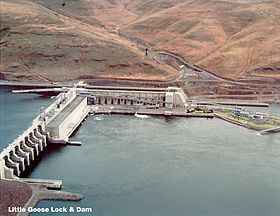
Idaho proposed today (Friday, July 2) the first of what could be several changes at Lower Granite and Little Goose dams on the lower Snake River to maintain cooler water temperatures in a river facing extreme environmental conditions as endangered sockeye begin to move up the overheated river.
A Systems Operational Request, sponsored by Idaho Department of Fish and Game’s Jonathan Ebel, was presented Friday, July 2 at a special meeting of the interagency Technical Management Team. The SOR called for two changes at the two dams.
The first request changes spill at the dams from summer flexible spill as called for in the 2020 Federal Columbia River Power System biological opinion for salmon and steelhead and instead diverts all spilled water over the dams to spillway weirs from 9 am to 11 pm. This change, which essentially reduces the amount of summer spill, could continue through July.
That operation will begin July 3, Doug Baus of the U.S. Army Corps of Engineers told TMT at Friday’s meeting.
More detailed information about the operation can be found in the SOR.
The second request of the SOR initiates truck transport of juvenile salmon at both dams until the period of reduced spill ends, or it could continue up to and through the summer transport period that would normally begin August 1.
“The first action is designed to cool the Snake River (down through Little Goose pool) by drawing cooler water from the Lower Granite pool,” Ebel said. “This will help us conserve Dworshak water and protect migrating sockeye and early-arriving steelhead. Given the temperatures in the region and the temperatures in the river, we think it is prudent to start this now.”
The second action – juvenile collection and truck transport – would begin as soon as possible, the Corps’ Baus said, maybe as soon as Wednesday, July 7.
According to the Corps’ Jonathan Roberts, there is still intense heat forecasted for the region, but coming Thursday, nighttime temperatures will begin to come down. “There will be some nights in the 50-degree range, and with some wind recently that cools the Lower Granite pool’s surface temperature, Lower Granite tailwater has dropped to about 66 degrees,” he said. “However, by the end of next week, the extreme heat wave will return.”
The overall impact of the first action – reducing spill at the two dams – would also allow the Corps to reduce spill at Dworshak Dam, on the North Fork Clearwater River, (Clearwater meets Snake at Lewiston) and would save the dam’s cold augmentation water. Currently, outflow at the dam is 12,500 cubic feet per second, which is a combination of 9.5 kcfs through the dam’s powerhouse and 3 kcfs of spill.
At TMT’s Wednesday meeting, June 30, Roberts said that due to the current operation at Dworshak releasing 12.5 kcfs, the flow augmentation generally used to cool the Snake River through August would only last through mid-August.
At Friday’s special meeting he said that the change in spill called for in the SOR would actually save water at the rate of adding one more day of flow augmentation for every 10 days the SOR would be active.
Migrating adult sockeye hit a thermal block in 2015 as river temperatures rose considerably above the 68 degree F limit. Some 90 percent of sockeye died before reaching Ice Harbor Dam, the lower of the four Snake River dams. IDFG, NOAA Fisheries and the Nez Perce Tribe set up a rescue project at Lower Granite Dam to trap the adults and haul them to the hatchery at Eagle, Idaho, which Jonathan Ebel of the Idaho agency said they are ready to do again this year.
At Wednesday’s TMT meeting, Ebel said IDFG would begin to trap and haul adult sockeye at Lower Granite Dam July 6 through July 23.
Some 20 sockeye have passed Lower Granite Dam as of July 1. The 10-year average on this date is 31 fish. Just 13 fish had passed on this date last year.
Oregon’s Erick Van Dyke and the Nez Perce Tribe’s Jay Hesse suggested that additional SOR’s that could address such issues as river temperatures, additional conservation of Dworshak water and juvenile transportation would be introduced at next week’s TMT meeting, Wednesday, July 7.
For background, see:
— CBB, June 24, 2021, “Intense Heat Wave Prompts Earlier Dworshak Water Releases To Cool Lower Snake River AS ESA-Listed Sockeye Soon To Arrive,” https://columbiabasinbulletin.org/intense-heat-wave-prompts-earlier-dworshak-water-releases-to-cool-lower-snake-river-as-esa-listed-sockeye-soon-to-arrive/
— CBB, January 8, 2021, “Another Low Upriver Spring Chinook Run Forecasted For 2021, Snake River Sockeye Projected At Only 700 Fish; Better News Downstream Bonneville Dam,” https://columbiabasinbulletin.org/another-low-upriver-spring-chinook-run-forecasted-for-2021-snake-river-sockeye-projected-at-only-700-fish-better-news-downstream-bonneville-dam/
— CBB, August 27, 2020, “Snake River Sockeye Nears End Of Run At 68 Percent Of Average, Fall Chinook Passage Gaining Steam; Cool Down In Lower Snake,” https://columbiabasinbulletin.org/snake-river-sockeye-nears-end-of-run-at-68-percent-of-average-fall-chinook-passage-gaining-steam-cool-down-in-lower-snake/
— CBB, October 15, 2020, “NOAA Fisheries Study Warns Climate Change Poses ‘Catastrophic’ Threat To Survival Of Endangered Snake River Sockeye,” https://columbiabasinbulletin.org/noaa-fisheries-study-warns-climate-change-poses-catastrophic-threat-to-survival-of-endangered-snake-river-sockeye/