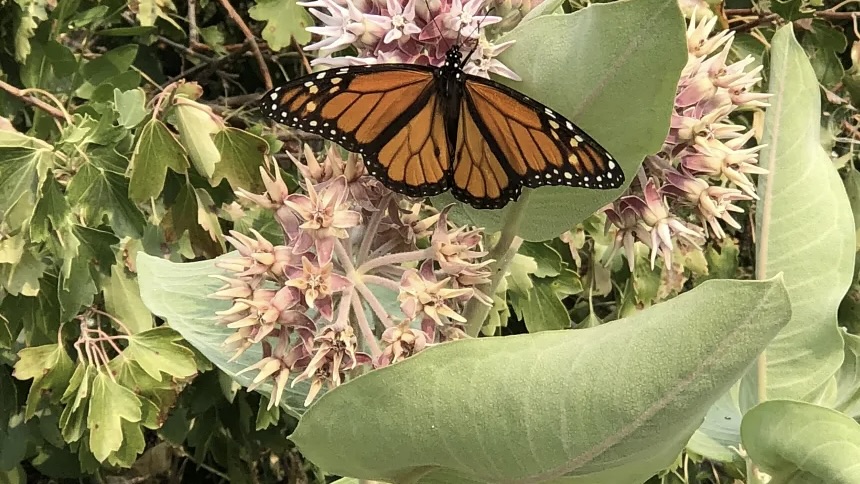
WDFW Completes Western Butterfly Conservation Plan Aimed At Boosting Startling Low Population Numbers
Above Photo by: Patrick Kaelber
The Washington Department of Fish and Wildlife and the Western Association of Fish and Wildlife Agencies recently completed a five-year update to the Western Monarch Butterfly Conservation Plan, a 50-year plan to guide coordinated, ecosystem-based conservation strategies that support a viable western monarch butterfly population.
The 2025 update refines habitat and population targets, incorporates emerging science, and identifies voluntary conservation actions aimed at stabilizing and recovering the western monarch population. The updated plan also includes a working definition of western monarch breeding habitat and a refined definition of monarch overwintering habitat.
“The latest update to the Western Monarch Butterfly Conservation Plan details actions that protect monarchs in eastern Washington, including restoring and protecting habitat like showy milkweed while reducing habitat loss, pesticide exposure, and invasive species,” said Julie Combs, WDFW’s monarch species lead.
Western monarch butterfly population numbers are alarmingly low compared to historic counts ranging from hundreds of thousands to over one million butterflies. The Western Monarch Count, an annual community science event led by the Xerces Society for Invertebrate Conservation, has recently documented some of the lowest western monarch butterfly overwintering populations – as low as 1,900 individuals – since the program began in 1997.
Those low overwintering numbers in other states like California directly translate into historically low migratory and breeding butterflies in Washington, as little as 25-100 butterflies annually in the last few years.
“In light of these startlingly low numbers, we wanted to ensure that with this plan, we are providing Washington land managers, landowners, conservation practitioners, and any others the right tools to help conserve monarch butterfly populations as best as they can,” said Combs.
The WAFWA Western Monarch & Native Insect Pollinator Working Group (WMNIP) updates the Western Monarch Butterfly Conservation Plan every five years. The WMNIP is currently chaired by WDFW Conservation Assessment Section Manager Taylor Cotten, who facilitated the 2025 updates to the plan.
“This plan update represents the best available science and details implementable actions that can be applied in Washington State and across the western monarch range,” says Cotten.
“Conserving monarchs is going to take all of us,” said Bill Van Pelt, WAFWA ecosystem coordinator. “This strategic plan identifies conservation actions at multiple levels, from a single person up to a city or corporation. Together we will be able to keep these orange jewels flying across Washington and throughout their range.”
The updated Western Monarch Butterfly Conservation Plan is available on the WAFWA website.