
The Bonneville Power Administration allowed the long-running Columbia Basin Fish Accords with tribes and states to expire Sept. 30, 2025 and it’s unclear if future agreements that would benefit salmon and steelhead recovery in the basin will materialize. Although BPA says it is open to discuss future Accords agreements with tribes, so far that has been more aspirational than substantive, at least according to one tribe.
The Confederated Tribes and Bands of the Yakama Nation says that BPA had terminated its Accords agreement three weeks early on Sept. 11 and that the federal agency is refusing to fund $50 million in carryover funds for hatcheries and other fisheries projects.
The date of termination coincides with the Yakima Nation’s filing in U.S. District Court asking the court, along with other parties to the Resilient Columbia Basin Agreement, to lift the stay of litigation in the 2021 case that challenges NOAA Fisheries’ biological opinion governing impacts of federal Columbia and Snake river dams on salmon and steelhead.
The Fish Accords are fish and wildlife projects implemented by tribes and states and funded by BPA revenues. The Accords account for nearly one-half the money the power marketing agency spends on its fish and wildlife programs, according to BPA. The other portion pays for the Northwest Power and Conservation Council’s Fish and Wildlife Program.
In an Oct. 21 letter to BPA Administrator John Hairston, Gerald Lewis, Chairman of the Yakama Nation Tribal Council, said the tribe is disappointed and in “absolute disagreement with the Bonneville Power Administration’s position. Yakama Nation also objects to and disputes BPA’s subsequent decision not to honor its commitments to Yakama Nation for the planned spend-down of over $50 million in Accord carryover funds.”
The reason BPA made these decisions, according to Lewis’ letter, is that the tribe entered into the litigation Sept. 11 to lift the stay. A stipulation in the original 2008 Accords is that tribes would not enter into “adverse litigation action in violation of the Accord’s litigation forbearance provisions.” In other words, as long as tribes would stay out of court, then Accord funds would be issued.
However, the Yakama Nation pointed out that the motion to lift the stay in the long-running BiOp case was unopposed by all parties, including federal agencies BPA, the U.S. Army Corps of Engineers and the Bureau of Reclamation. It was simply a “procedural response to the United States’ termination of the Resilient Columbia Basin Agreement, which was the sole basis for the stay,” Lewis’ letter to Hairston says.
Lifting of the stay would likely not have been needed if the federal government had not altered course and reneged on a Biden-era Memorandum of Understanding between plaintiffs and the U.S. government. The MOU, signed in December 2023 — Resilient Columbia Basin Agreement — was to be effective through 2028 and was designed to restore Columbia River basin salmon and steelhead runs to “healthy and abundant levels.”
Oregon District Court Judge Michael H. Simon had approved the stay in the original and long-running lawsuit that challenged NOAA Fisheries’ 2020 biological opinion and the Corps’ Environmental Impact Statement and Record of Decision as long as the agreement was in place.
However, the Trump Administration on June 12 revoked the agreement and notified the partners in the MOU in a June 24 letter. Plaintiffs in the case and participants in the RCBA went back to the U.S. District Court in Oregon to ask the court to lift the stay and resume the court case that had been on pause for nearly two years. The stay was lifted Sept. 11.
Parties to the BiOp case followed lifting of the stay by filing in U.S. District Court a preliminary injunction seeking emergency operational changes at federal Columbia and Snake river dams to protect endangered salmon and steelhead from harms caused by dam operations. The changes include increased spill, which allows juvenile fish to pass over the dams instead of through turbines, and lowered reservoir elevations, which decreases the time salmon spend migrating through stagnant, overheated waters. They also asked the court approve a set of emergency conservation measures for Tucannon River spring Chinook, a population that is rapidly approaching extinction, as well as increasing federal efforts to control predators like invasive walleye and some birds that prey on salmon and steelhead.
Tribes were given some advanced warning on the expiration of the Accords, according to Jeremy Takala, Chair, Yakama Nation Fish & Wildlife Committee. In late April, BPA verbally informed the original Accord parties of its decision to allow their Accords to expire on Sept. 30 without successor agreements in place and without establishing a timeline for negotiating new long-term funding agreements, Takala said.
“BPA’s abrupt unilateral action to terminate the Accord only months before the end of the fiscal year was contrary to the terms of the 2022 Accord Extension and the 2023 Resilient Columbia Basin Agreement, both of which required BPA to enter negotiations on a successor Accord,” he said.
He said the action was unilateral because the Yakama Nation believes that BPA made the decision to terminate its Accords three weeks early on its own without checking with the Corps or Bureau.
“BPA repeatedly promised us over multiple meetings that BPA would continue providing the same base level of project portfolio funding during the current FY26-28 rate case period, with rate case inflation applied,” Takala said. “Critically, BPA also committed to allow Accord parties continued access to ‘Carryforward’ funds during FY26-28.”
According to Takala, carryforward funds are project funds from prior year’s projects that were not able to be spent, and so are carried forward. “They are a unique feature of the Accords that we rely upon to fill funding gaps, meet inflationary pressures, and accomplish complex projects (e.g. capital projects at hatcheries, and large-scale habitat conservation and restoration projects) over multiple years,” he said.
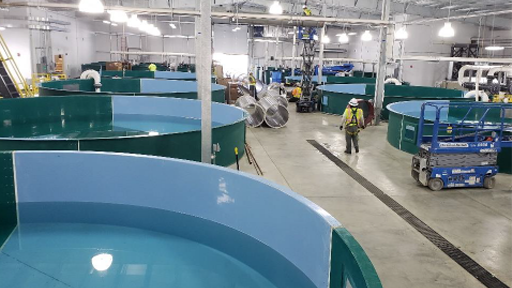
He added that BPA’s abandonment of its Accord carryforward commitments of about $50 million placed Yakama Nation hatchery production and habitat restoration projects in serious jeopardy. That includes the Klickitat Hatchery, Prosser Hatchery, Marion Drain Sturgeon facility, and MRS Coho facility.
“Many of these projects support the baseline of ESA mitigation action that NOAA relied upon in the 2020 Columbia River System Operations BiOp for its ‘no jeopardy’ finding— a finding whose sufficiency is already under judicial review,” Takala said. “If BPA fails to deliver these mitigation actions, the Action Agencies could face additional ESA compliance risk, as well as undermine years of cooperative progress on salmon recovery under the Northwest Power Act.”
In his response to Lewis’ Oct. 21 letter and after a meeting with the Yakama Nation leadership, the BPA administrator’s letter to the tribe of Nov. 7 was more conciliatory.
“Although we have different perspectives on the conclusion of the Fish Accord, as discussed at our meeting, I am pleased that we agree on the value of accomplishments that Yakama Nation and BPA have achieved together for fish and wildlife, and the importance of our continued partnership. From our discussion, I know that we also agree on the importance of avoiding stranded investments in large-scale projects that are already underway. To that end, I am hopeful that our staffs will continue collaborating to prioritize within the current suite of work that BPA and Yakama Nation are implementing to ensure that the highest priority work is not disrupted.”
BPA spokesperson, David Wilson, confirmed that the agency is not currently negotiating with the lower Columbia River Tribes, but he did say that “BPA has continued to express interest in developing modernized versions of the Accords.”
“Whether through Accords, annual contracts, or other arrangements, BPA is fully committed to funding the projects that address its fish and wildlife mitigation responsibilities under the Northwest Power Act and other federal laws,” Wilson said. “BPA’s Fish and Wildlife Program is focused on mitigating for the effects of the dams on fish and wildlife and their habitat as well as meeting obligations under the Endangered Species Act. The expiration of Accords does not change BPA’s commitment to continued implementation of such work.”
The BPA budget for fish and wildlife includes both the Council’s Fish and Wildlife Program “direct expenses” and the Accords. During the 2024-25 fiscal year that was $285 million in direct expenses. The previous fiscal year, direct expenses were $256 million and BPA has budgeted $309 million in its FY2026-28 rate case (Microsoft PowerPoint – F&W cost slide_BP26 IPR). That’s an 11 percent increase over FY2025-26, according to information from BPA (PowerPoint Presentation see slide 23).
Parties with Fish Accords that expired at the end of FY2025 include the Yakama, Warm Springs, Umatilla, Colville, and Shoshone-Bannock tribes; the Columbia River Inter-Tribal Fish Commission; and the states of Idaho and Montana.
BPA has separate agreements with the Kalispel Tribe (through FY2034), the Coeur d’Alene Tribe (through FY2033), and the Spokane Tribe (through FY2033). However, all these were agreements made prior to this year.
Although an agreement has not been reached, the state of Idaho is still talking with BPA about an Accord extension, according to Lance Hebdon, Bureau Chief of Fisheries at the Idaho Department of Fish and Game.
During the previous three-year extension of the Accords (2022 – 2025) Idaho was allowed $53 million for Accord activities. The Accords funded wild salmon and steelhead monitoring for abundance, productivity (both adult to adult and adult-juvenile) and genetic/life history characteristics; Sockeye recovery program including Captive Broodstock, smolt production, research and emergency trap and haul; anadromous fish habitat improvements, Yellowstone Cutthroat Trout conservation in the South Fork Snake River, Kootenai River Sturgeon and Burbot research and monitoring, fish screen work in anadromous waters to keep fish out of irrigation canals, Lake Pend Oreille fisheries management to benefit Bull Trout and sportfish, Hebdon wrote in an email.
Washington has not been an Accord participant since 2018, Michael Garrity, Columbia River Policy Lead with the Washington Department of Fish and Wildlife wrote in an email. He wrote that the state did have an accord on estuary projects from 2009-2018, and a memorandum of understanding from 2018-2023 that served as “sort of an ‘accord-lite.’”
“One of the many benefits of the now defunct Resilient Columbia Basin Agreement was a call to come up with new long-term agreements between fish managers and BPA, as well as discussion about how Columbia Basin fish managers could receive more deference in implementing the NW Power and Conservation Council’s fish and wildlife program and thereby help BPA more efficiently meet its mitigation and enhancement obligations,” Garrity wrote. “WDFW remains interested in advancing a conversation along those lines when the time is right.”
Tucker Jones, Columbia River and Ocean Salmon Program Manager at the Oregon Department of Fish and Wildlife said that Oregon has never been a party to the Accords.
BPA, along with states Idaho and Montana, and tribes, negotiated a three-year extension of the Fish Accords in 2022.
Previously, the Accords had been extended in 2018 for four years after a 10-year agreement made in 2008. Signing on to the 4-year extension in 2018 were the states of Idaho and Montana, the Confederated Tribes of the Colville Reservation, the Confederated Tribes of the Warm Springs Reservation of Oregon, the Confederated Tribes of the Umatilla Indian Reservation, the Confederated Tribes and Bands of the Yakama Nation, the Shoshone Bannock Tribes of the Fort Hall Reservation, and the Columbia River Inter-tribal Fish Commission, along with BPA, the Bureau and the Corps. The 4-year agreement set aside more than $400 million for fish and wildlife mitigation and protection.
For background, see:
— CBB, Oct. 19, 2025, Judge Denies Feds’ Request To Put Salmon BiOp Case On Hold Due To Shutdown, Plaintiffs Seek Changes To Dam Operations To Aid Fish, Judge Denies Feds’ Request To Put Salmon BiOp Case On Hold Due To Shutdown, Plaintiffs Seek Changes To Dam Operations To Aid Fish – Columbia Basin Bulletin
— CBB, September 26, 2025, Judge Sets Schedule For Continuing Litigation Over Columbia River Basin Salmon Recovery; Motions, Briefs Oct. 8 To Jan. 22, 2026, Judge Sets Schedule For Continuing Litigation Over Columbia River Basin Salmon Recovery; Motions, Briefs Oct. 8 To Jan. 22, 2026 – Columbia Basin Bulletin
— CBB, September 14, 2025, Plaintiffs Return To Federal Court To Continue Legal Battle Over Columbia Basin Salmon Recovery, Judge Lifts Stay, Plaintiffs Return To Federal Court To Continue Legal Battle Over Columbia Basin Salmon Recovery, Judge Lifts Stay – Columbia Basin Bulletin
— CBB, June 13, 2025, Trump Rescinds Biden’s Executive Order Aimed At Restoring Columbia Basin Salmon, Steelhead Runs, https://columbiabasinbulletin.org/trump-rescinds-bidens-executive-order-aimed-at-restoring-columbia-basin-salmon-steelhead-runs/
— CBB, January 19, 2025, COUNCIL PANEL HEARS DETAILS ON $1 BILLION ‘RESILIENT COLUMBIA BASIN AGREEMENT,’ EXTENT OF ‘COLLABORATION’ QUESTIONED, HTTPS://COLUMBIABASINBULLETIN.ORG/COUNCIL-PANEL-HEARS-DETAILS-ON-1-BILLION-RESILIENT-COLUMBIA-BASIN-AGREEMENT-EXTENT-OF-COLLABORATION-QUESTIONED/
— CBB, Sept. 15, 2022, Bonneville Power Administration Having Good Financial Year; More Money Coming For Fish/Wildlife, Fish Accords To Be Extended, Bonneville Power Administration Having Good Financial Year; More Money Coming For Fish/Wildlife, Fish Accords To Be Extended – Columbia Basin Bulletin
— CBB, October 26, 2018, FEDS, TRIBES, STATES SIGN EXTENDED COLUMBIA BASIN FISH ACCORDS; $400 MILLION FOR FISH/WILDLIFE, HTTPS://CBBULLETIN.COM/FEDS-TRIBES-STATES-SIGN-EXTENDED-COLUMBIA-BASIN-FISH-ACCORDS-400-MILLION-FOR-FISH-WILDLIFE/