
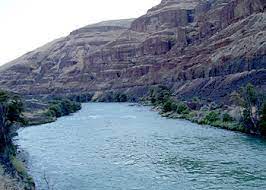
Columbia River Steelhead Update: Lowest Return Since 1938 Prompts Oregon To Restrict Fishing In Key Tributaries, ‘Uncharted Territory’
August 27th, 2021
In response to extremely low returns to date of Columbia Basin upriver summer steelhead, the Oregon Department of Fish and Wildlife is adopting additional emergency rules to increase protections for wild summer steelhead in central and eastern Oregon Columbia River tributaries.
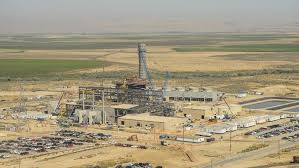
Council Approves Release Of Draft Power Plan Looking 20 Years Into Future For Northwest Electricity System
August 26th, 2021
The Northwest Power and Conservation Council this week approved release of a draft 2021 Northwest Power Plan for public review and comment that calls for continued reliance on existing hydropower and remaining coal and gas plants, among other sources, to meet the region’s energy needs during a transition phase.
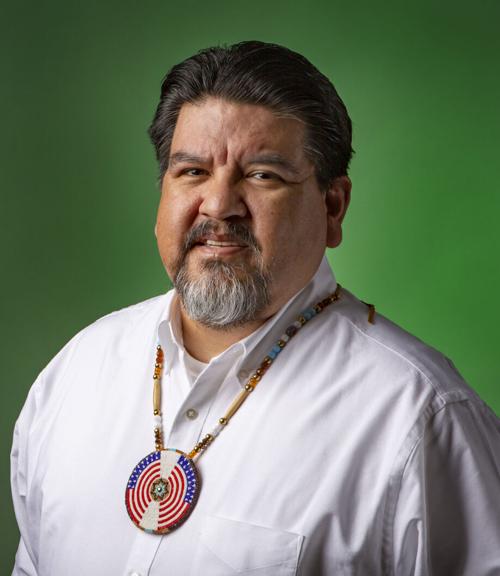
Oregon NW Power/Conservation Council Member Sams Nominated To Be National Park Service Director
August 26th, 2021
The White House has announced the intent to nominate Northwest Power and Conservation Council member Charles F. “Chuck” Sams III as Director of the National Park Service. The nomination will now be considered by the U.S. Senate. Sams has represented Oregon on the Council since April.
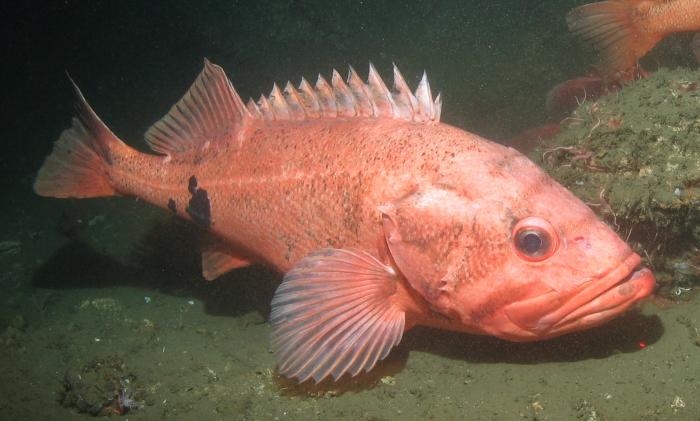
Want To Boost Productivity Of Fisheries? Protect Largest, Most Prolific Fish, Says Study
August 26th, 2021
Management of many of the largest fisheries in the world assumes incorrectly that many small fish reproduce as well as fewer large ones with similar total masses, a new analysis has found. That can lead to overharvesting the largest, most prolific fish that can contribute the most to the population.
CDFW, NOAA Fisheries Move Forward On ‘Voluntary Drought Initiative’ To Help Protect Salmon, Steelhead; Agreements With Landowners, Water Users
August 12th, 2021
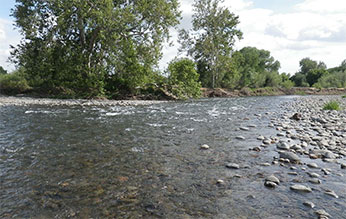
The California Department of Fish and Wildlife and the National Oceanic and Atmospheric Administration Fisheries announced this week a “Voluntary Drought Initiative” designed to protect populations of salmon, steelhead, and sturgeon from the effects of the current unprecedented drought.
Oregon Commission Approves Purchase Of Minam River Land To Eventually Create 15,000-Acre Wildlife Area; Protect Salmon, Bull Trout
August 12th, 2021
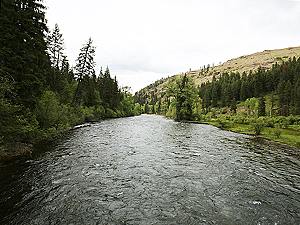
The Oregon Fish and Wildlife Commission last week approved the purchase of nearly 5,000 acres of land along the Minam River in northeast Oregon as part of Phase one of a project that will eventually create the 15,000-acre Minam River Wildlife Area.
Lorraine Loomis, Strong Advocate For Pacific Salmon, Tribal Treaty Rights, Dies At Age 81
August 12th, 2021
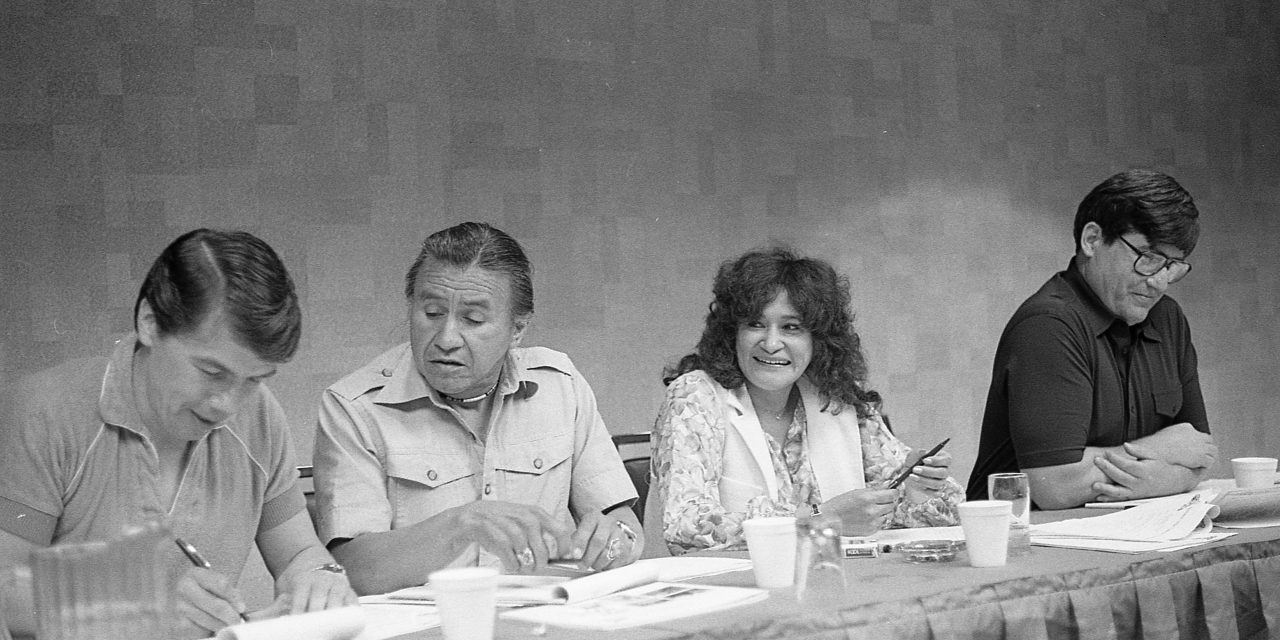
Lorraine Loomis, Northwest Indian Fisheries Commission chairperson and Swinomish fisheries manager, passed away August 10 at the age of 81.
Study: Baby Marine Turtles’ Stomachs Packed With Plastic Debris, For Pacific Green Turtles Up To Nearly 1 Percent Body Mass
August 5th, 2021
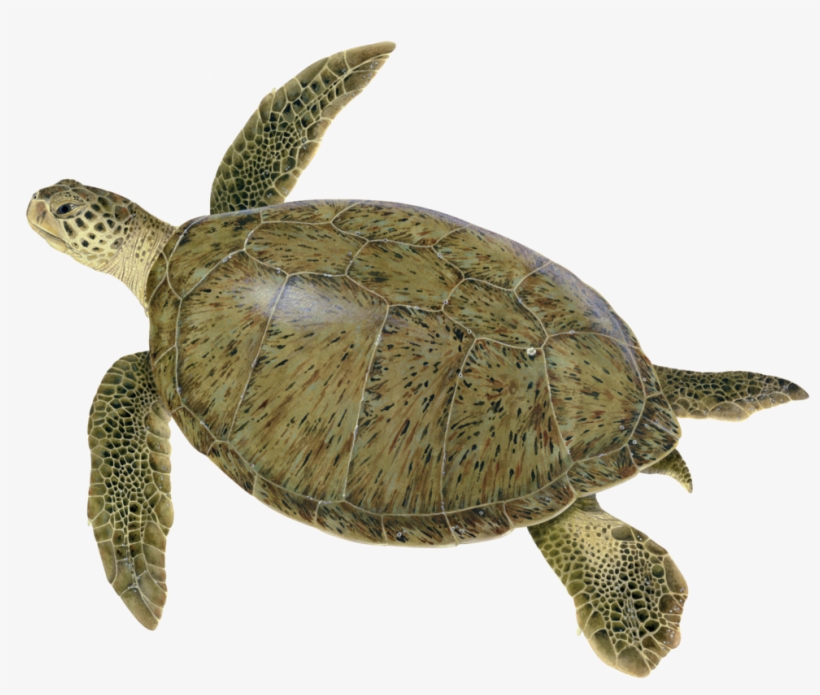
Plastic pollution has become one of the most pressing threats to marine wildlife. It is estimated that more than 700 marine species, from blue whales to small barnacles, have had interactions with plastics in the oceans. Plastics now make up 80% of all marine debris and can be found everywhere, from surface waters to deep-sea sediments.
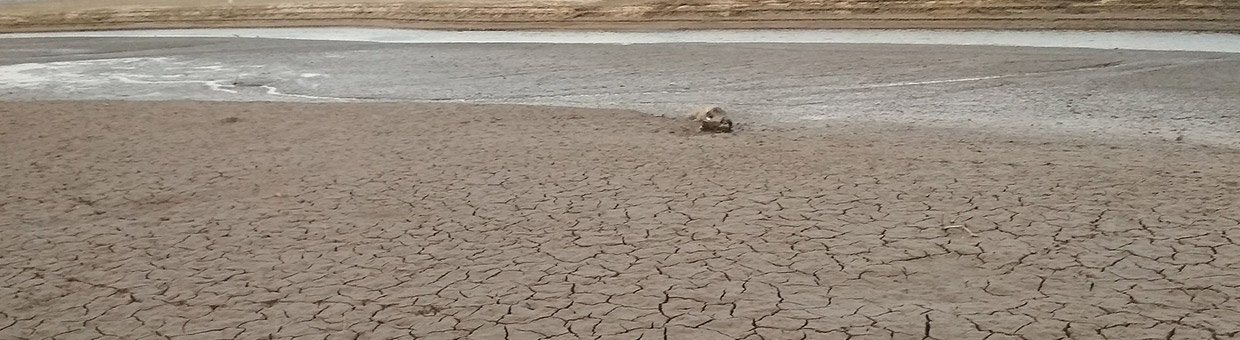
Bureau Of Reclamation Launches Drought Web Portal Offering Real-Time Information
August 5th, 2021
“Severe and sustained droughts are part of life in the Western U.S., resulting in water shortages, affecting agriculture, municipalities, tribes and ecosystem functions,” says the Bureau of Reclamation in a new web portal providing real-time drought-related information and details of drought actions.

Large Area Of Hypoxic Water Off Northwest Coast Shows Potential Of ‘Dead Zone’ Forming; Earliest Start In 35 Years
July 29th, 2021
Oxygen-depleted bottom waters occur seasonally along the continental shelf of Washington and Oregon when strong winds blowing along the coast in spring and summer trigger upwellings that bring deep, cold, nutrient-rich water to the surface.

During High Heat Columbia Gorge National Fish Hatchery Managers, Tribes Transfer, Release Juvenile Salmon; Warming Climate Presents Ongoing Challenge
July 29th, 2021
Mike Clark and a team of fisheries professionals watched the weather forecast for late June and knew it meant serious problems for the more than 7 million salmon being reared in the Columbia River Gorge National Fish Hatcheries. Each day the weather forecast for the Pacific Northwest brought increasingly dire predictions. What started as 104 degrees soon became a forecast of 108 degrees.
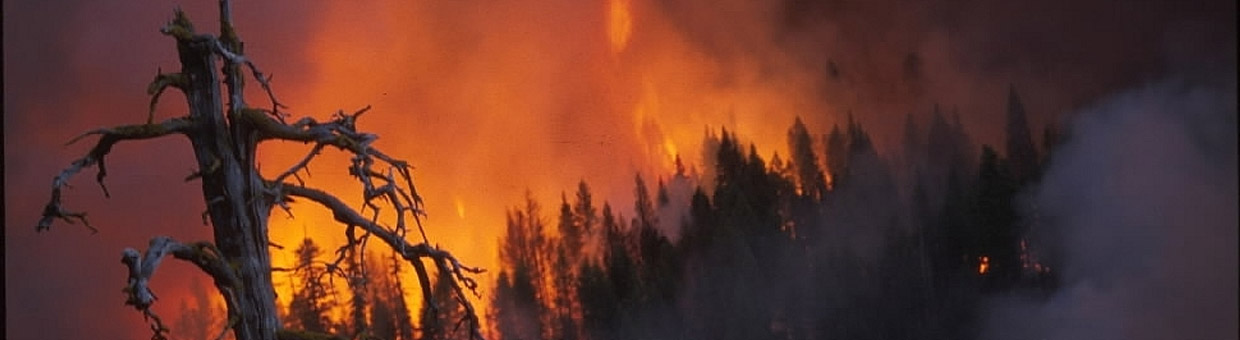
UW Study Looks At Long-Term Future Of Western Wildfires Under Increased Temperatures, Drought; Fires Become ‘Self-Limiting’?
July 29th, 2021
In recent years, wildfires on the West Coast have become larger and more damaging. A combination of almost a century of fire suppression and hotter and drier conditions has created a tinderbox ready to ignite, destroying homes and polluting the air over large areas.
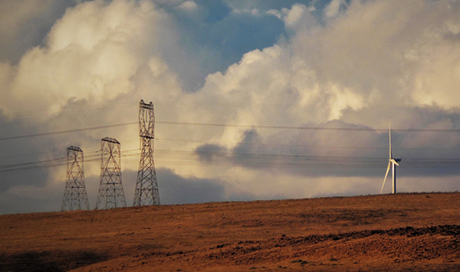
Bonneville Power Drops Power Rates By 2.5 Percent, Reduces Proposed Transmission Rates
July 29th, 2021
The Bonneville Power Administration will decrease power rates by an average of 2.5% and slashed its proposed transmission rate increase in half to an average of 6.1%. The new rates were announced this week as BPA released the final record of decision for its BP-22 power and transmission rate case as well as the TC-22 tariff proceeding.
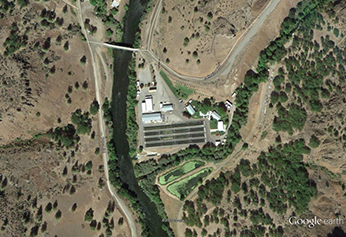
Unprecedented Relocation: Drought, Poor Water Conditions Force CDFW To Move 1.1 Million Juvenile Salmon From Klamath River Hatchery
July 22nd, 2021
Due to drought and poor water conditions in the Klamath River, the California Department of Fish and Wildlife successfully relocated 1.1 million juvenile, fall-run Chinook salmon from its Iron Gate Fish Hatchery in Siskiyou County.
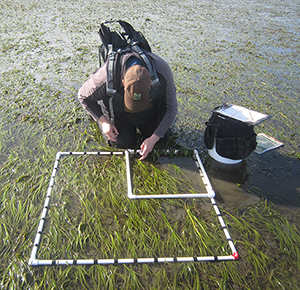
Oregon Legislative Bill Funds Efforts To Monitor Impacts Of Ocean Acidification On Marine Life
July 22nd, 2021
The Oregon Legislature’s passage of House Bill 3114 is “another historic Oregon first in the fight against ocean acidification and hypoxia (OAH) and shows Oregon leaders’ awareness of the importance of healthy oceans,” said the Oregon Department of Fish and Wildlife in a press release.

USFWS Proposes Revisions To Spotted Owl Critical Habitat, Withdraws Trump Administration’s Rule Excluding 3.4 Million Acres
July 22nd, 2021
The U.S. Fish and Wildlife Service this week said it is proposing a revised critical habitat rule for the northern spotted owl that identifies 204,797 acres of exclusions from the 2012 critical habitat designation under the Endangered Species Act. The Service is simultaneously proposing to withdraw the Trump Administration’s January 15, 2021 rule that would have excluded 3.4 million acres of critical habitat for the northern spotted owl.
Washington Ecology Begins Review Of Surface Water Quality Standards
July 19th, 2021
Washington is beginning a review of its surface water quality standards and is seeking public input until September 16.
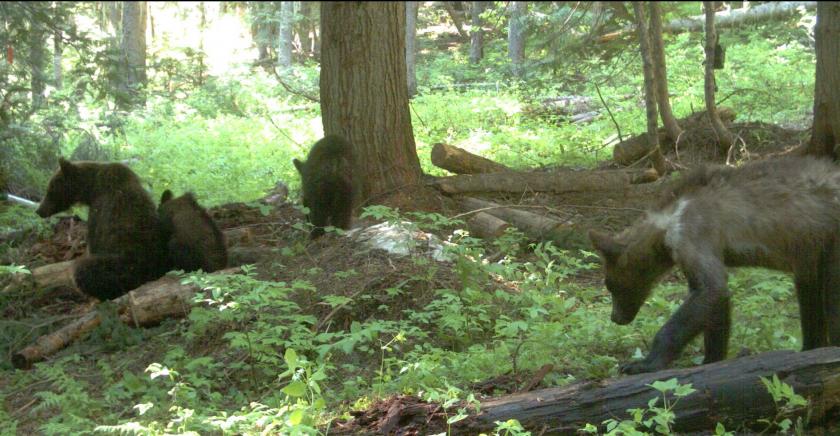
Grizzly Bears In Northeast Washington: First Female Grizzly Captured, Fitted With Radio Collar, Released Onsite
July 15th, 2021
In a first for Washington state, wildlife biologists recently captured and fitted a female grizzly bear with a radio collar. The bear, accompanied by three yearling offspring, was then released to help biologists learn more about grizzly bears in Washington state.
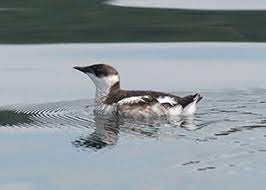
ODFW Uplists Marbled Murrelets From Threatened To Endangered Under State ESA; Danger Of Extinction
July 15th, 2021
The Oregon Fish and Wildlife Commission last Friday voted 4-3 to reclassify the marbled murrelet from threatened to endangered under the state’s Endangered Species Act.
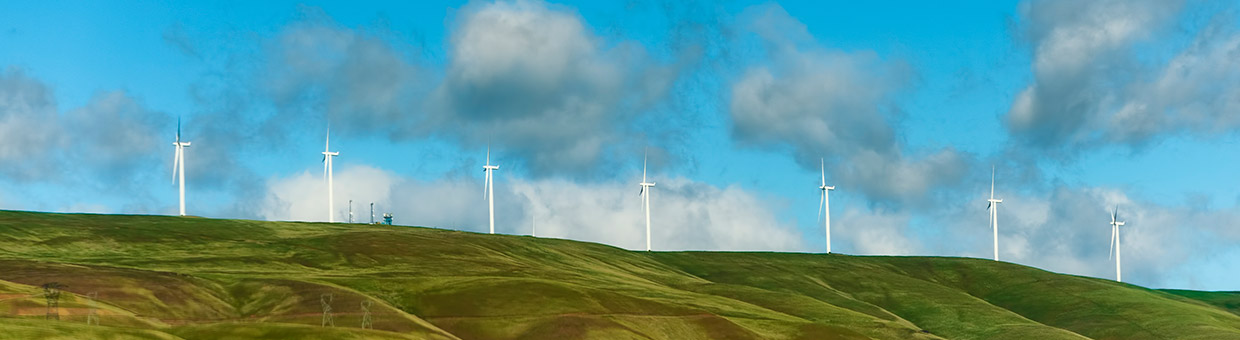
New Study Identifies Risks To 14 Raptor Species From Collisions With Wind Turbines; Five At Risk Of Population Decline
July 15th, 2021
A recent U.S. Geological Survey and Oklahoma State University study shows not all raptor species are equally impacted by collisions with wind turbines. Of 14 species studied, five are at risk of population declines due to collisions.

Whoa! Angler Smashes Washington’s Tiger Trout Record By 6 Pounds With a Massive 24 Pounder
July 15th, 2021
A massive tiger trout pulled from Loon Lake in northeast Washington’s Stevens County in late June has set a new state record, state fishery managers have confirmed.
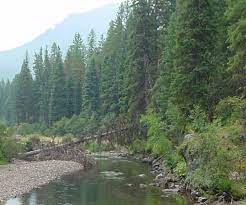
ODFW, Partners Looking To Purchase 15,000 Acres Along NE Oregon’s Minam River For New State Wildlife Area; Salmon, Bull Trout Habitat
July 8th, 2021
The Oregon Department of Fish and Wildlife will host an online public meeting on July 13 at 6:00 p.m., to share information and gather feedback on the potential acquisition of 15,000-acres for a state wildlife area along the Minam River.

IDFG Explains Fish Managers’ Difficult Choices When High Heat Threatens Fish
July 8th, 2021
Idaho Fish and Game initiated the first fish salvage order of 2021 in mid-June due to low water, which is earlier than usual and signals more challenges ahead as summer progresses. With drought in some areas and near-record high temperatures throughout the state in late June, conditions may become hazardous for fish.

ODFW Implements Emergency Angling Restrictions As Salmon, Steelhead, Sturgeon Face Severe Drought
July 8th, 2021
The Oregon Department of Fish and Wildlife is implementing emergency regulations that began July 1 in several angling zones as Oregon faces a severe drought this summer, putting the state’s salmon, steelhead, trout and sturgeon at risk.
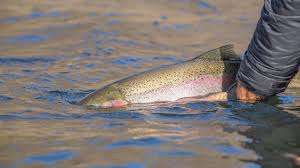
Town Halls Set To Discuss Washington’s Declining Coastal Steelhead Runs In Preparation For Next Season; Follows Early Fishing Closure This Year
July 8th, 2021
With recent and long term declines in coastal steelhead and last season’s early closure to the 2020-2021 coastal steelhead sport fishery, Washington Department of Fish and Wildlife fishery managers are hosting a suite of virtual public town hall meetings this summer and fall to gather feedback from the public as they prepare for next season.
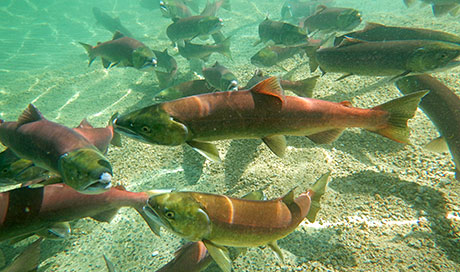
‘Don’t Give Up On This’: At Summit, Tribal Leaders Urge Action On Dams To Give Salmon ‘Right To Exist’
July 7th, 2021
Act now and act together, or watch salmon runs continue to plummet in the Northwest. That was the message Wednesday (July 7) when tribal leaders from throughout the Columbia Basin gathered for a “salmon and orca summit” organized by the Nez Perce Tribe and the Affiliated Tribes of Northwest Indians.
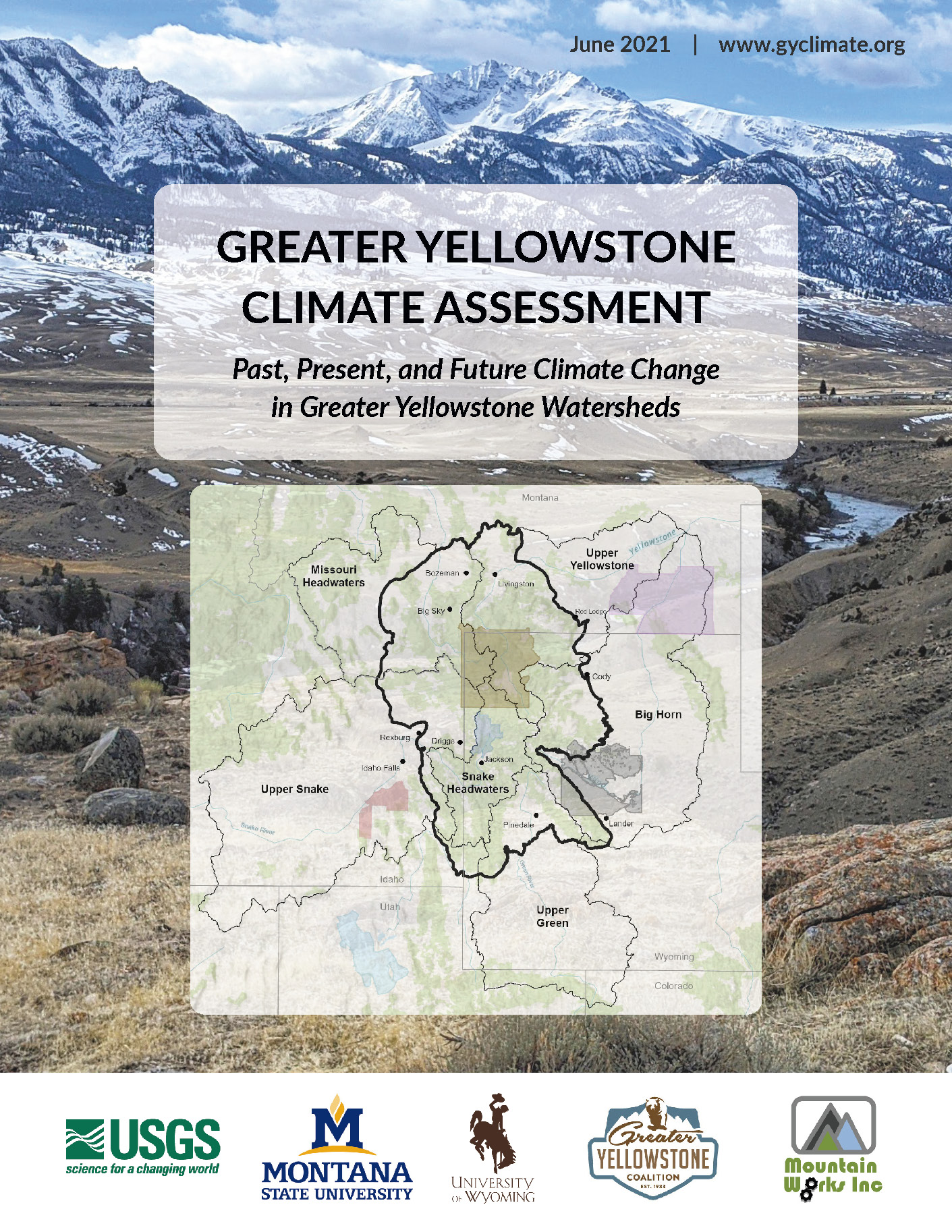
Report Highlights Climate Change Impacts On Greater Yellowstone Area; 40-60 More Days Exceeding 90 Degrees
June 30th, 2021
Temperature significantly increased and snowfall decreased in the iconic Greater Yellowstone Area since 1950 because of climate change, and these trends will likely continue through the rest of the century, according to a climate report published today. The Greater Yellowstone Area includes the headwaters of the Snake River.
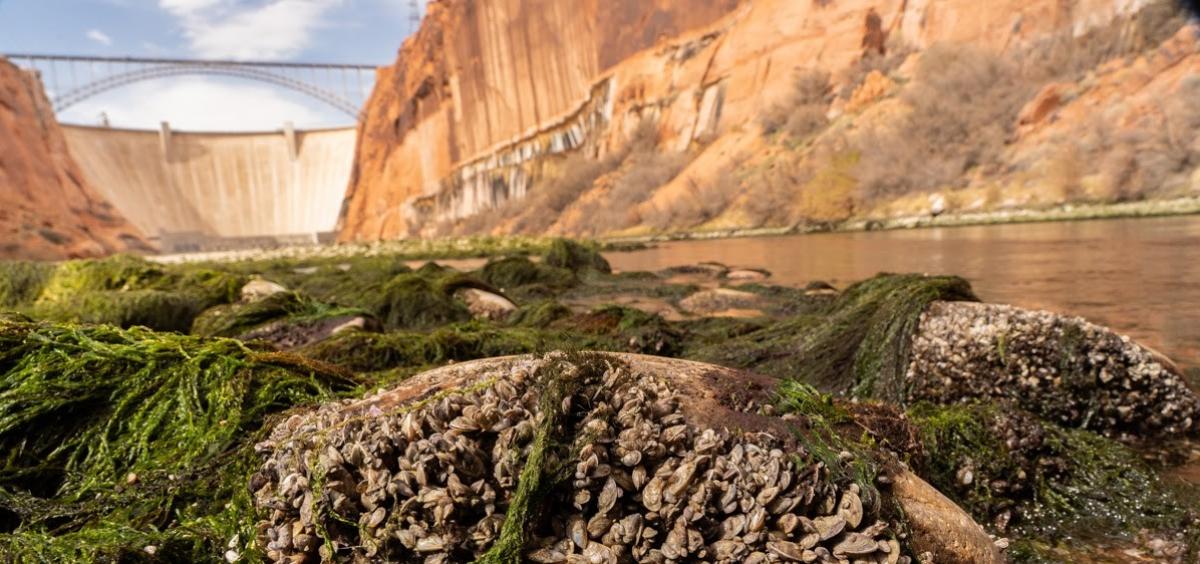
Oregon Researchers’ Grand Canyon Study Looks At Impacts Of ‘Hydropeaking’; Causes ‘Trouble For Ecosystems Downstream’
June 30th, 2021
Researchers from Oregon State University say ecological data gathered during a recent low-flow experiment in the Grand Canyon is a key step toward understanding Colorado River ecosystems as the amount of water in the river continues to decline.
Interior Transfers National Bison Range Lands In Trust To BIA For Salish/Kootenai Tribes Of Flathead Reservation
June 24th, 2021
In an important move to restore Tribal homelands, the Department of the Interior announced this week the transfer of all lands comprising the National Bison Range, approximately 18,800.22 acres, to the Bureau of Indian Affairs to be held in trust for the Confederated Salish and Kootenai Tribes of the Flathead Reservation in Montana. The lands, which are completely within the boundaries of the reservation, were transferred to the Bureau from the U.S. Fish and Wildlife Service.

DOE’s New ‘IrrigationViz’ Tool Aims For Irrigation Modernization; Increase Water Supply, Renewable Energy
June 24th, 2021
The Department of Energy’s Water Power Technologies Office, Idaho National Laboratory and Pacific Northwest National Laboratory have created a new software tool, IrrigationViz, to help analyze the costs and benefits of irrigation modernization.

Giving Returning Salmon A Boost: Emergency, Short-Term Pulse Flows Implemented In California’s Clear Creek To Aid Spring Chinook
June 24th, 2021
The Bureau of Reclamation, NOAA Fisheries, and U.S. Fish and Wildlife Service this week implemented an emergency pulse flow release in northern California from Whiskeytown Dam into Clear Creek to benefit Central Valley spring-run Chinook salmon.
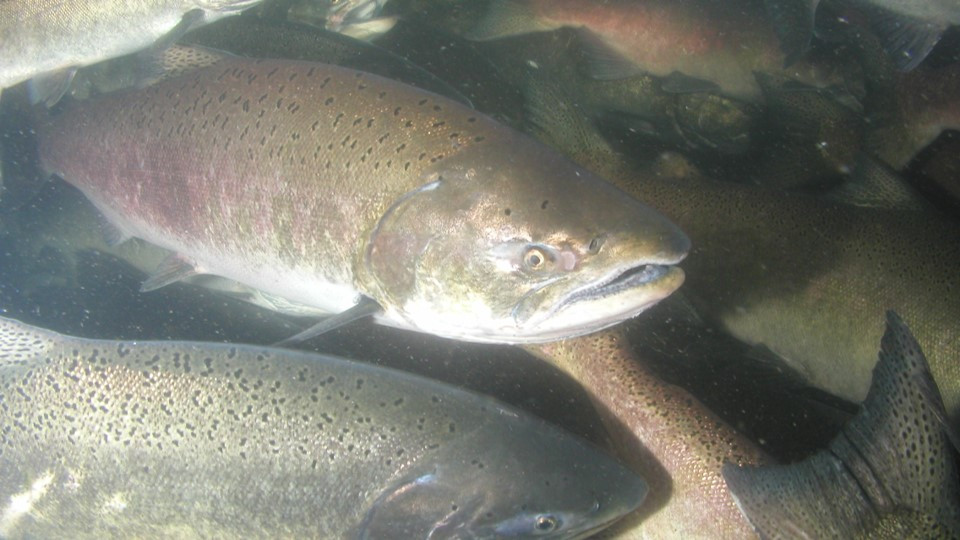
Ocean Salmon Fishing Off Washington Coast Opens; Columbia River Coho Forecasts The Highlight
June 17th, 2021
Sport anglers will have the opportunity to reel in salmon off the Washington coast starting Saturday, June 19 in all four of Washington’s coastal marine areas.
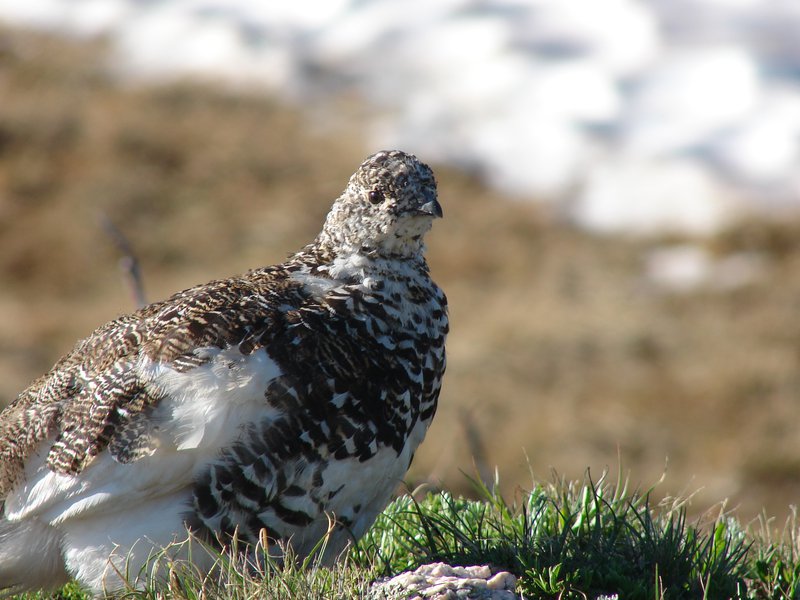
USFWS Proposes To List Mt. Rainier White-Tailed Ptarmigan As Threatened; Range From B.C. To Mt. Adams
June 17th, 2021
In response to a petition and litigation by the Center for Biological Diversity, the U.S. Fish and Wildlife Service proposed this week to protect the Mt. Rainier white-tailed ptarmigan as a threatened species under the Endangered Species Act.
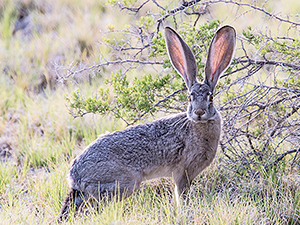
Oregon Sees State’s First Detection Of Deadly Virus In Wild Rabbit
June 17th, 2021
The USDA Foreign Animal Disease Diagnostic Laboratory last week confirmed rabbit hemorrhagic disease virus 2 (RHDV2) in a wild black-tailed jackrabbit collected in Lake County near Christmas Valley, Ore. on May 20, 2021.
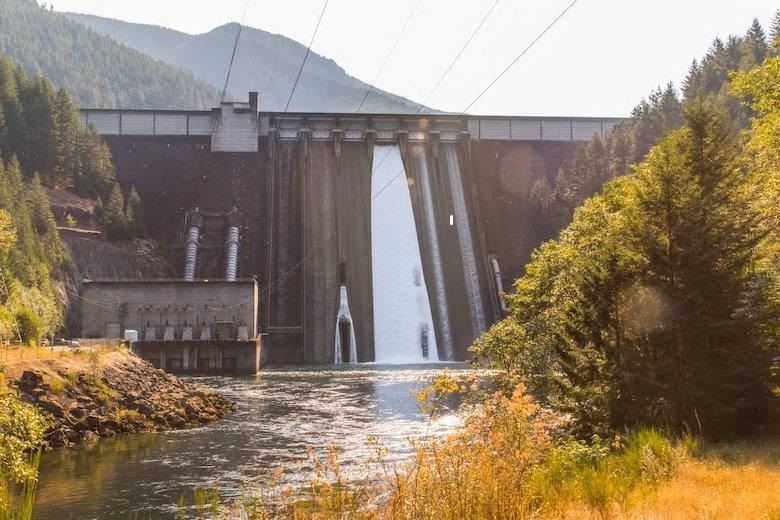
Corps Issues FONSI For Dropping Detroit Dam Pool To Reduce Stress On Spill Gates During Earthquake
June 10th, 2021
The U.S. Army Corps of Engineers, Portland District has finalized a Finding of No Significant Impact for the Environmental Assessment of the reservoir pool reduction at Willamette Valley’s Detroit Dam in response to a seismic hazard analysis last year.
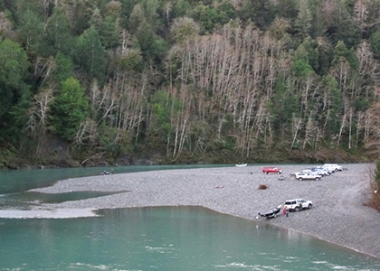
Due To Low Forecasted Returns, ODFW Restricts Fishing For Wild Chinook Salmon In 10 Southwest Oregon Rivers
June 10th, 2021
The Oregon Department of Fish and Wildlife is enacting temporary restrictions on coastal wild adult Chinook salmon harvest in the Southwest Zone due to low forecasted returns.
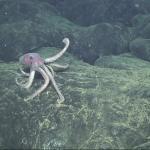
Oregon State University Selected To Lead NOAA Institute Focused On Marine Research, Up To $37 Million In Funding
June 10th, 2021
Oregon State University has been selected to host a National Oceanic and Atmospheric Administration institute focused on collaborative study of the rapidly changing ocean and expanded demands on its use.
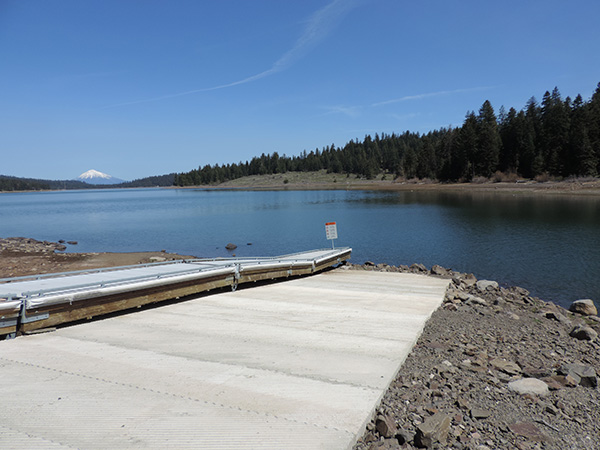
ODFW Getting Ready For Drought Impacts On Streams, Fishing; May Need Emergency Actions To Protect Native Fish
June 3rd, 2021
March and April of 2021 in Oregon were among the driest spring months since the 1890s. Many streams are already at 25 percent of the flow that is typical for this time of year, with flows usually seen in early summer observed in April on some southern Oregon streams.
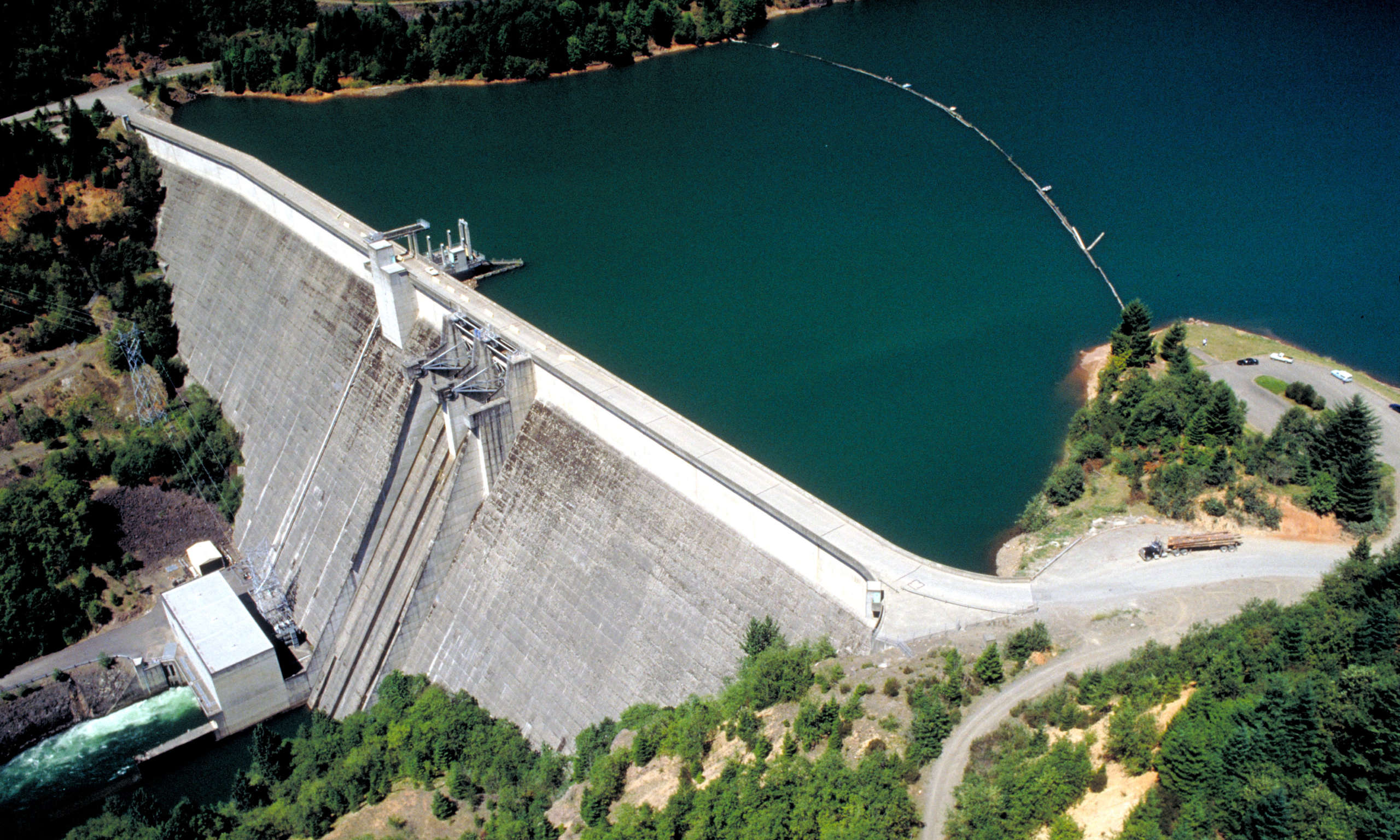
WSU Study Shows Greenhouse Gas Emissions From Reservoirs Higher Than Previously Thought
June 3rd, 2021
A new study shows per-area greenhouse gas emissions from the world’s water reservoirs are around 29% higher than suggested by previous studies, but that practical measures could be taken to help reduce that impact.

Yakama Nation Project Rescues, Rears Stranded Bull Trout In Low Water, Re-Introduces To Quality Habitat
June 3rd, 2021
In an effort to return numbers of bull trout to self-sustainable levels, Yakama Nation Fisheries and their partners last week released 531 bull trout into Kachess Reservoir and 61 bull trout into Gold Creek, a tributary to Keechelus Reservoir.
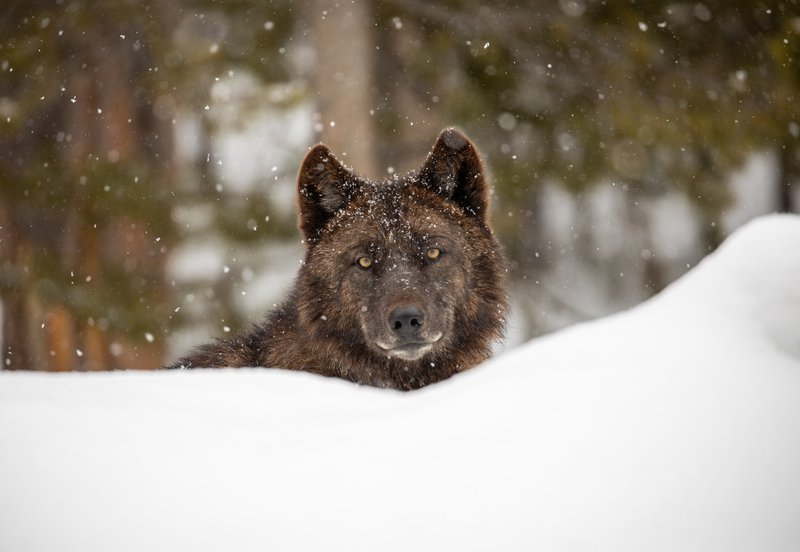
Groups Petition USFWS To Immediately Restore ESA Protections For Northern Rockies Wolves
May 27th, 2021
The Center for Biological Diversity, the Humane Society of the United States, Humane Society Legislative Fund and Sierra Club this week petitioned the U.S. Fish and Wildlife Service to restore federal protection under the Endangered Species Act to gray wolves, after Idaho and Montana passed legislation aimed at reducing wolf populations in those states.

Research Says New High-Tech Recreational Fishing Equipment May Pose Risk To Fisheries; Managers Should Assess Impacts
May 27th, 2021
New developments in recreational fishing technology–from the use of aerial drones and social media scouting reports to advances in hook design–are creating challenges for fisheries management and effective policy making, according to a new study co-authored by University of Massachusetts Amherst researcher Andy Danylchuk.
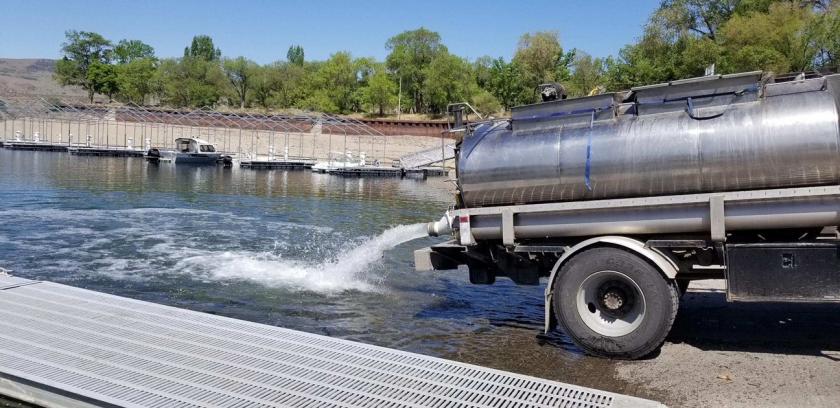
Hundreds Of Thousands Of Rainbow Trout Released Into Lake Roosevelt; Destination Fishery Mitigation For Loss Of Salmon
May 20th, 2021
Hundreds of thousands of rainbow trout will be released into Lake Roosevelt from net pens and fish hatcheries in northeast Washington over the next two weeks.

Montana Wants Help From Public In Reporting Snapping Turtle Sightings West Of Divide
May 20th, 2021
Montana Fish, Wildlife and Parks is asking for help from the public in reporting snapping turtle sightings in west-central Montana.
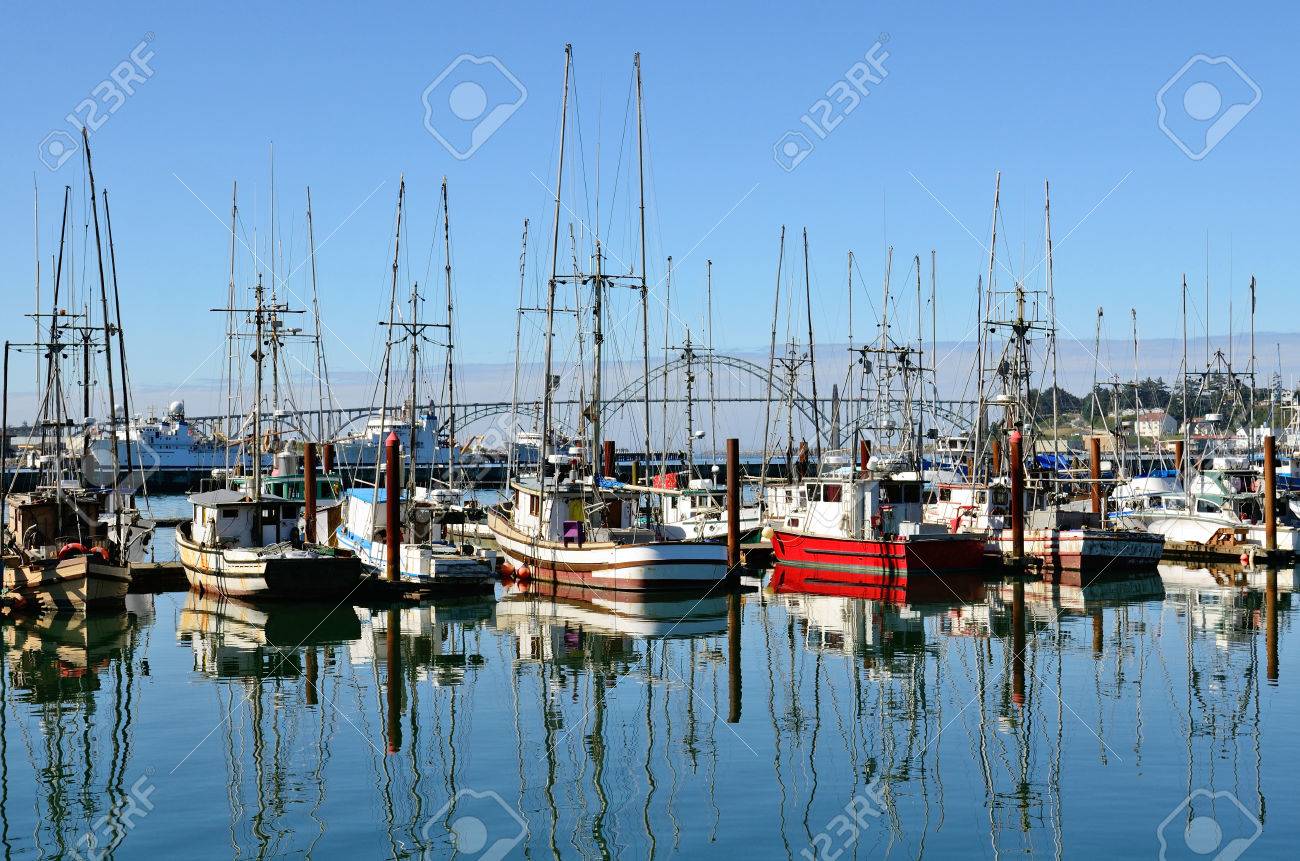
NOAA Releases Two Reports: Status Of The Stocks 2020, Fisheries Of The United States 2019
May 20th, 2021
NOAA Fisheries this week announced the release of two new reports: the Annual Report to Congress on the Status of U.S. Fisheries and the 2019 Fisheries of the United States Report. The agency says these reports “highlight the continued rebuilding and recovery of U.S. fisheries and the broad economic impact of commercial and recreational fisheries on the U.S. economy.”
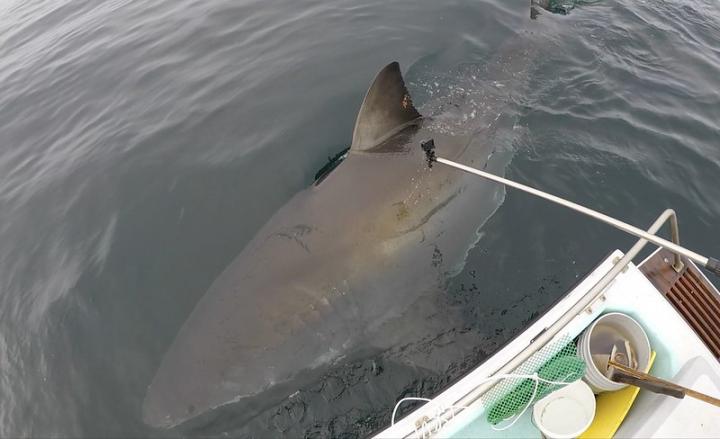
8 Years Of Counting Great White Sharks; West Coast Numbers About 300, Travel From Mexico To Washington State
May 20th, 2021
The population of white sharks that call the Central California coast their primary home is holding steady at about 300 animals and shows some signs of growth, a new long-term study of the species has shown.
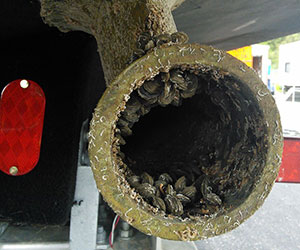
With Northwest Boating Season Just Beginning WDFW Already Finds 11 Watercraft Fouled With Invasive Mussels
May 13th, 2021
Only five months into the year, and Washington Department of Fish and Wildlife aquatic invasive watercraft inspection stations staff have already inspected over 5,500 watercraft; 11 of which were fouled with invasive zebra and/or quagga mussels.
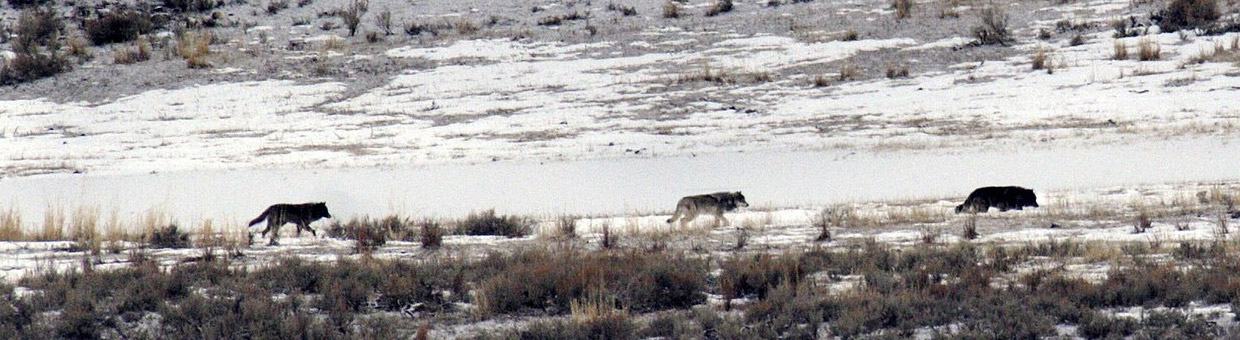
115 Wolf Scientists, Experts Urge Biden Administration To Restore ESA Protections For Wolves, Say Best Science Not Used To De-List
May 13th, 2021
Days after Idaho Gov. Brad Little signed a bill allowing the state to kill up to 90 percent of the state’s wolves, more than 100 scientists, several from the Northwest, this week called upon Interior Secretary Deb Haaland and the U.S. Fish and Wildlife Service to reinstate federal protections for gray wolves under the Endangered Species Act.
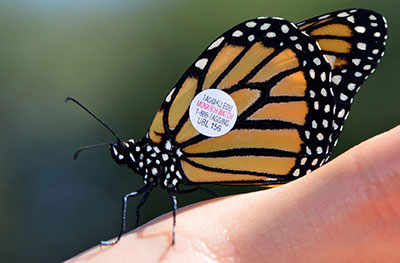
WSU Researcher Optimistic Monarch Butterfly, Key Pollinator, Adapting To Climate Change, May Avoid Extinction
May 13th, 2021
A count of the Western Monarch butterfly population last winter saw a staggering drop in numbers, but there are hopeful signs the beautiful pollinators are adapting to a changing climate and ecology.
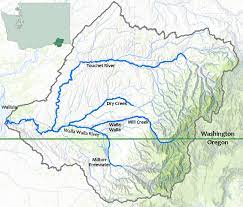
Draft Walla Walla Water 2050 Strategic Plan Addressing Declining Streamflows, Aquifers Out For Comment
May 13th, 2021
Communities, industries, farms and endangered fish in both Washington and Oregon depend on the Walla Walla River Basin where streamflows and aquifers have steadily declined, despite a decades-long effort to find lasting water solutions in the region.
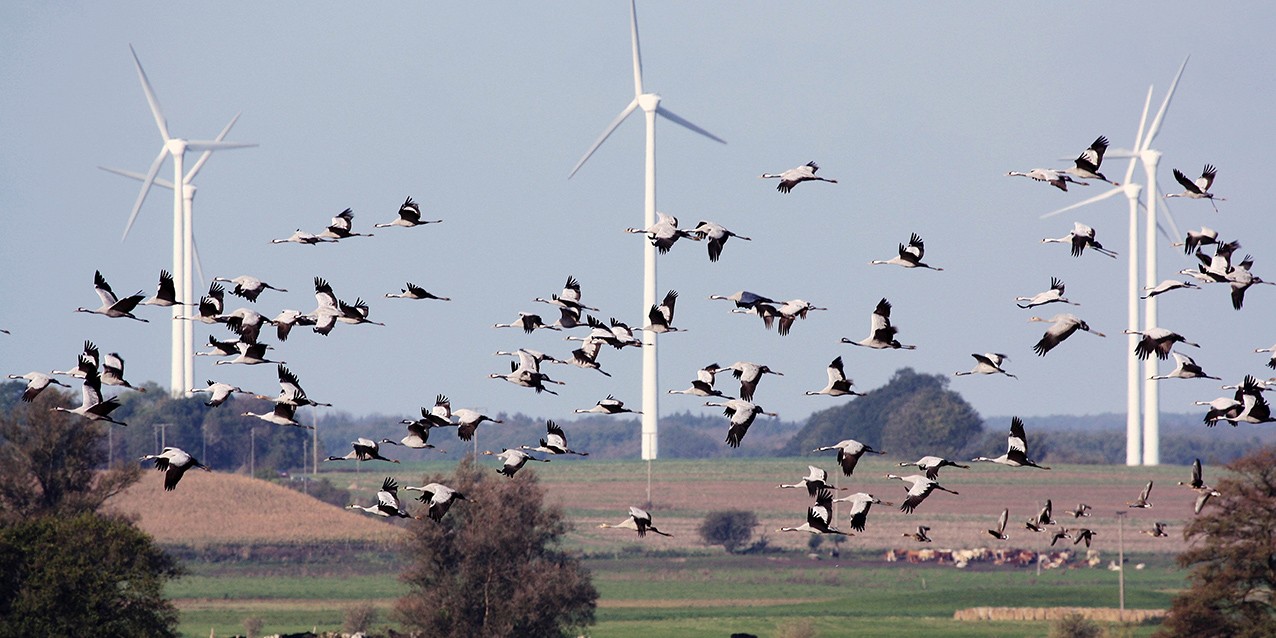
Interior Moves To Revoke Trump Administration’s Changes To Migratory Bird Treaty Incidental Take Interpretation
May 6th, 2021
The U.S. Fish and Wildlife Service announced a proposed rule to revoke the January 7, 2021, final regulation that limited the scope of the Migratory Bird Treaty Act. Significant concerns about the interpretation of the MBTA have been raised by the public, legal challenges in court and from the international treaty partners, says the agency.
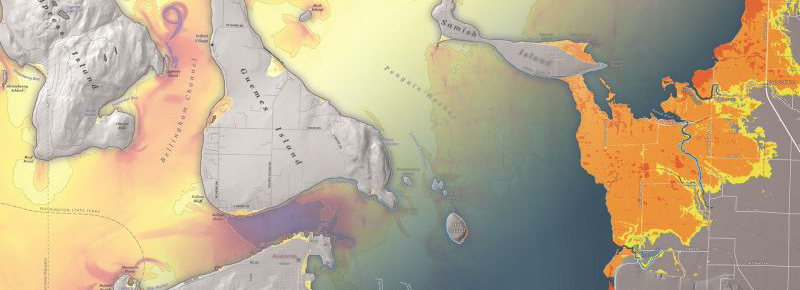
New Study Shows Impacts Of Cascadia Tsunami In Puget Sound: Reach Whidbey Island In One Hour, 30 Minutes After Quake
May 6th, 2021
The Washington State Department of Natural Resources has released a new study showing, for the first time, the impacts that a magnitude 9.0 earthquake on the Cascadia subduction zone would have on Puget Sound communities.
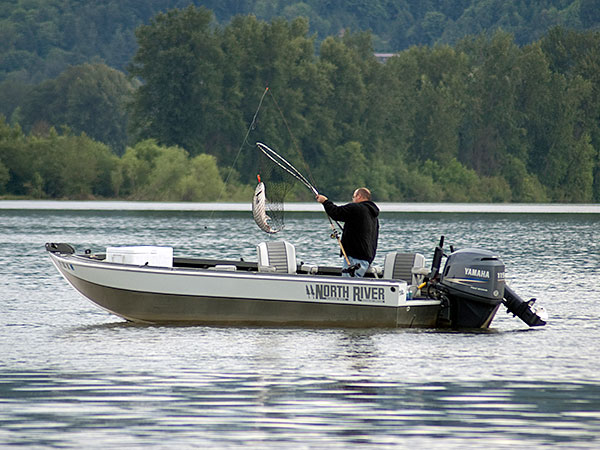
Oregon, Washington Announce Columbia River Fishing Seasons, Regulations For Summer Chinook, Fall Chinook, Steelhead; Reduced Bag Limits
April 29th, 2021
Oregon and Washington fishery managers recently announced seasons and regulations for 2021 Columbia River summer and fall salmon and steelhead fisheries.
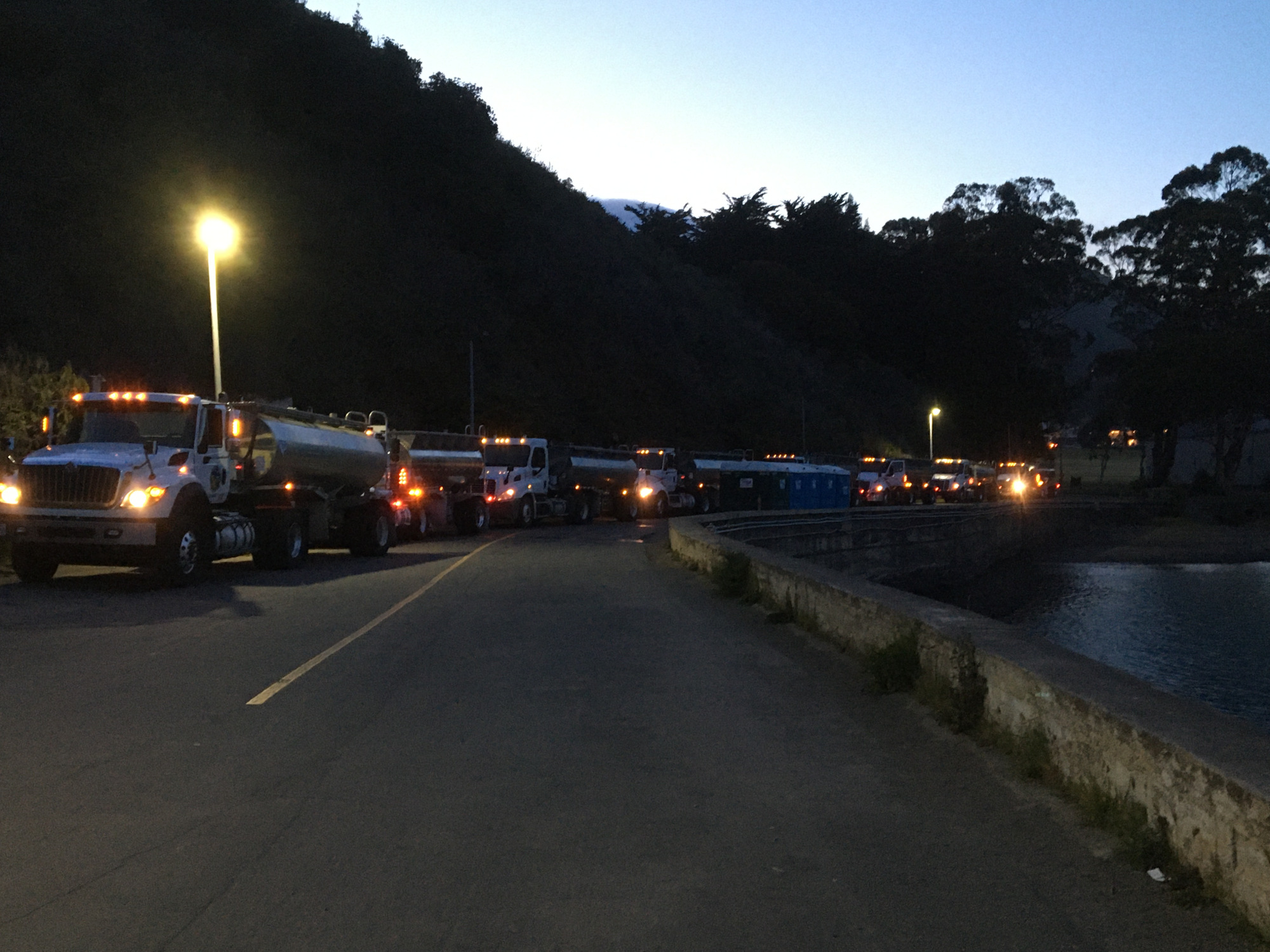
Low Flows, High Temperatures Prompt California To Truck 17 Million Salmon Smolts From Central Valley To Coast
April 29th, 2021
The California Department of Fish and Wildlife is trucking millions of hatchery-raised juvenile Central Valley fall-run chinook salmon this spring to San Pablo Bay, San Francisco Bay and seaside net pens due to projected poor river conditions in the Central Valley. The massive trucking operation is designed to ensure the highest level of survival for the young salmon on their hazardous journey to the Pacific Ocean.
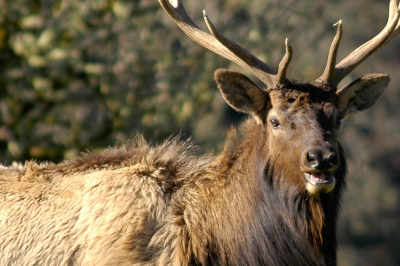
Introduced ‘Recovering America’s Wildlife Act’ Would Bring Millions To State Fish/Wildlife Agencies For Conservation
April 29th, 2021
What Oregon Department of Fish and Wildlife is calling “a major new piece of legislation,” co-sponsored by Oregon U.S. Rep. Peter DeFazio, was introduced in the House of Representatives last week. The Recovering America’s Wildlife Act of 2021 (RAWA) would provide new resources for the conservation of Oregon’s at-risk fish and wildlife species, says the agency.

Bonneville Power Names New Chief Operating Officer, Responsible For Environment, Fish And Wildlife
April 29th, 2021
The Bonneville Power Administration has chosen Joel Cook to be its new chief operating officer. As COO, Cook will be responsible for the agency’s Power and Transmission services, as well as its Environment, Fish and Wildlife and Customer Support Services organizations.
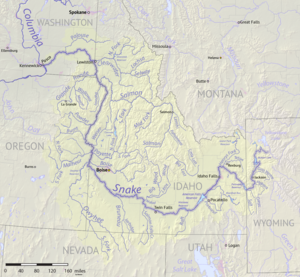
American Rivers, Citing Four Lower Snake Dams, Names Snake River Nation’s Most Endangered River
April 22nd, 2021
The national conservation group American Rivers, in its annual most endangered rivers report, has placed the Snake River in Oregon, Washington and Idaho at the top of the list. The main threat, the group says, are the four federal dams on the lower Snake River.

Biden Administration Resumes White House Council On Native American Affairs Established In 2013
April 22nd, 2021
On April 23, Secretary of the Interior Deb Haaland and Domestic Policy Advisor Susan Rice will convene the first White House Council on Native American Affairs meeting of the Biden-Harris administration. Secretary Haaland will serve as the Council’s Chair.
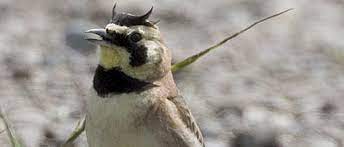
USFWS Seeks Public Comment On Streaked Horned Lark ESA Listing; Small PNW Bird Gone From Most Of Its Historical Range
April 22nd, 2021
After reviewing the best available scientific and commercial information, the U.S. Fish and Wildlife Service is proposing to reaffirm the listing of the Pacific Northwest’s streaked horned lark as threatened under the Endangered Species Act. The Service is also proposing a revised special rule under section 4(d) of the ESA to provide for the conservation needs of the species. The announcement opens a 60-day public comment period.
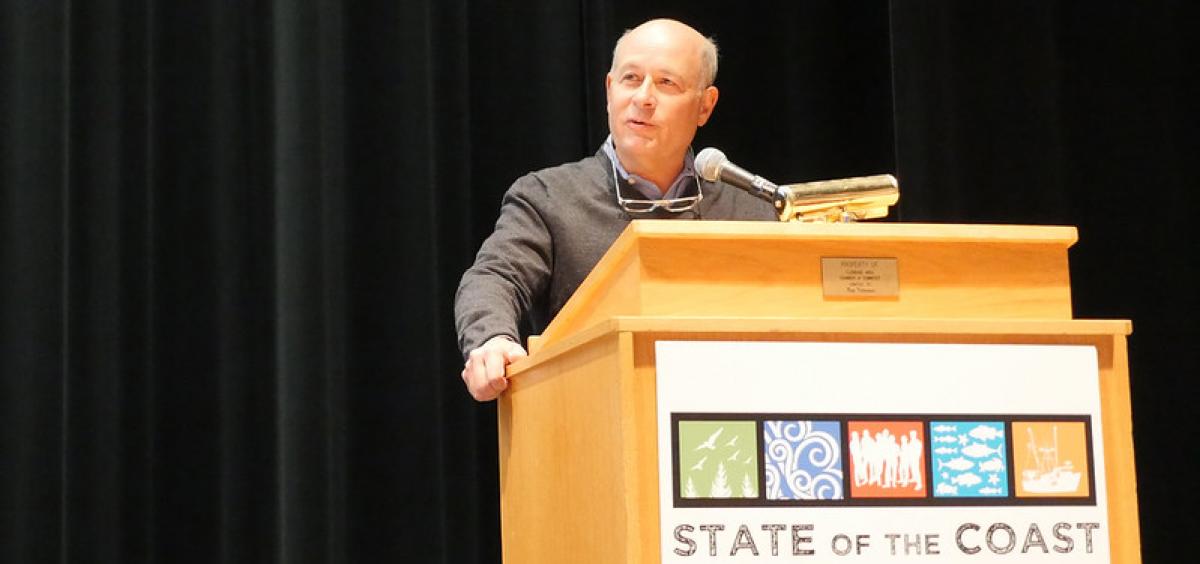
Biden Taps Oregon State Professor To Lead NOAA, Montanan To Head Bureau Of Land Management
April 22nd, 2021
President Joe Biden Thursday nominated an Oregon State University professor and a former chief of staff to former Montana Gov. Steve Bullock to lead two key agencies – the National Oceanic and Atmospheric Administration and the Bureau of Land Management.
Inslee Signs Bill Placing Statue Of Tribal Leader Billy Frank Jr. In National Statuary Hall, Replacing Marcus Whitman
April 15th, 2021
Washington Gov. Jay Inslee this week signed HB 1372, which will place a statue of tribal leader Billy Frank Jr. in the National Statuary Hall. Inslee was joined by members of Frank’s family, tribal and community members, Lt. Gov. Denny Heck and Rep. Debra Lekanoff when he signed the bill in a ceremony at Wa He Lut Indian School in Olympia.
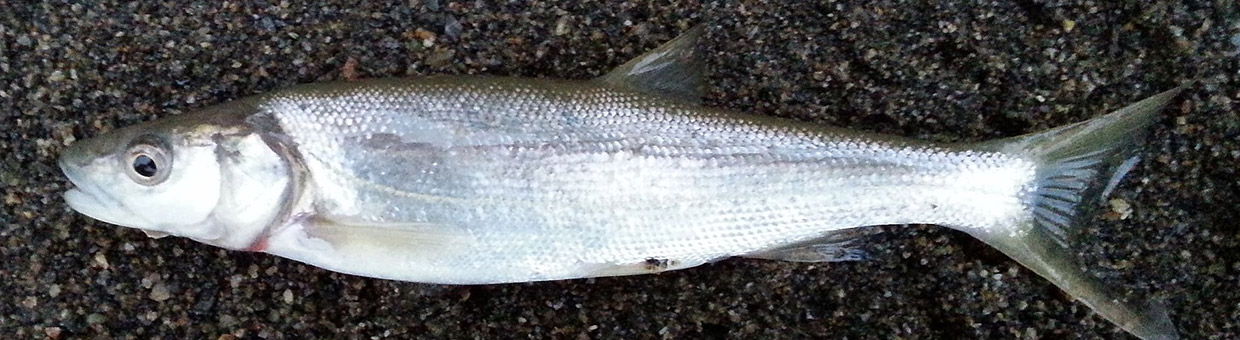
Pikeminnow Reward Fishery Gets Early Opening Trial In McNary Pool; Targets Congregation At Yakima River Mouth
April 15th, 2021
Registered anglers fishing near the Tri-Cities, Washington, can fish and turn in northern pikeminnow beginning April 19 as part of an early opening trial of the 2021 Northern Pikeminnow Sport Reward Fishery.
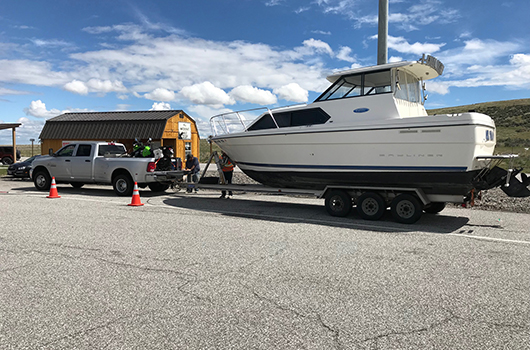
More Mussel-Fouled Boats Intercepted In Montana: Boaters From Infested Lake Mohave, Lake Powell, Lake Havasu
April 15th, 2021
Montana’s watercraft inspectors have intercepted six mussel-fouled boats; the latest boat was stopped at the Anaconda watercraft inspection station on Saturday, April 10.

New Idaho Steelhead Record From South Fork Clearwater; Over 35 Inches Very Rare
April 15th, 2021
Scott Turner of Boise, Idaho set a new catch-and-release state record for steelhead. Turner landed the monster sea-going trout on April 11 on the South Fork Clearwater. The fish measured 39.25 inches long — beating Samuel Brumbaugh’s previously held record by 1.25 inches.
Report: U.S. Power Sector Halfway To Zero Carbon Emissions; More Large Reductions Possible
April 15th, 2021
Concerns about climate change are driving a growing number of states, utilities, and corporations to set the goal of zeroing out power-sector carbon emissions. To date 17 states plus Washington, D.C. and Puerto Rico have adopted laws or executive orders to achieve 100% carbon-free electricity in the next couple of decades.
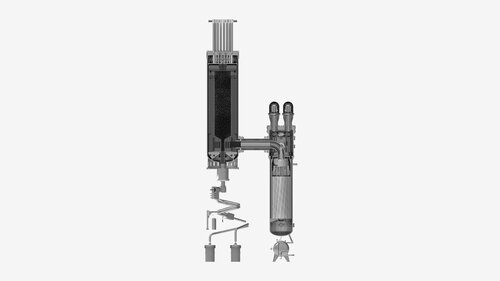
Energy Northwest, Grant PUD, X-Energy Form Partnership To Build Nation’s First Advanced Nuclear Reactor
April 15th, 2021
This month Energy Northwest, Grant County Public Utility District and X-energy, LLC signed a memorandum of understanding establishing a mutual partnership to support the development and commercial demonstration of the country’s first advanced nuclear reactor.
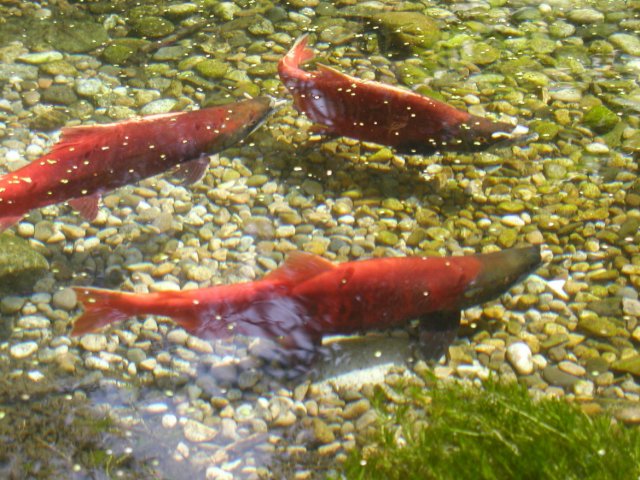
Land-Locked: Though Salmon Harvest Opportunities Limited In Idaho This Year, Kokanee Estimates At Dworshak Reservoir Up 75 Percent
April 9th, 2021
Although harvest opportunities for chinook salmon will be limited this year in Idaho, that doesn’t mean you can’t put some fresh salmon on the table.
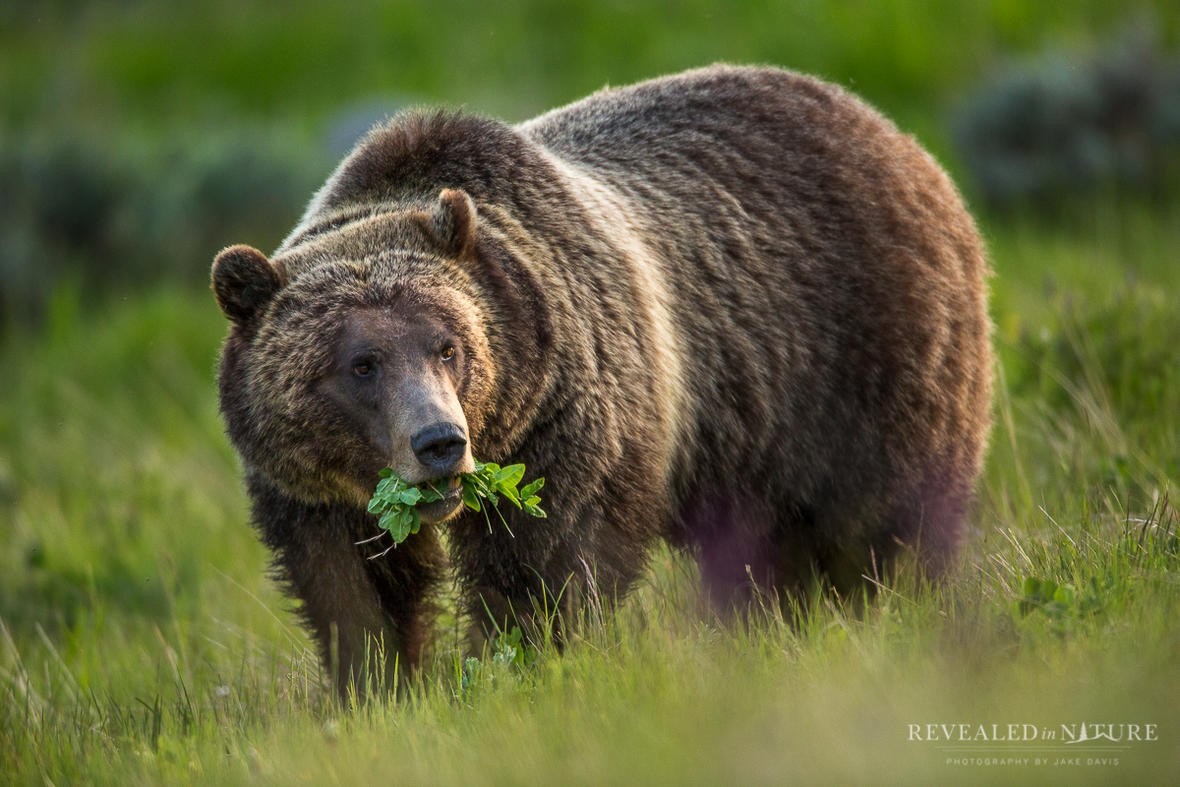
Five-Year Status Review: Grizzly Bears To Retain Threatened Status Under ESA, Obstacles Remain For Full Recovery
April 9th, 2021
The U.S. Fish and Wildlife Service is recommending no change to the current listed status of the grizzly bear in the lower-48 states as threatened under the Endangered Species Act following the completion of a five-year status review. The agency says the recommendation follows a thorough review of the best available science, informed by an independently peer-reviewed species status assessment.
Economic Costs Of Aquatic Invasive Species: Global Study Shows 10 Times Less Spent On Prevention Than Damages
April 9th, 2021
The global movement of goods and people, in its modern form, has many unwanted side effects. One of these is that animal and plant species travel around the world with it.
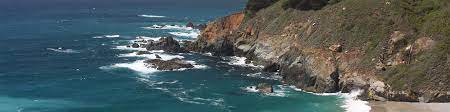
California Current: West Coast Waters Show Evidence Of Improved Productivity
April 2nd, 2021
A new report provides a snapshot of the health of the California Current ecosystem. With the system shifting from a warmer El Niño to a cooler La Niña-influenced system, the ecosystem may become more productive.
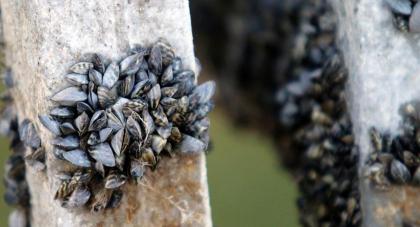
Watercraft Inspections Open In Montana, Already Found Mussel-Infested Boat From Wisconsin Headed To Sandpoint
April 1st, 2021
Montana’s first watercraft inspection stations are opening for the 2021 season. Inspection stations near Dillon and Ravalli opened earlier this month. The Anaconda station opened Saturday, March 20, and intercepted the first mussel fouled boat of the year.
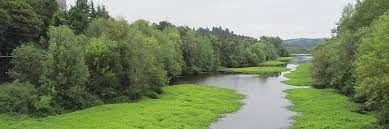
Fish, Sediment, Dioxin Study Completed For Salem’s Willamette Slough; State Maintains Fish Advisory for Willamette River from Eugene to Portland
April 1st, 2021
Fish in Willamette Slough have similar levels of dioxins in their tissue as those in other parts of the Willamette River, according to a study approved by the Oregon Department of Environmental Quality.
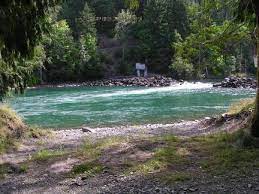
Elwha River Fishing Closures Extended For Fish Recovery; Further Recolonization, Spatial Expansion Needed
April 1st, 2021
The Lower Elwha Klallam Tribe, Olympic National Park, and the Washington Department of Fish and Wildlife announced an extension to continue recreational and commercial fishing closures for the Elwha River and its tributaries through July 1, 2022.
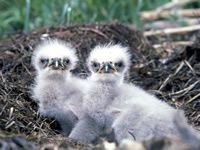
USFWS Bald Eagle Report: From 417 Nesting Pairs In 1963 To 71,400 Pairs Today
April 1st, 2021
Populations of the American bald eagle — the national symbol of the United States — have quadrupled since 2009, according to a new report by the U.S. Fish and Wildlife Service.

OSU’s Lubchenco Tapped To Lead White House’s Climate, Environmental Science Efforts
April 1st, 2021
Oregon State University Distinguished Professor Jane Lubchenco will lead climate and environmental science efforts in the White House as the new deputy director of climate and environment in the White House Office of Science and Technology Policy.
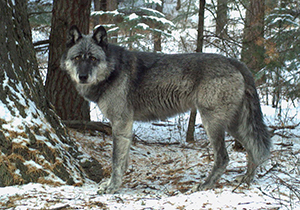
Collared Gray Wolf From Mt. Hood Area Moving Deeper Into California, Last Reading Fresno County
April 1st, 2021
The GPS-collared gray wolf known as OR-93 continues to travel farther south in California than the collared wolves that have preceded him.
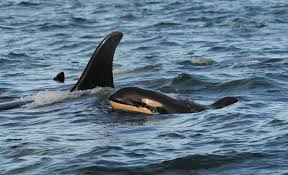
Save The Whales: Researchers Study Public Comments, Emotional Sentiments On Orca Conservation,‘Emotions Intertwined With Decision-Making’
March 18th, 2021
Oregon State University researchers analyzed more than 17,000 public comments focused on orca conservation in the state of Washington and found that the most common emotional sentiments were trust, anticipation and fear.
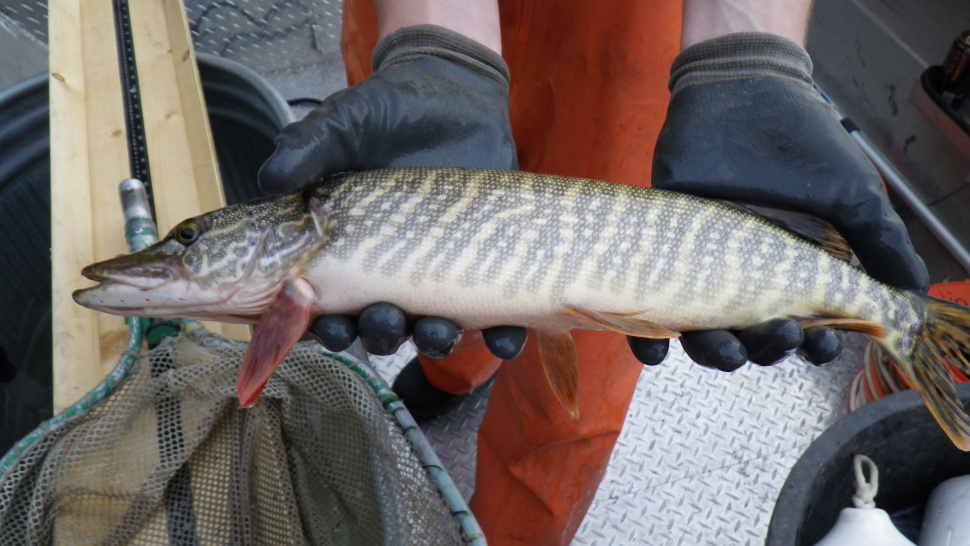
Pike Removal Resumes In Lake Coeur D’Alene To Reduce Predation On Native Cutthroat; Past Efforts Showing Positive Results
March 11th, 2021
Biologists with the Coeur d’Alene Tribe will resume gill netting efforts this spring to reduce northern pike numbers in Windy Bay, Benewah, Chatcolet, Round, and Hidden Lakes. In cooperation with the Idaho Fish and Game, the project aims to reduce pike predation on native, lake-run cutthroat trout in select areas of Lake Coeur d’Alene.
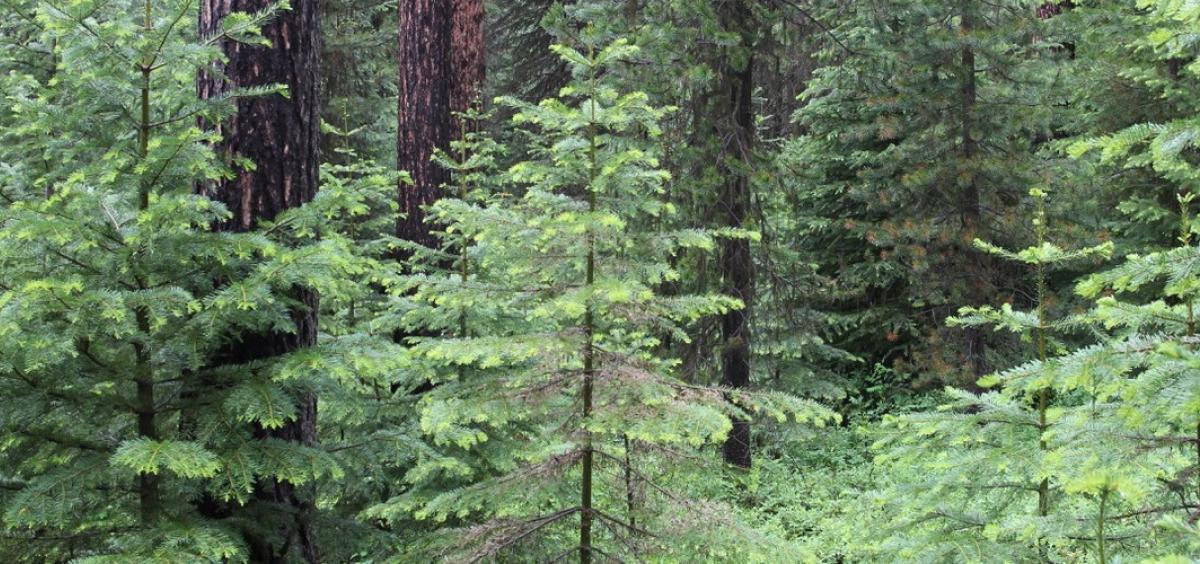
Study: Diameter Limits On Tree Cutting Hampered Eastern Oregon Forest Restoration; New Rule Allows Cutting Large Firs Killing Ponderosa Old Growth
March 11th, 2021
A quarter-century-old harvesting restriction intended to last one year has served as an obstacle to returning eastern Oregon national forests to the healthier, more fire-resilient conditions they embodied in the late 1800s, research by the Oregon State University College of Forestry shows.

FERC Issues OSU License For Nation’s First Wave Energy Testing Facility
March 11th, 2021
The Federal Energy Regulatory Commission has issued Oregon State University a license to build and operate the nation’s first pre-permitted wave energy testing facility, culminating an unprecedented regulatory process that spanned nearly 10 years.
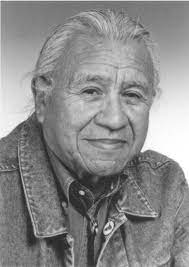
Western Washington Tribes Urge State Senate Approval To Replace Marcus Whitman Statue With Billy Frank Jr. In U.S. Capitol
March 11th, 2021
Treaty Indian tribes in western Washington strongly support state legislation passed by the state House of Representatives this week that calls for placing a statue of the late natural resources and civil rights champion Billy Frank Jr. in the National Statuary Hall in the nation’s Capitol Building. The statue would replace the Marcus Whitman likeness.
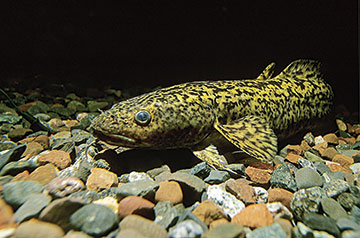
Initial Surveys Show Angler Success For Kootenai River Burbot Higher Than 2020, 2019 (When Fishery Reopened)
March 4th, 2021
Initial surveys and reports suggest that angler success, satisfaction, and harvest of Kootenai River burbot in 2021 are higher than what was observed in 2019 and 2020.
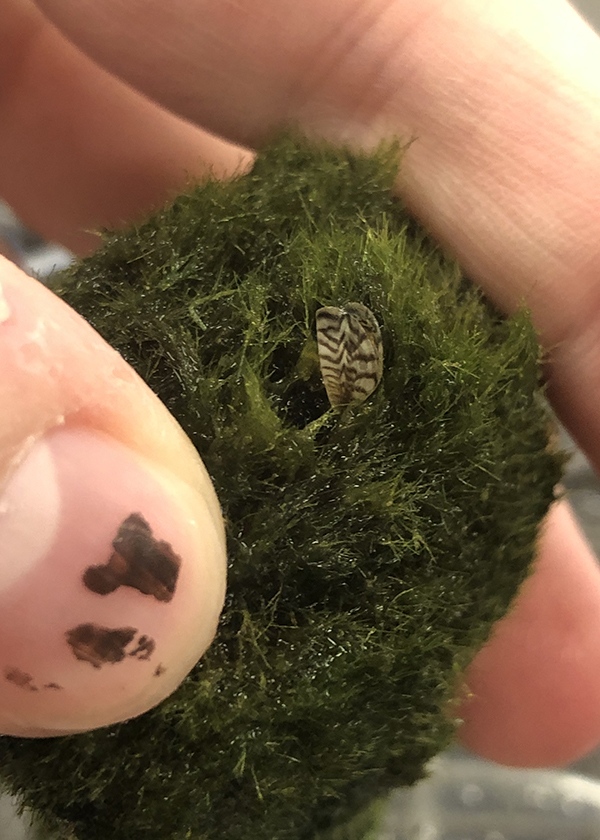
Moss Plant For Aquariums Sold At Northwest Stores Carrying Live Zebra Mussels; Wildlife Agencies Urge Removal From Shelves
March 4th, 2021
Wildlife agencies are urging pet and aquarium stores to remove “Betta Buddy Marimo Ball,” a moss plant for aquariums, after invasive zebra mussels were discovered inside the product.

Columbia/Snake River Locks Close For Annual Maintenance; Oregon Delegation Seeks Annual Federal Funding For Coast, Columbia River Maritime Infrastructure
March 4th, 2021
The U.S. Army Corps of Engineers’ Portland and Walla Walla districts will close all Corps navigation locks on the Columbia and Snake rivers March 6 at 6 a.m. for regularly-scheduled annual inspections, preventative maintenance and repairs.
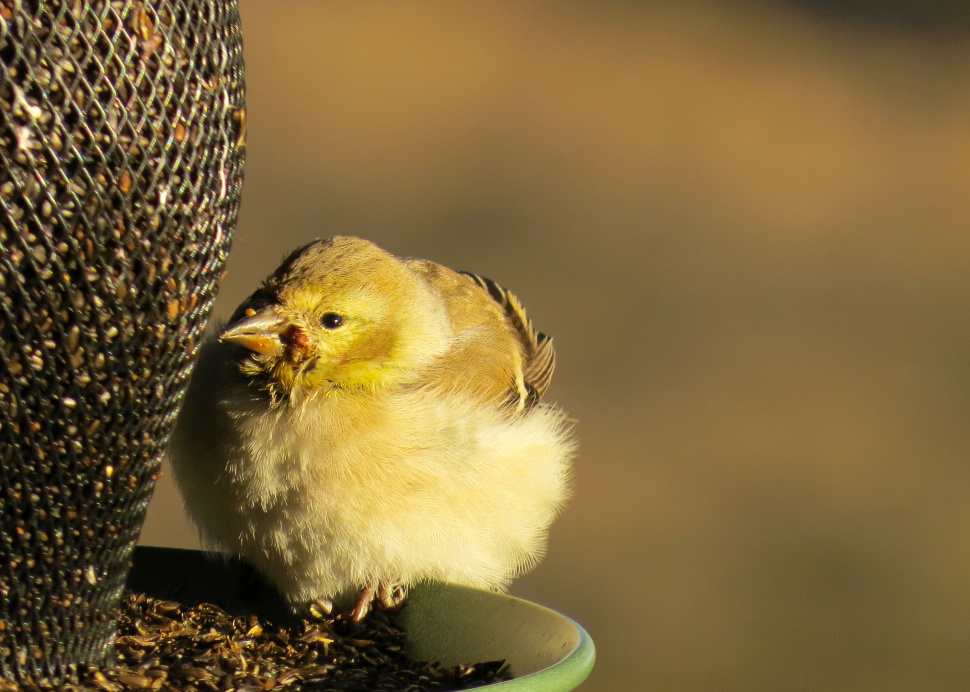
Salmonellosis Outbreak Hits Northwest Songbirds; Take Down Those Backyard Bird Feeders
March 4th, 2021
Continued reports of sick or dead birds at backyard feeders across Northwest states are prompting fish and wildlife agencies to recommend people leave their wild bird feeders down, or take extra steps to maintain them.
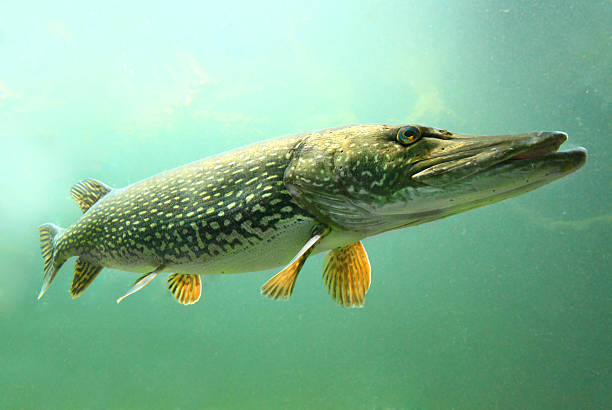
Inevitable Northern Pike Will Hit Salmon Country: Those On Front Lines Say Funding, Coordinated Plan Needed Now
February 26th, 2021
The problem of invasive Northern Pike in the Columbia River Basin is one of those problems that is someone else’s until it becomes yours.

SmartPass: Oregon Using Cameras, Artificial Intelligence To Capture Fisheries Effort To Improve Management
February 26th, 2021
The Environmental Defense Fund is launching a new platform today to improve data collection and management of fishing in the ocean using smart cameras coupled with artificial intelligence to get an accurate assessment of the number of vessels fishing in a particular region.
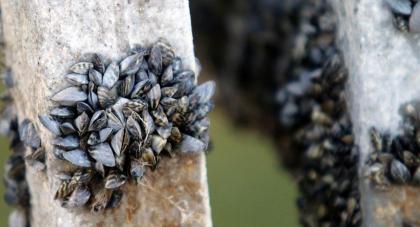
Washington Sets Up New Inspection Station On I-90 To Catch Infested Boats Headed East To Columbia River; Oregon Finds Zebra Mussels On Boat
February 26th, 2021
With Feb. 22-28 declared Invasive Species Awareness Week by Washington Gov. Jay Inslee, the Washington Department of Fish and Wildlife announced that a new watercraft inspection Station will open near Cle Elum in mid-March.
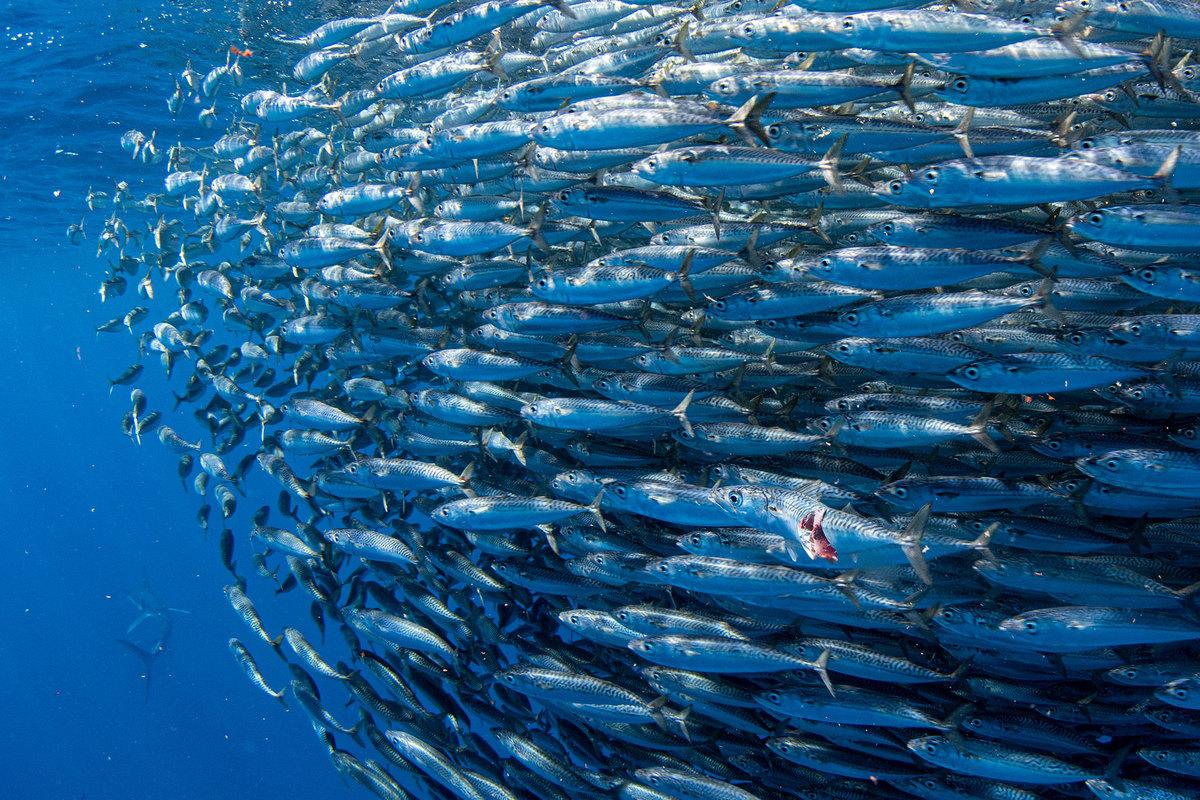
Climate Change Likely To Move California’s Historic Sardine Fishery North Into Oregon, Washington Ports
February 26th, 2021
Pacific sardines are a small but sometimes numerous fish closely intertwined with California’s fishing history. A new study linking climate change and the northern sardine stock fishery shows that they may shift north along the West Coast as the ocean warms.
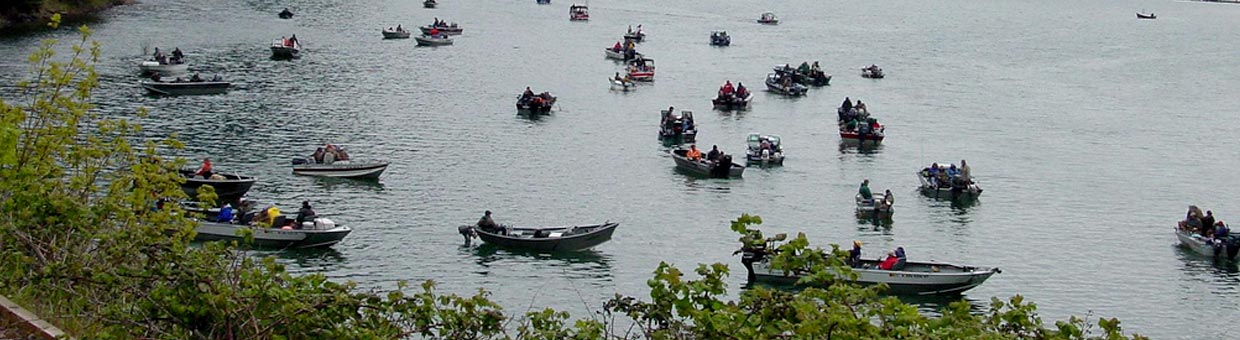
WDFW Seeking Public Participation In Setting 2021 Salmon Fishing Seasons
February 12th, 2021
Washington Department of Fish and Wildlife fishery managers have scheduled a variety of opportunities for the public to participate in setting state-managed salmon fishing seasons for 2021, beginning with an annual salmon forecast meeting on Feb. 26.
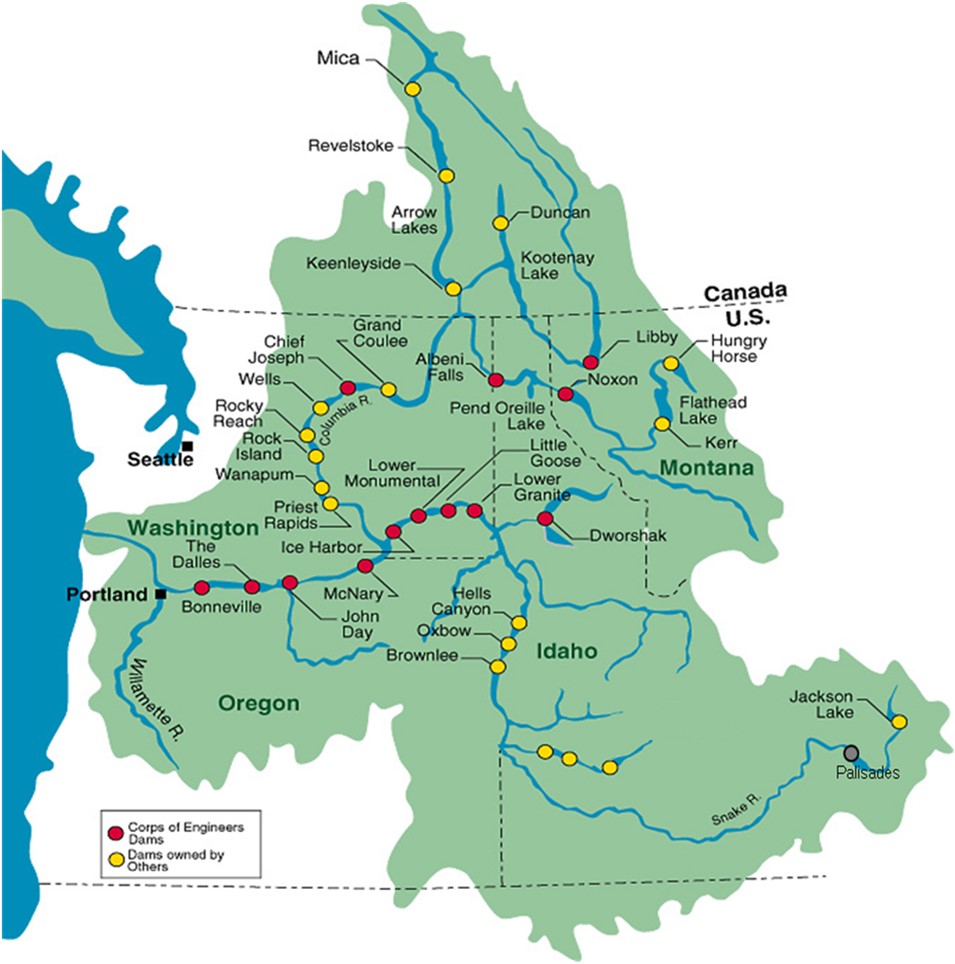
British Columbia Sets Columbia River Treaty Virtual Town Hall
February 12th, 2021
The British Columbia province on Feb. 24 will be hosting a Virtual Town Hall on the Columbia River Treaty.

New Northwest Power And Conservation Council Members For Oregon, Montana
February 12th, 2021
Montana Gov. Greg Gianforte appointed Doug Grob to the Northwest Power and Conservation Council, while changes are also coming to Oregon representation.
Interior Announces Tribal Consultations, March 12 For Alaska, Northwest and Pacific Regions
February 12th, 2021
The Department of the Interior announced this week that it will host initial consultations with Tribal leaders next month.

Epigenetics: Researchers Can Now Use New DNA-Based Technique On Skin Samples To Determine Age, Sex Of Alaska’s Endangered Beluga Whales
February 5th, 2021
Researchers can now determine the age and sex of living beluga whales in Alaska’s Cook Inlet thanks to a new DNA-based technique that uses information from small samples of skin tissue.

Counterintuitive: Covid-19 Lockdowns Temporarily Raised Global Temperatures, Less Aerosols Blocking Sunlight
February 5th, 2021
The lockdowns and reduced societal activity related to the COVID-19 pandemic affected emissions of pollutants in ways that slightly warmed the planet for several months last year, according to new research led by the National Center for Atmospheric Research.
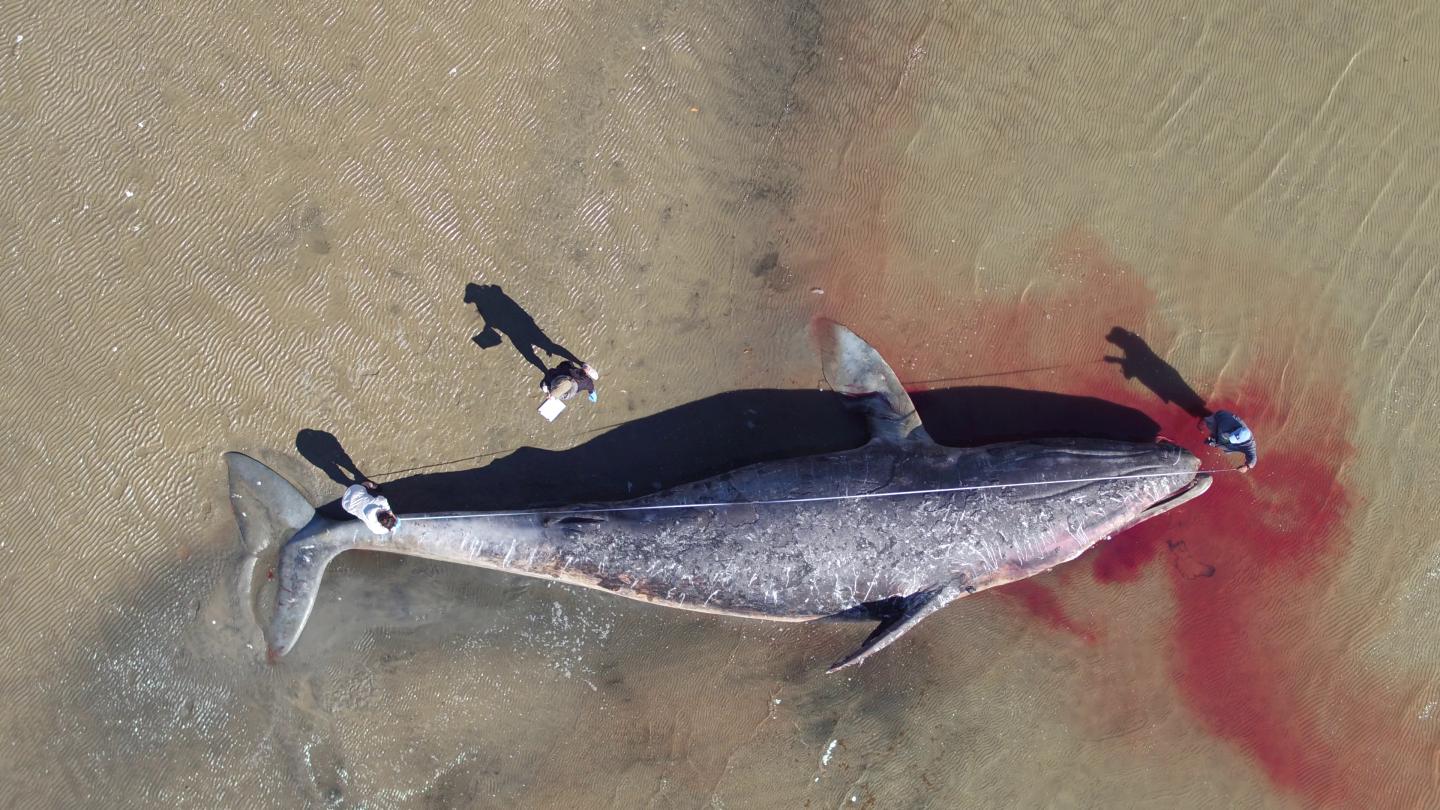
NOAA Fisheries Finds 24 Percent Drop In Gray Whales Population Along West Coast; Similar To Previous Fluctuations
January 29th, 2021
The population of gray whales that migrate along the West Coast has declined about 24 percent since 2016. It now stands at an estimated 20,580 whales, a new population assessment by NOAA Fisheries has found. That is similar to previous fluctuations in the Eastern North Pacific population that has long since recovered from the days of whaling.

Fishing, Hunting License Sales Soar In California As Result Of Covid-19 Pandemic; Physical Outlet, Mental Relief
January 29th, 2021
With more free time on their hands, a growing interest in securing their own food, coupled with the needs for physical outlets and mental relief as a result of the COVID-19 pandemic, more Californians turned to fishing and hunting last year.

Scientists’ Letter To NW Governors: ‘Wild Snake River Salmon, Steelhead Cannot Be Restored With Lower Snake River Dams In Place’
January 15th, 2021
In an open letter to the governors of Washington, Oregon, Idaho, and Montana, published this week, a group of scientists well known by those active in Northwest fisheries conservation contend that research overwhelmingly shows that Snake River wild salmon and steelhead populations cannot be recovered without the removal of four dams on the lower river.
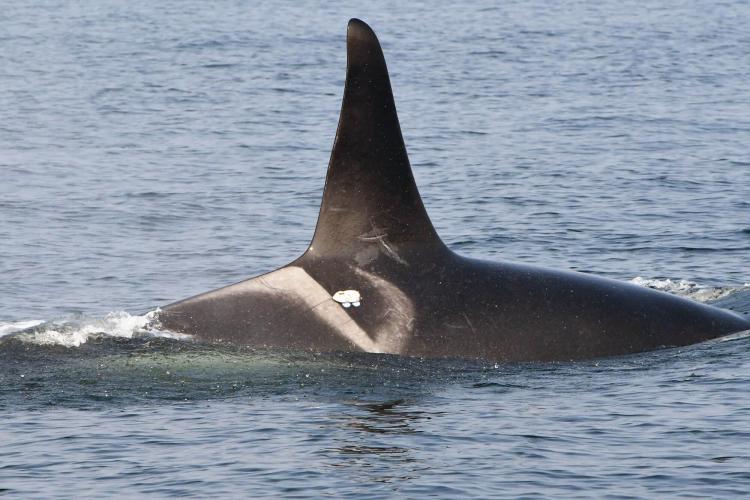
New NOAA Study Shows Female Puget Sound Killer Whales Cease Feeding When Vessels Within 400 Yards
January 15th, 2021
Boat traffic within 400 yards of endangered Southern Resident killer whales interrupts their foraging, often leading female whales to cease feeding altogether. That is a key finding from a new analysis of data from suction-cup tags that track the whales’ movement underwater.
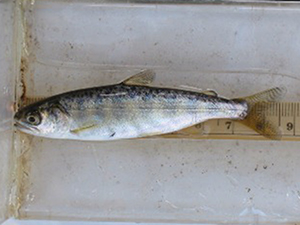
Hey, That’s Not A Kokanee, It’s An ESA-Listed Willamette Juvenile Spring Chinook; Know The Difference, Pinch The Barbs
January 15th, 2021
Anglers are having some success catching kokanee in Detroit Reservoir lately, thanks in part to the new bonus bag limit of 5 kokanee. But Oregon Department of Fish and Wildlife is also hearing from anglers that targeting kokanee is resulting in quite a few inadvertently hooked juvenile chinook salmon too.
DOE Taps Hairston As New Bonneville Power Administrator, Has Served As Acting CEO Since September
January 8th, 2021
The U.S. Department of Energy announced this week it has selected John Hairston as administrator and CEO of the Bonneville Power Administration. The appointment was effective Jan. 7.
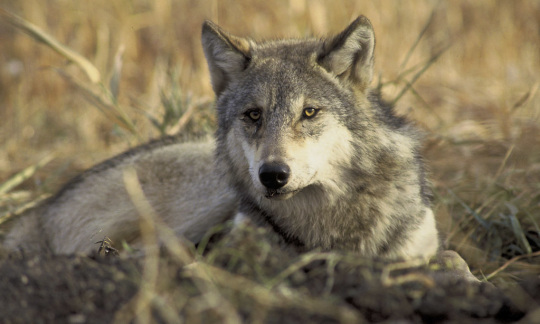
ODFW Now Managing Wolves Statewide As USFWS Decision To Remove Federal ESA Protections Goes Into Effect This Week
January 8th, 2021
The U.S. Fish and Wildlife Service this week formally removed most gray wolves in the lower 48 from the Endangered Species List, which turns management over to state fish and wildlife agencies, including Oregon Department of Fish and Wildlife.
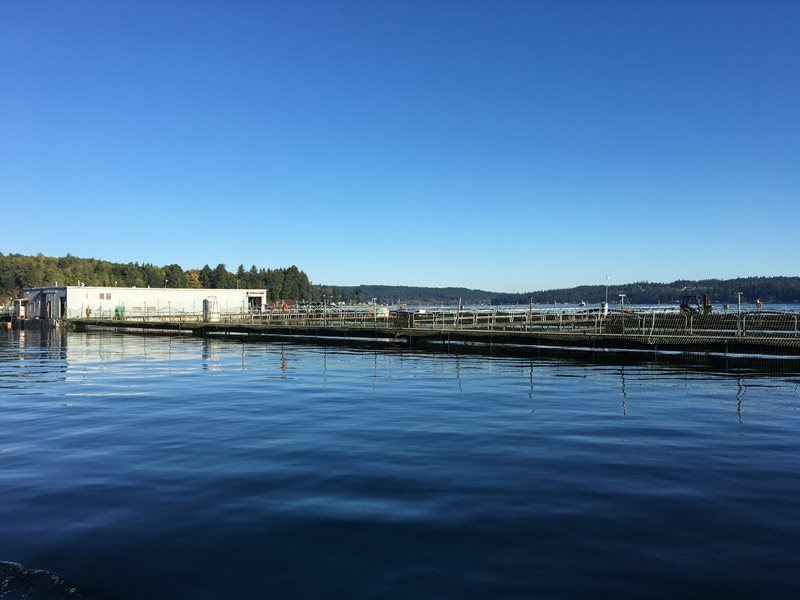
Washington DOE Revises Permits Allowing Cooke Aquaculture To Raise Sterile, All-Female Steelhead In Puget Sound
January 8th, 2021
The Washington Department of Ecology has revised four water quality permits to allow sterile, all-female steelhead to be raised in marine net pens, instead of Atlantic salmon.
WDOE To Hold Information Meeting On EPA’s TMDL For Temperature In Columbia/Snake Rivers; State To Write Implementation Plan
January 8th, 2021
The Washington Department of Ecology will be holding an informational meeting on the Environmental Protection Agency’s Total Maximum Daily Load for Temperature in the Columbia and Lower Snake Rivers on January 28.
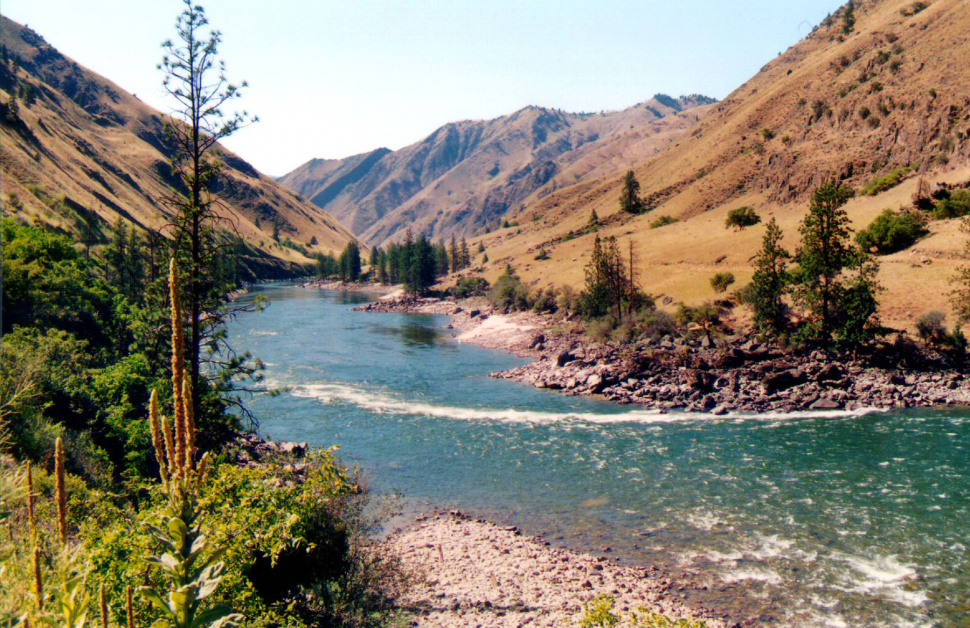
EDITOR’S NOTEBOOK: Top Ten Columbia Basin Salmon/Steelhead Recovery Stories For 2020
December 30th, 2020
Though the coronavirus pandemic threw our lives off kilter for much of 2020, it didn’t freeze movement of major developments in Columbia Basin salmon and steelhead recovery and other important fish and wildlife issues.
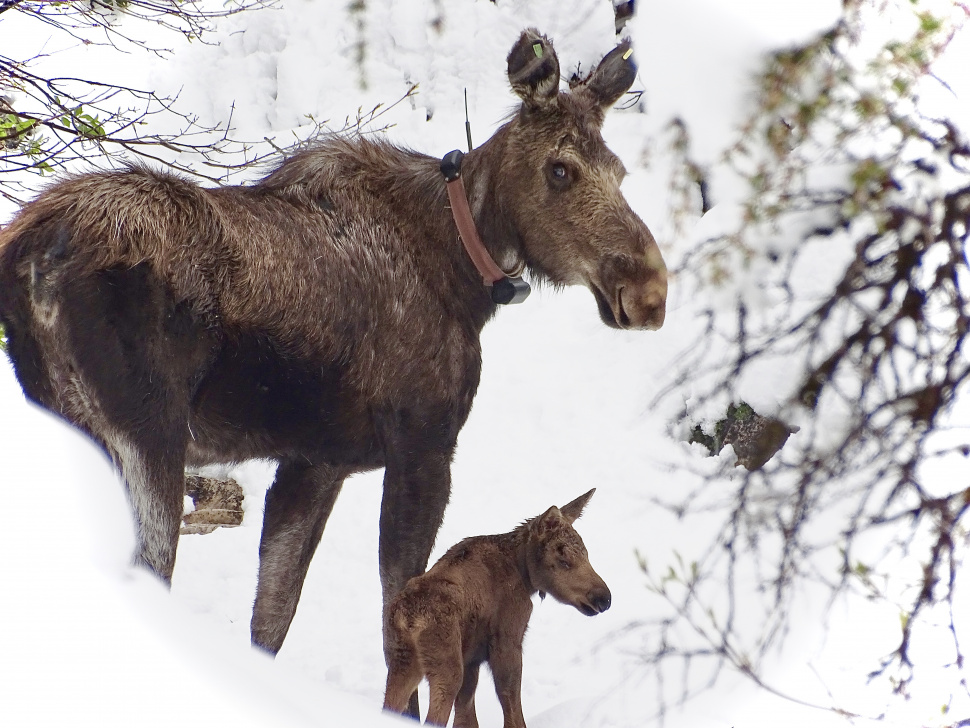
Idaho Moose Research Seeks Reasons For Population Decline; Next Step Deeper Look At Calf Survival
December 30th, 2020
Idaho Fish and Game and University of Idaho researchers began a multi-year moose research project in early 2020. Adult survival so far has been better than expected, but populations are still declining in the long term. They hope more research will provide clues on how to help Idaho’s largest big game animal rebound, or at least, discover what’s causing their decline in Idaho and beyond.
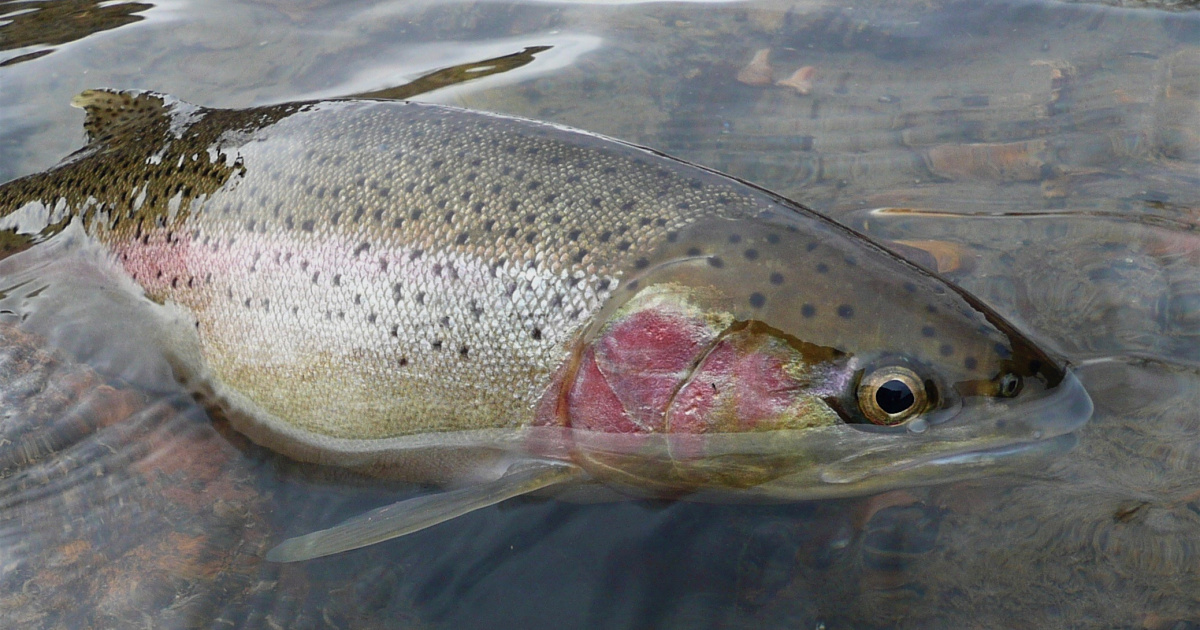
With Low Steelhead Returns To Snake River Basin Continuing, Oregon Extends Reduced Bag Limits To April; Hatchery Fish 38 Percent Of Average
December 30th, 2020
Oregon fishery managers have extended reduced daily bag limits for hatchery steelhead in the Snake River and tributaries, including the Grande Ronde, Wallowa and Imnaha Rivers. The bag limit of two hatchery steelhead per day remains in effect from January 1 to April 30, 2021.
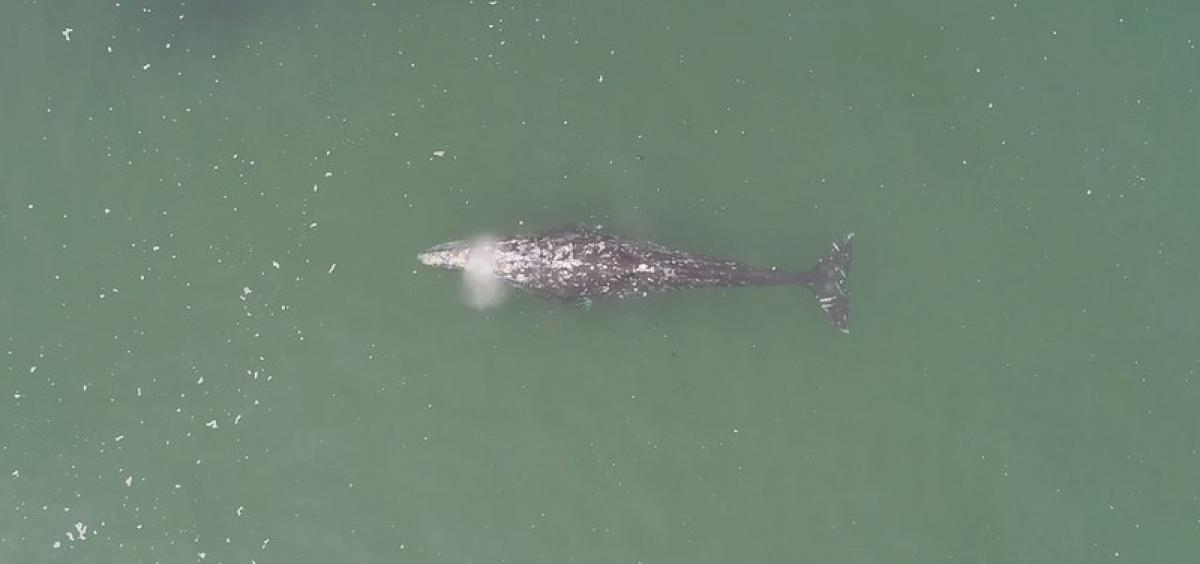
Analysis Of Fecal Samples Important New Tool For Understanding Whale Health, Impacts Of Human-Generated Noise
December 30th, 2020
Poop samples are an effective, non-invasive tool for monitoring gray whale reproduction, stress and other physiological responses, a new study from Oregon State University shows.
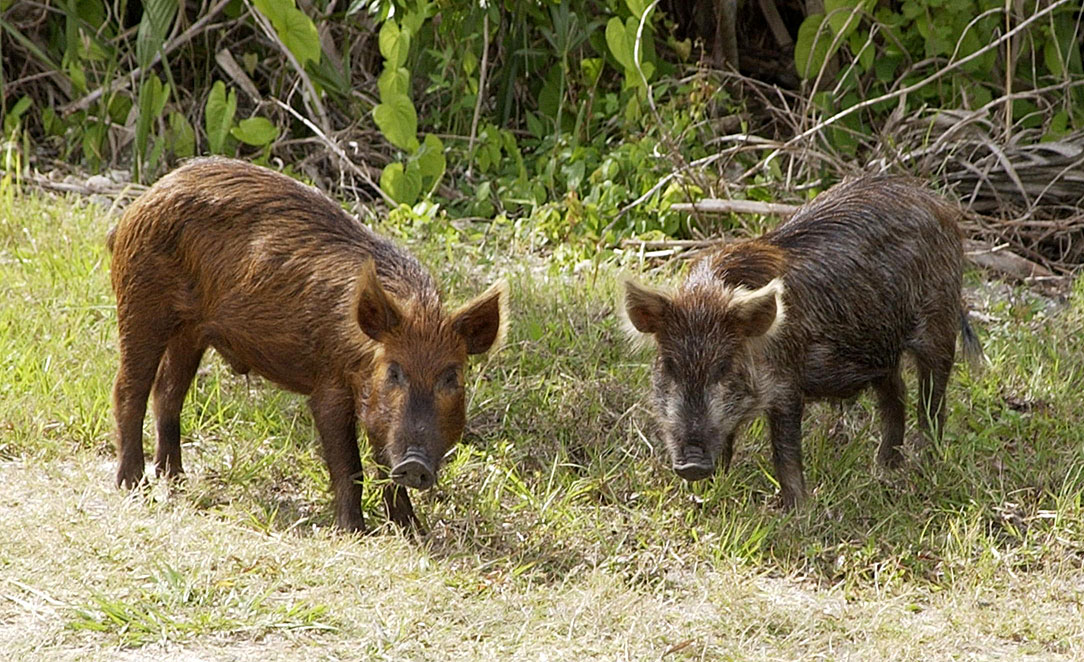
Montana, Washington Working Together To Stop Canadian Wild Pigs From Spreading Across Borders
December 30th, 2020
The Montana and Washington invasive species councils have joined forces to stop wild pigs from crossing borders.
Cantwell, Murray Object To Selection Process For New BPA Administrator, Citing ‘Lack Of Transparency’
December 22nd, 2020
Washington Democratic U.S. Sens. Maria Cantwell and Patty Murray said this week they voiced their displeasure with the “lack of transparency in the selection process” for head of the Bonneville Power Administration during a Friday call with Department of Energy Deputy Secretary Mark Menezes.
Montana Survey Shows Support For Grizzly Bears’ Presence As Populations Expand
December 17th, 2020
A new survey of Montanans shows positive attitudes toward grizzly bears and support for the presence of grizzly bears within the state, however acceptance of bear presence in areas closer to residential and agricultural areas is lower than in remote public land areas.
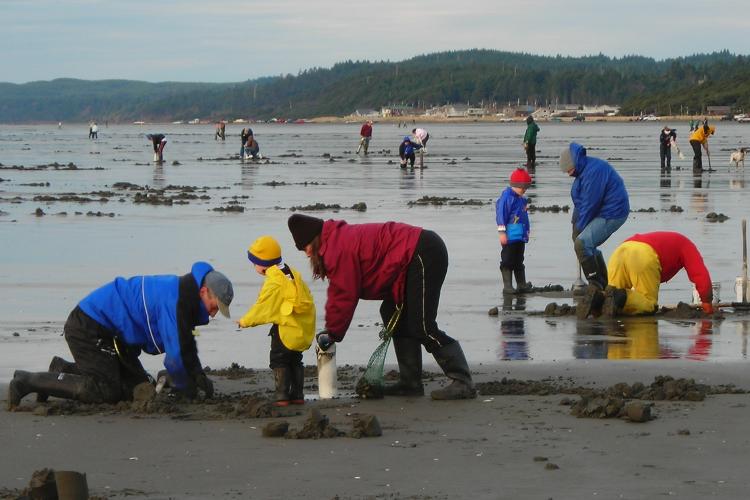
New Study Shows Repeated Marine Heatwaves Fueling Harmful Algal Blooms Off U.S. West Coast, Forcing Shellfish Fisheries Closures Since 2015
December 17th, 2020
Repeated marine heatwaves off the U.S. West Coast starting about 2013 fueled record harmful algal blooms that seeded a region off Northern California and Southern Oregon with toxic algae, a new study has found. That reservoir of harmful algae has, in turn, spread across the West Coast and forced the closure of valuable Dungeness crab and other shellfish seasons every year since 2015.

Research Details Crash Of Sunflower Sea Star Populations Along West Coast; Key To Healthy Kelp Forests
December 17th, 2020
The iconic sunflower sea star has been listed as critically endangered by the International Union for Conservation of Nature following a groundbreaking population study led by Oregon State University and The Nature Conservancy.

Washington Issues Coastal Steelhead Fishing Restrictions To Protect Declining Wild Steelhead; Could Mean 50 Percent Less Catch
December 11th, 2020
Fishery managers with the Washington Department of Fish and Wildlife this week announced restrictions to sportfishing in rivers throughout the Washington coast to protect wild steelhead populations.
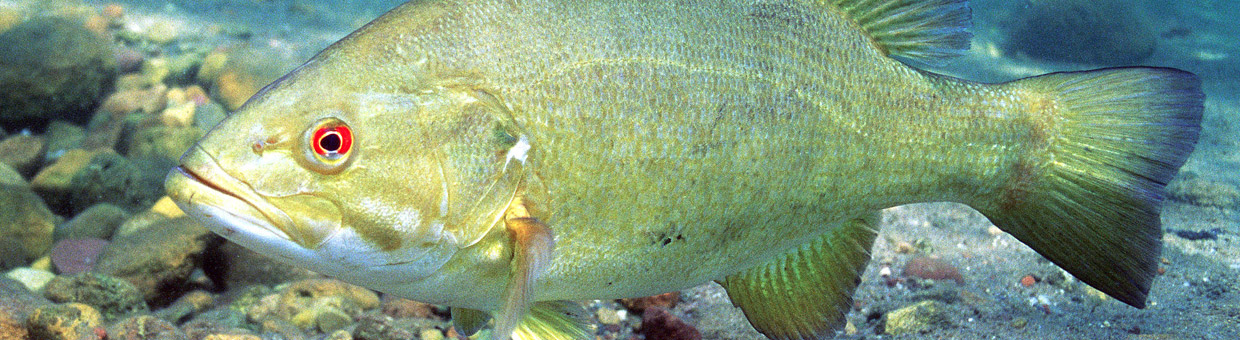
Oregon Health Authority Issues Health Advisory For Multnomah Channel, Scappoose Bay Resident Fish, Shellfish; PCBs, Dioxins
December 11th, 2020
The Oregon Health Authority is issuing recommendations on the amount of resident fish, shellfish and crayfish from the Multnomah Channel and Scappoose Bay that people should eat.

2020 Arctic Report Card: ‘Transformation To Warmer, Less Frozen, Biologically Changed Region Well Underway’
December 11th, 2020
NOAA’s 15th Arctic Report Card catalogs for 2020 the numerous ways that climate change continues to disrupt the polar region, with second-highest air temperatures and second-lowest summer sea ice driving a cascade of impacts, including the loss of snow and extraordinary wildfires in northern Russia.
Washington Submits Draft Plan For Distributing $50 Million In COVID Relief For Commercial Seafood Industries, Charters, Tribes
December 10th, 2020
Washington state announced this week that it has submitted a draft plan for how to distribute $50 million in federal relief funding to members of Washington’s commercial seafood, shellfish and charter industries to NOAA Fisheries or review and approval.
Redds Survey Shows Good Spawning Run For Coeur D’Alene Lake Chinook, Second Highest Count On Record
December 3rd, 2020
The October, 2020 annual survey of Coeur d’Alene Lake chinook salmon redds showed a strong spawning run, with the second highest count on record.

After Several Incidents, Idaho Reminding Hunters Illegal To Transport Into State Whole Deer Carcasses, Heads From CWD Positive States
December 3rd, 2020
During the last several weeks, the Idaho Department of Fish and Game became aware of several separate incidents of hunters illegally transporting whole deer carcasses or deer heads into Idaho from states with Chronic Wasting Disease.
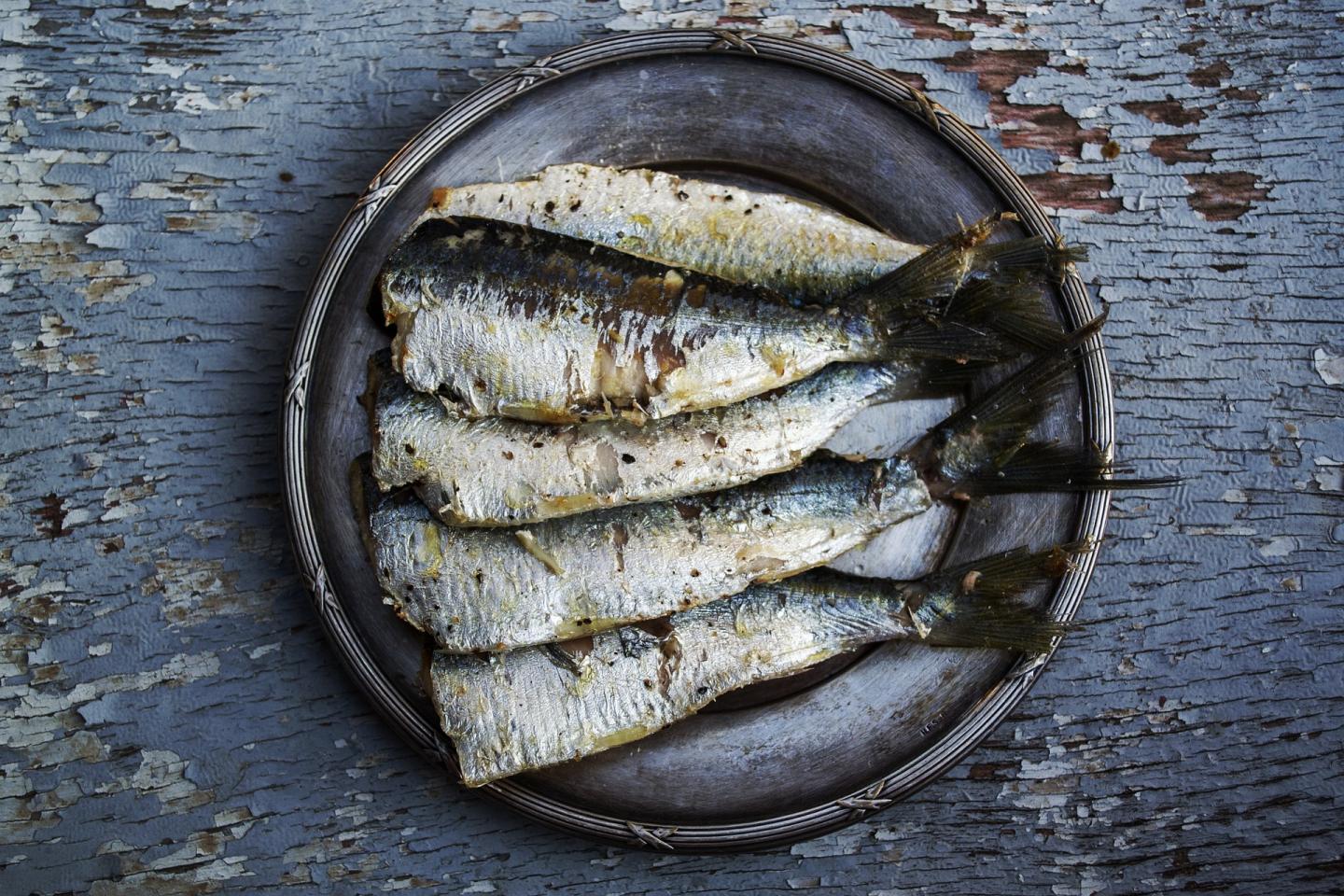
U.S. Seafood Industry Experiences Sharp Drops In Exports, Imports, Catches Due To Covid; Aid Should Target Certain States, Tribal Fisheries
December 3rd, 2020
The pandemic is putting a hurt on the seafood industry, finds the largest study of COVID on U.S. fisheries, which suggests that American fishmongers may flounder – or go belly up – without more government aid.
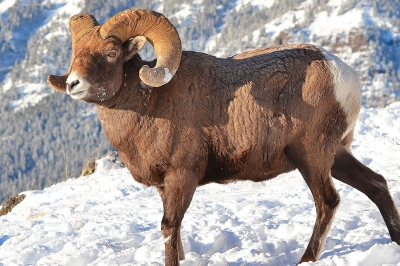
Pneumonia That Caused Die-Off Of Oregon Bighorn Sheep Herd Jumps I-84, Infects New Baker County Herd
December 3rd, 2020
Oregon Department of Fish and Wildlife and the Confederated Tribes of the Umatilla Indian Reservation have determined that the same strain of bacterial pneumonia that caused a die-off in the Lookout Mountain bighorn sheep herd earlier in the year has spread to the Burnt River herd.

Seventh Annual ‘One River, Ethics Matter’ Video Conference To Focus On Lower Columbia River Estuary, Discuss Columbia River Treaty
December 3rd, 2020
The seventh annual “One River, Ethics Matter” conference will be held during the COVID-19 pandemic by videoconference on December 9 and 10. It will focus on the lower Columbia River estuary and the Cowlitz Indian Tribe.
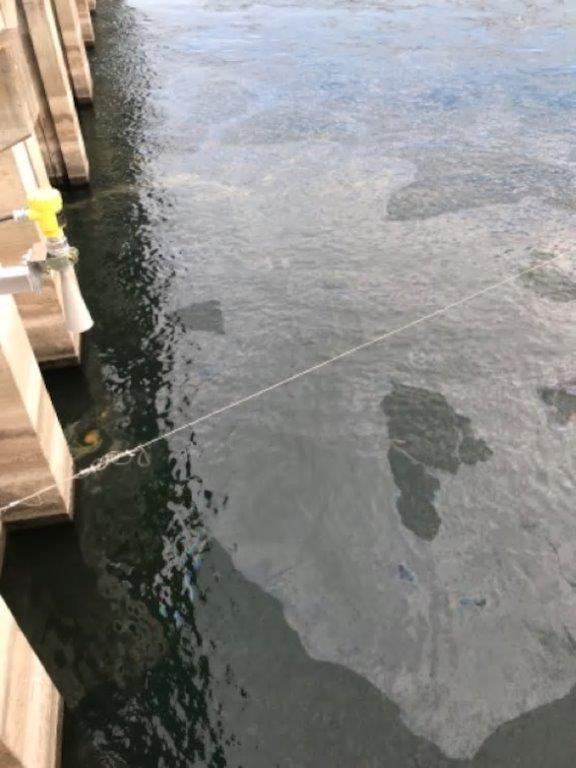
Turbine At Dalles Dam Spills Up To 200 Gallons Of Oil; Booms, Skimmers Deployed
December 3rd, 2020
At the Dalles Dam Thursday a thrust hub cooling water pipe broke, spilling up to 200 gallons of oil into the Columbia River. The equipment is part of a fish unit turbine designed to provide attraction water for migrating fish.

Steelhead Return To Hells Canyon Good Enough To Transport, Stock Some In Boise River For Anglers
November 20th, 2020
Approximately 250 steelhead were stocked in the Boise River on the afternoon of Thursday, November 19. Trapped at Hells Canyon Dam on the Snake River, the fish will be released in equal numbers at five locations: Glenwood Bridge, Americana Bridge, below the Broadway Avenue Bridge behind Boise State University, at West Parkcenter Bridge and at Barber Park.
Using A Drone To Carry Hook/Bait To That Fishing Hole? Montana Considers Ban On Using Remote Control Devices While Fishing
November 20th, 2020
The Montana Fish and Wildlife Commission will hold a public hearing via a telephonic Zoom platform on Dec. 1, at 10 a.m., to consider a new rule pertaining to banning the use of remote-controlled devices and drones while fishing.

Washington, Oregon Seek Nominations For Columbia River Fishing Advisory Groups
November 12th, 2020
Fishery managers from Washington and Oregon are seeking nominations for advisors to fill positions on advisory committees that provide input on recreational and commercial fishing issues on the Columbia and Snake rivers.

Washington Fish/Wildlife Commission Seeks Comments On Latest Draft Of Hatchery/Fishery Reform Policy
November 12th, 2020
The Washington Fish and Wildlife Commission is asking for public comment on the latest draft of its revised Hatchery and Fishery Reform policy.
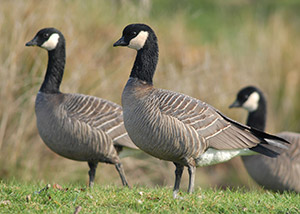
Fungal Infection Hits Geese In Willamette Valley; If See Bird Die-Off Report To ODFW
November 12th, 2020
Oregon Department of Fish and Wildlife biologists are aware of over 100 cackling geese that have died in various parts of the Willamette Valley over the last month.
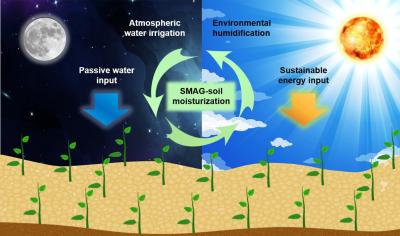
Self-Watering Soil Transform Farming? Pulls Water Out Of Air At Night, Releases During Day
November 12th, 2020
A new type of soil created by engineers at The University of Texas at Austin can pull water from the air and distribute it to plants, potentially expanding the map of farmable land around the globe to previously inhospitable places and reducing water use in agriculture at a time of growing droughts.
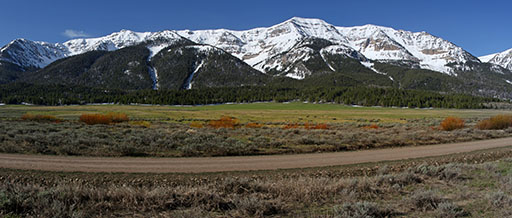
NOAA Winter Outlook: Warmer, Drier In Southern Tier, Cooler, Wetter In Northern Tier
October 30th, 2020
NOAA’s winter forecast for the U.S. favors warmer, drier conditions across the southern tier of the U.S., and cooler, wetter conditions in the North, thanks in part to an ongoing La Nina.
IDFG Will Know Soon If Hells Canyon Trap Has Enough Steelhead For Boise River Stocking
October 30th, 2020
Idaho fisheries managers expect to open the fish trap at Hells Canyon Dam on Nov. 2 and will hopefully have enough fish available for the Boise River.
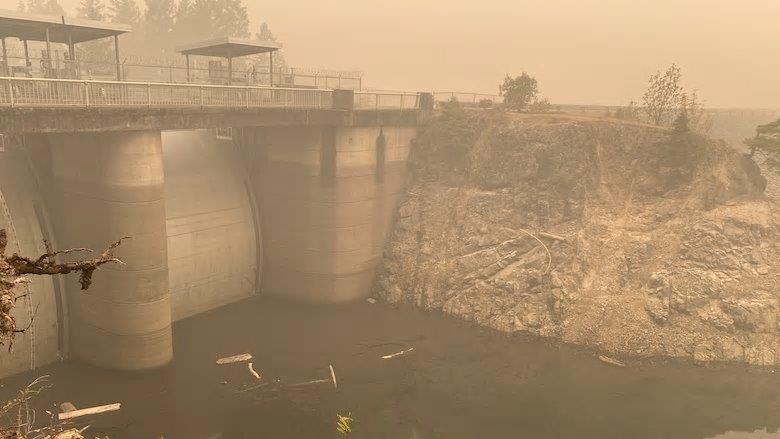
Labor Day Fires: Four Willamette Valley Dams, Fish Facilities Surrounded, Threatened By Fire, No Serious Damages; Scorched Soil Brings Flood Risks
October 30th, 2020
Dam safety can be a gloomy business at times. In order to protect a dam, engineers must first brainstorm all the different ways the structure could possibly fail. It’s a strategy of predicting and preparing for the worst.
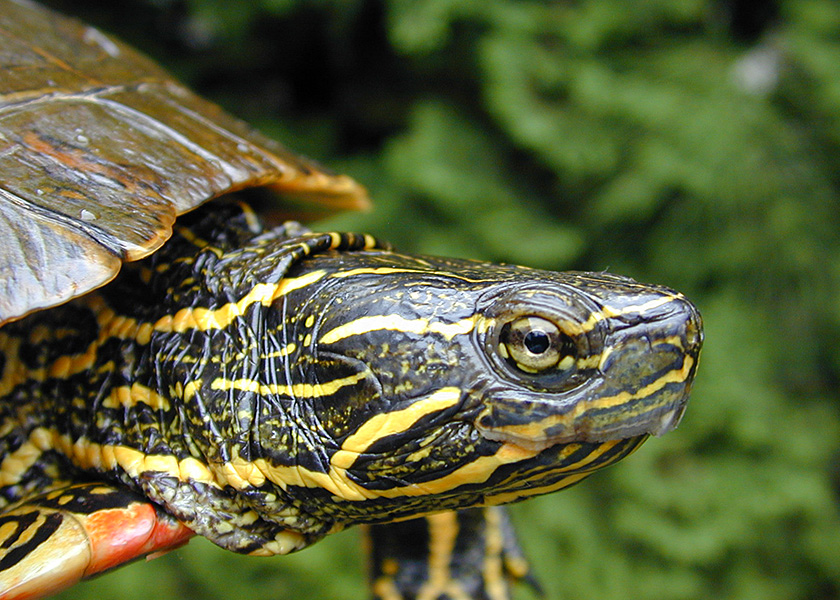
In First 10 Years, Willamette Wildlife Mitigation Program Protects Over 11,000 acres At $64 Million In BPA Funds; Program Ends In 2025
October 30th, 2020
The Willamette Wildlife Mitigation Program reached its 10th year of protecting land for wildlife throughout the Willamette Valley this month. The program ends in 2025.
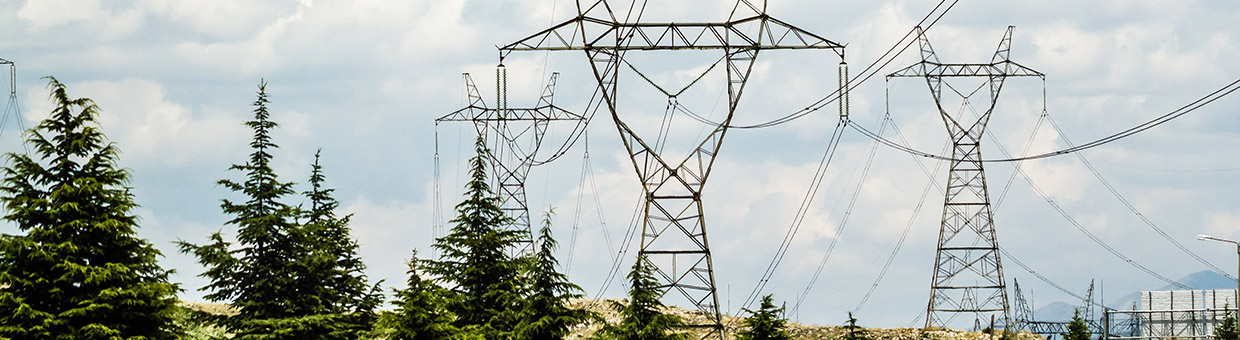
Bonneville Power Administration Makes $736 Million Payment To U.S. Treasury
October 15th, 2020
The Bonneville Power Administration has made its 37th consecutive U.S. Treasury payment of $736 million, which covers a variety of costs, including irrigation assistance that BPA provides to help irrigators repay their share of certain Bureau of Reclamation projects.
Washington DOE Distributes $22 Million For Streamflow Restoration In 16 Watersheds
October 15th, 2020
Communities around the state will soon receive grant funds to support projects that protect rivers and improve streamflows. The Washington Department of Ecology is investing up to $22 million in 21 high priority projects located in 16 watersheds.
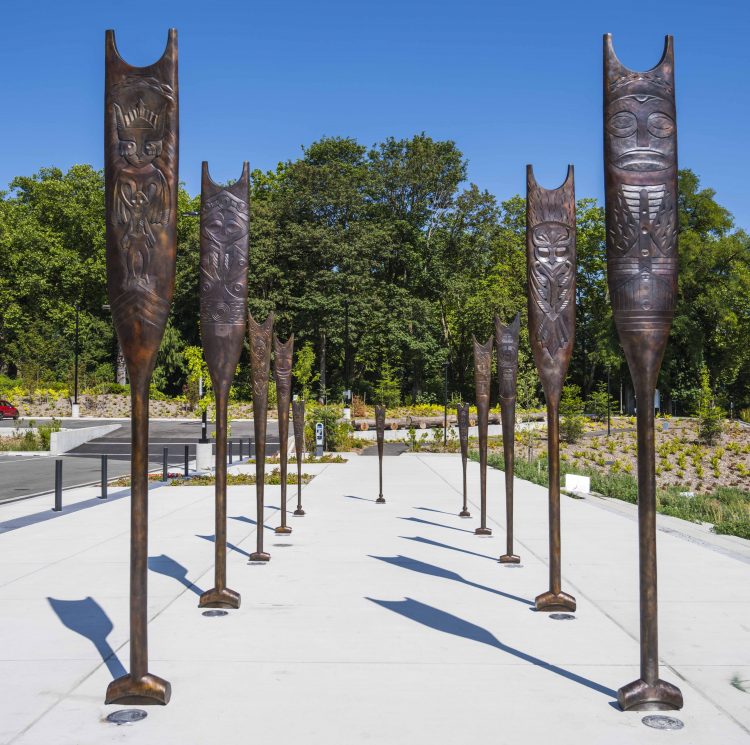
UW’s New Burke Museum’s New Outdoor Installation ‘Guests of the Great River’ (The Columbia); 11 Large-Scale Bronze Paddles
October 15th, 2020
Officially one year after the opening of the new Burke Museum and in honor of Indigenous Peoples Day, the Burke Museum, University of Washington, and the Washington State Arts Commission announced a new outdoor installation called Guests of the Great River that greets guests as you arrive at the museum’s east entrance.
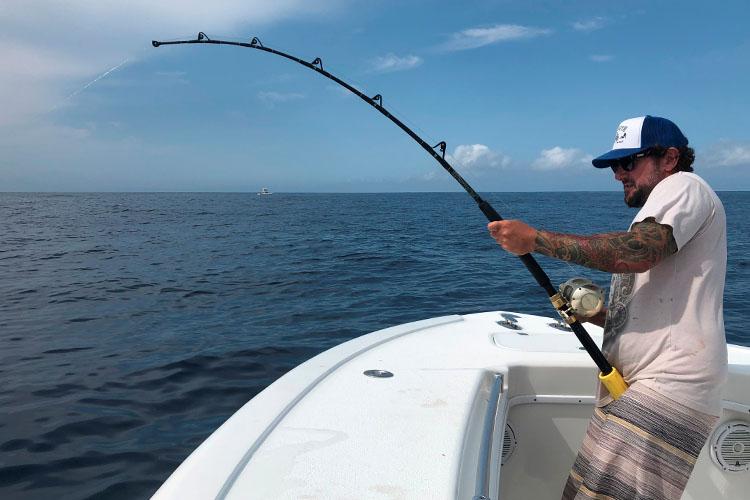
Where Do Saltwater Anglers Get Their Fishing Info? NOAA Survey Says Most Trusted Sources Friends, Family, Bait Shops
October 15th, 2020
A new survey of saltwater recreational anglers looked at their sources of information when it comes to fishery management and data collection. It found that their most used and trusted sources were friends, family, bait and tackle shops, and state and federal agency information such as websites and regulation guides.
PGE Shuts Down Oregon’s Only Coal-Fired Plant, Largest Single Source Of Greenhouse Gas Emissions In State
October 15th, 2020
Portland General Electric Company this week announced it has permanently shuttered its coal-fired Boardman Generating Station in Eastern Oregon’s Morrow County. The closure fulfills an agreement PGE reached with stakeholders, customer groups and regulators in 2010 to significantly reduce air emissions from power production in Oregon by ending operations at Boardman 20 years ahead of schedule and transitioning to cleaner energy resources.

Marine Community Reshuffles Under Warmer Pacific Arctic; Larger Predatory Fish Will Expand Range Poleward
October 1st, 2020
Climate warming will alter marine community compositions as species are expected to shift poleward, significantly impacting the Arctic marine ecosystem.
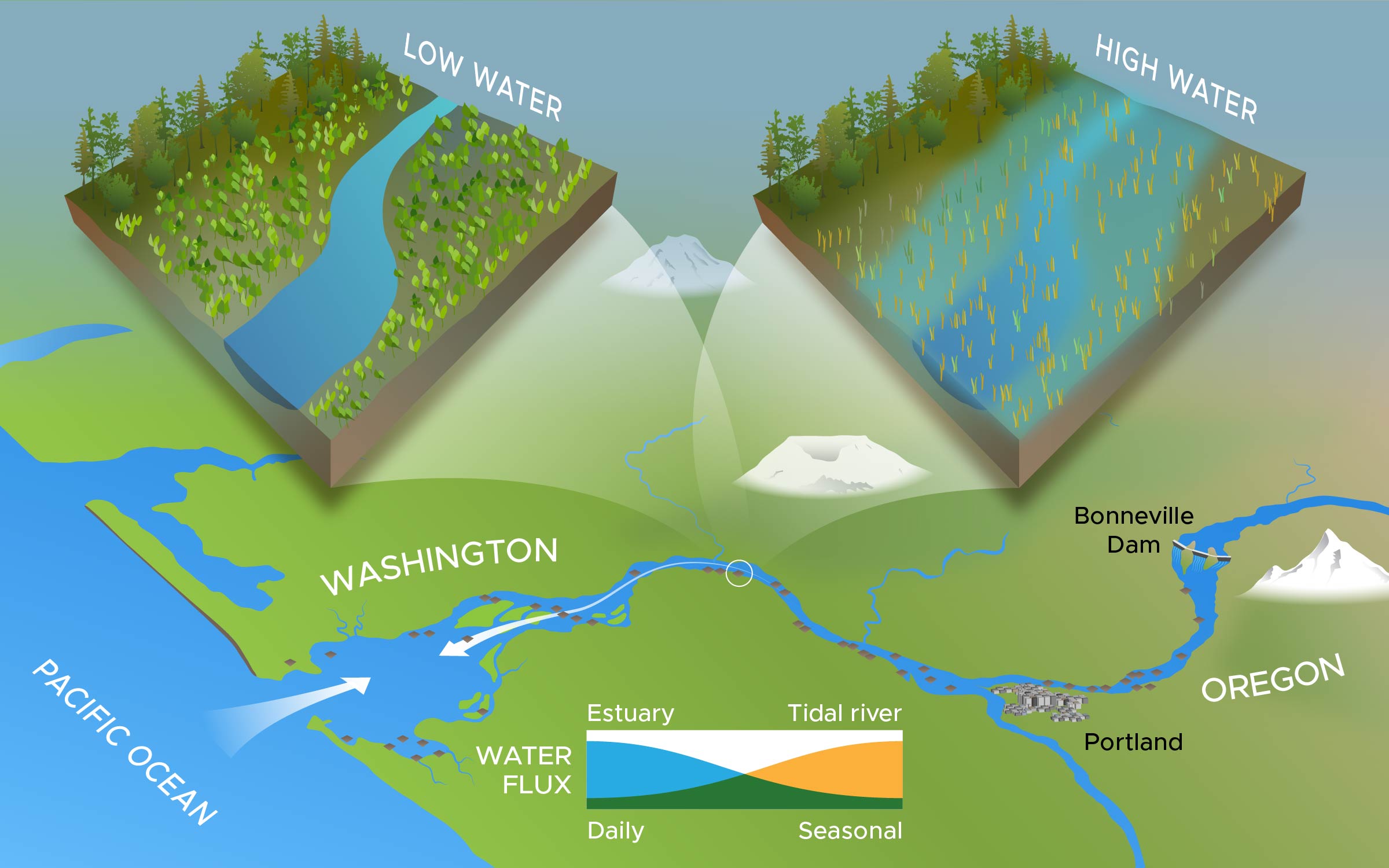
Columbia River Floodplain: PNNL Researchers Develop Framework Identifying Ecological Indicators For Estuaries, Tidal Rivers
October 1st, 2020
Researchers at the Pacific Northwest National Laboratory’s Marine and Coastal Research Laboratory have developed a predictive framework of ecological indicators and analyses for estuarine–tidal river research and management.

Corps, Portland District, Warns Of Potential Significant Flooding In Wake Of Historic Wildfires
October 1st, 2020
The upcoming rainy season, combined with the historic wildfires in Oregon, set the stage for increased flooding conditions according to Portland District, U.S. Army Corps of Engineers officials. The potential for damage from these floods in the Willamette Valley, in the Umpqua River Basin, and along the Rogue River are significant.

Deschutes Land Trust Preserves 4500-Acre Central Oregon Ranch, Includes Spawning Grounds For Wild Steelhead
October 1st, 2020
The Deschutes Land Trust has purchased Priday Ranch, a new conservation project on 4,500 acres north of Madras, Oregon that includes steelhead spawning streams.
Corps Changes Classification Of Willamette Valley’s Green Peter Dam From High Risk To Low Risk
October 1st, 2020
After years of extensive studies, a risk assessment and recent rehabilitation of spillway gates, Army Corps of Engineers officials have reclassified Green Peter Dam, near Sweet Home, Ore., as a low risk dam.
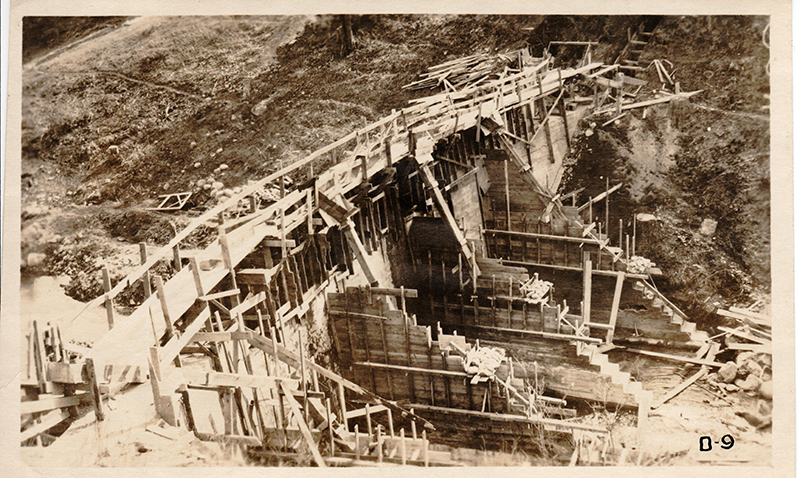
Agreement Keeps Wallowa Dam Rehabilitation Project Moving Forward; Could Eventually Lead To Return Of Sockeye To Wallowa Lake
September 24th, 2020
An agreement was recently signed that is a key step in the return of sockeye salmon to northeast Oregon’s Wallowa Lake. Bull trout, mountain whitefish, wild rainbow trout, and possibly steelhead could also start returning to Wallowa Lake when fish passage is restored.
Labor Day Wildfires: Equipment In 7 Of 13 BPA Transmission Maintenance Districts Impacted, One Line De-Energized
September 24th, 2020
Bonneville Power Administration line crews were rapidly deployed to areas where BPA transmission and fiber customers experienced service interruptions due to devastating wildfires that swept across much of the Pacific Northwest.
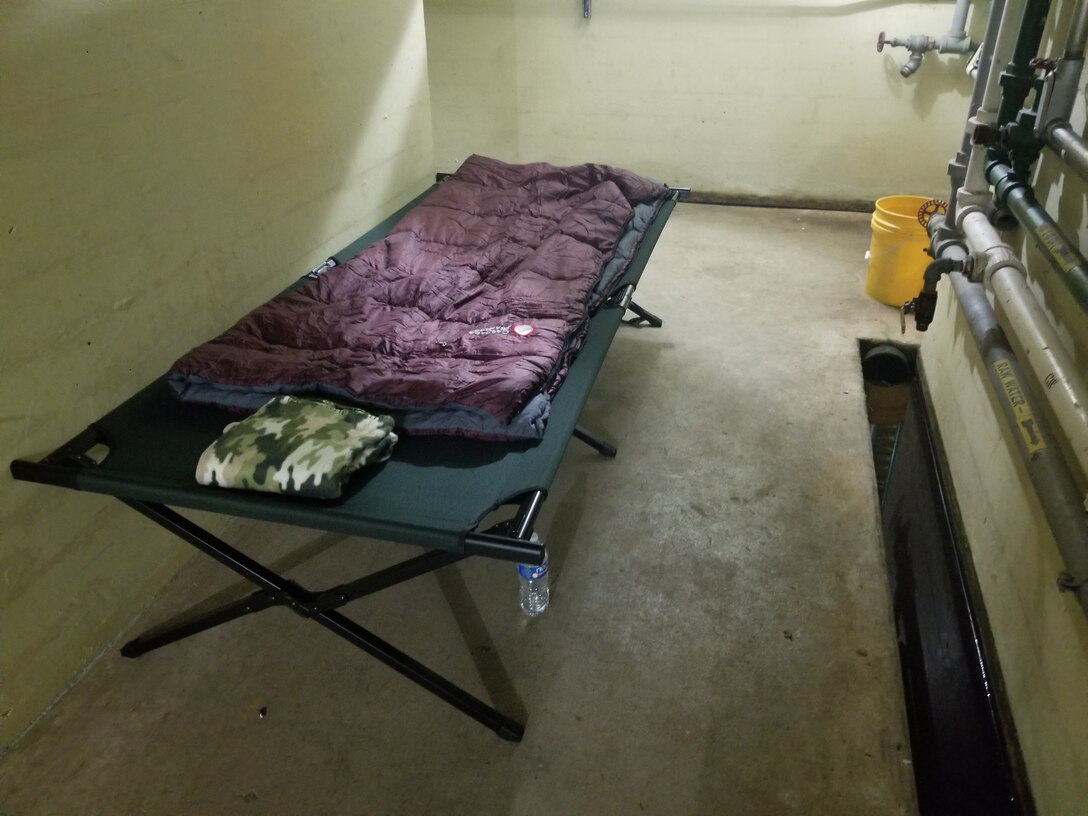
Labor Day Wildfires: Dam Operator Trapped At Detroit Dam During Beachie Fire, Took Refuge In Lower Level
September 24th, 2020
Before leaving for his work shift, Mike Pomeroy said goodbye to his wife, Ronda, the way he always did: with a promise.
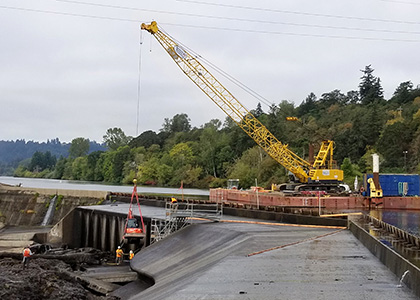
Work Underway To Repair Willamette Falls Fishway System To Ensure Passage Of ESA-Listed Upper Willamette Winter Steelhead, Spring Chinook
September 24th, 2020
Work is underway to repair the fishway system at Willamette Falls. Anglers and other users of the river may be seeing barge traffic as construction materials are transported from down river to the channel leading up to the cul-de-sac and notice fish counts are not being updated, says the Oregon Department of Fish and Wildlife.
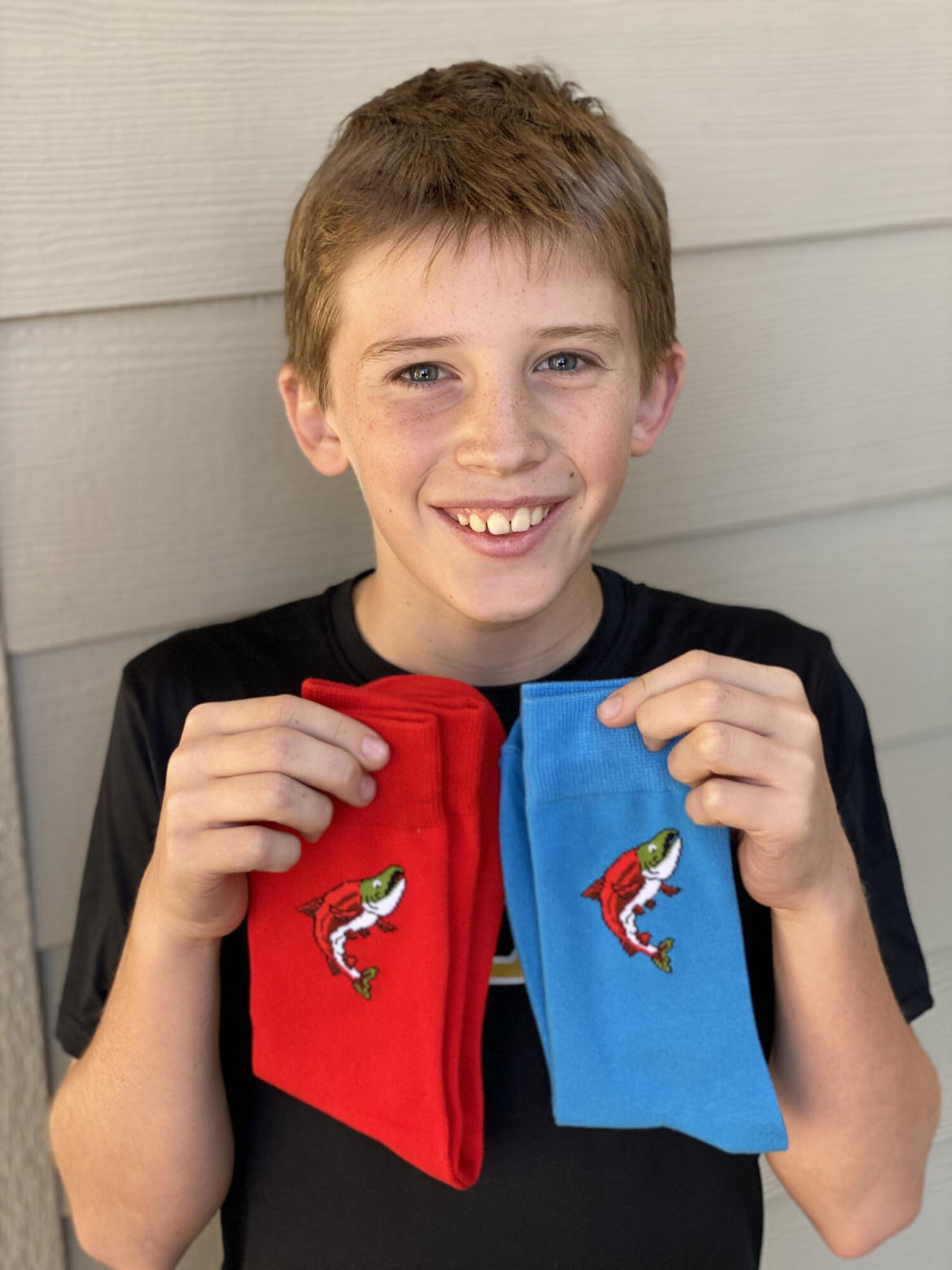
Sock Guy For Sockeye: Boise 12-Year-Old Wins National Award For ‘Lonesome Larry’ Project Helping Endangered Snake River Sockeye
September 24th, 2020
Twelve-year-old Topher Jones of Boise, also known as the “Sock Guy for Sockeye”, was among 25 winners of the 2020 Gloria Barron Prize for Young Heroes, which annually honors outstanding young leaders who have made a significant and positive difference to people and the environment.
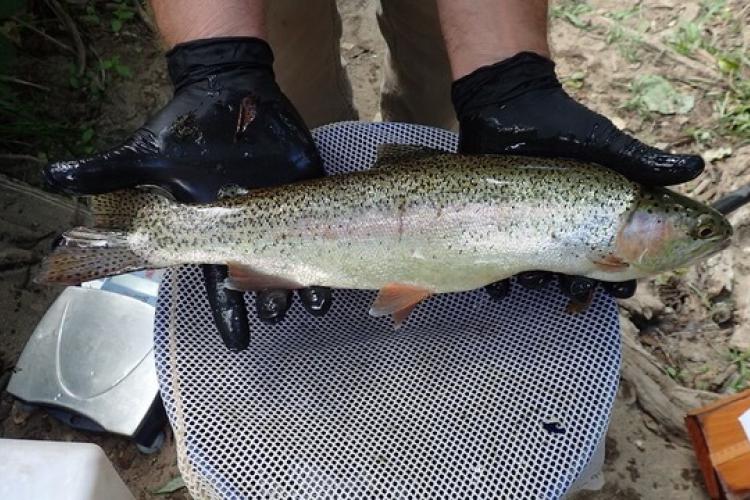
NOAA Fisheries Finalizes First Habitat Conservation Plan In California’s Central Valley, Intended To Aid Threatened Steelhead
September 24th, 2020
Improvements in fish passage and assurances of water in California’s Calaveras River will help promote recovery of threatened steelhead. These changes will be implemented under the first plan of its kind in the Central Valley of California.

Oregon Fires Result In Burning, Evacuation Of Several Hatcheries, No Lives Lost; Some Fish Lost, Transferred; 1.6 Million Released Into McKenzie River
September 17th, 2020
Despite the unprecedented wildfires and evacuation of six ODFW-managed fish hatcheries, millions of fish at these facilities remain alive with hatchery staff returning as they are able to care for fish and even spawn spring chinook during a critical time in their life cycle.
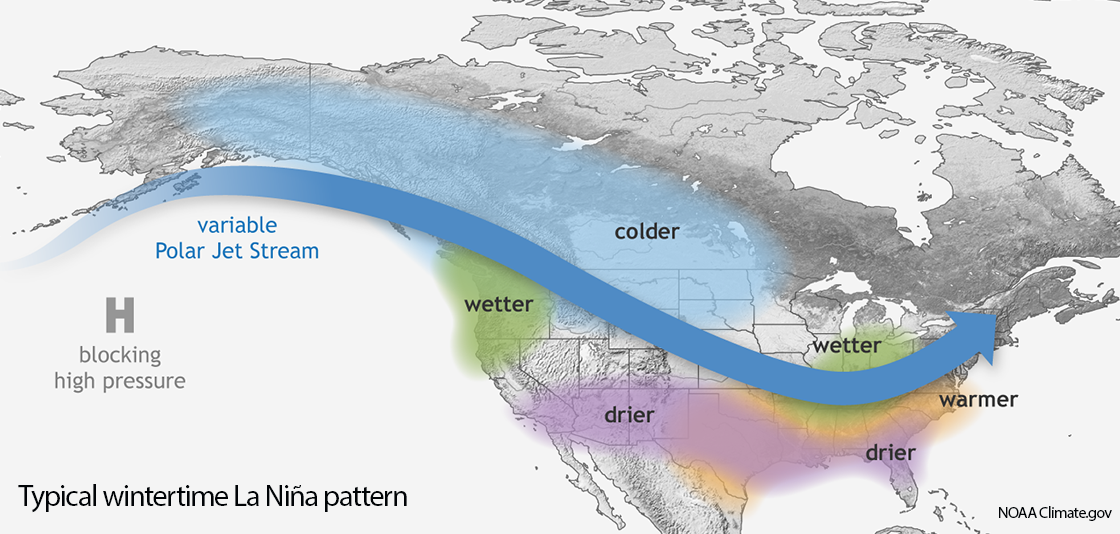
NOAA Says La Nina Climate Pattern Has Developed, Will Persist Until February; Above Average Precip, Colder In Northern Tier
September 17th, 2020
A La Nina climate pattern has developed in the United States and is likely to persist through the winter, according to an advisory issued by NOAA’s Climate Prediction Center.
With Deschutes Basin Water Stretched Thin, Plans For New ‘On-Farm’ Irrigation Efficiencies Program Announced
September 17th, 2020
The Deschutes River Conservancy and Central Oregon Irrigation District this week announced plans for a new on-farm program that will increase on-farm irrigation efficiencies and conserve water.

New Study Provides Evidence Of Killer Whale Predation On Bowhead Whales In U.S. Pacific Arctic; Reduction Of Sea Ice Key Factor
September 17th, 2020
For the first time, scientists have direct evidence that killer whales are preying on bowhead whales in the U.S. Pacific Arctic. A dramatic loss of sea ice in recent years may be leaving bowheads more vulnerable to killer whale predation.
Energy Secretary Taps Hairston As Interim CEO For Bonneville Power Administration
September 11th, 2020
John Hairston, who has spent the past five years in the Bonneville Power Administration front office, most recently as the chief operating officer since September 2019, has been named interim administrator and Chief Executive Officer by Secretary of Energy Dan Brouillette.
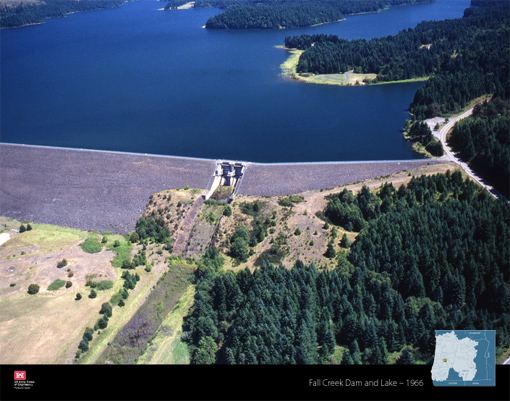
Record Spring Chinook Return At Willamette Valley’s Fall Creek Dam, Reservoir Drawdown To Move Juveniles A Factor
September 11th, 2020
The U.S. Army Corps of Engineers report a record return of spring chinook salmon this year at Fall Creek Dam.
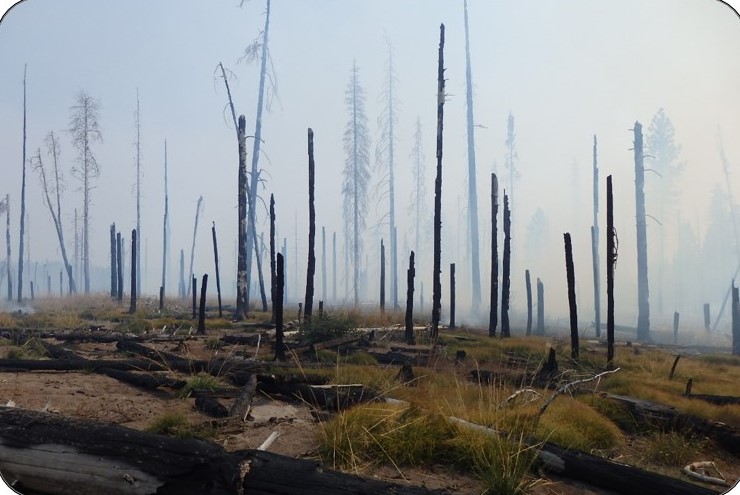
Corps’ Portland District Closes Recreation Areas Near Several Dams Due To Willamette Valley Fires
September 11th, 2020
Due to multiple fires burning throughout the Willamette Valley, the U.S. Army Corps of Engineers, Portland District is closing several recreation areas it manages near its dams.
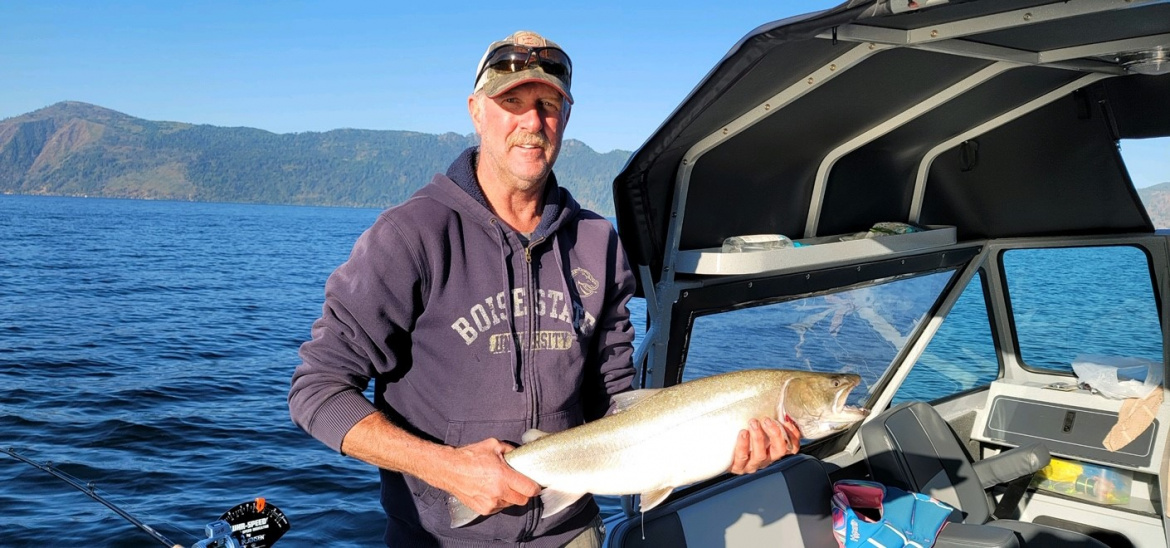
Lake Pend Oreille Angler Sets New Idaho Record For Catch/Release Bull Trout
September 11th, 2020
Ed O’Hara of Hayden, Idaho landed the latest catch/release state record bull trout.
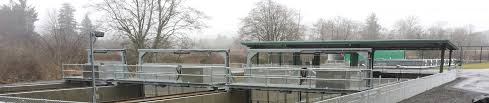
Washington Fish/Wildlife Commission Outlines $23.5 Million In Possible COVID-19-Related Budget Cuts; Hatchery Closures, Less For Salmon Recovery, Southern Resident Killer Whales
August 27th, 2020
The Washington Fish and Wildlife Commission Friday approved $17 million in budget requests for needed enhancements to manage fish and wildlife in Washington state. Commissioners also provided a list of potential service cuts, while pointing out the counterproductive nature of such cuts should statewide elected officials adopt them.
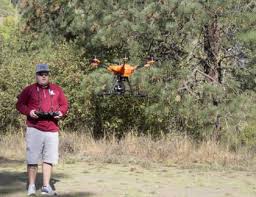
WDFW Using Drones To Count Spawning Salmon Nests, Collect Data On Habitat Restoration
August 27th, 2020
Washington Department of Fish and Wildlife will partner with Washington State University on a research project to use drone technology to advance conservation efforts for summer chinook salmon.
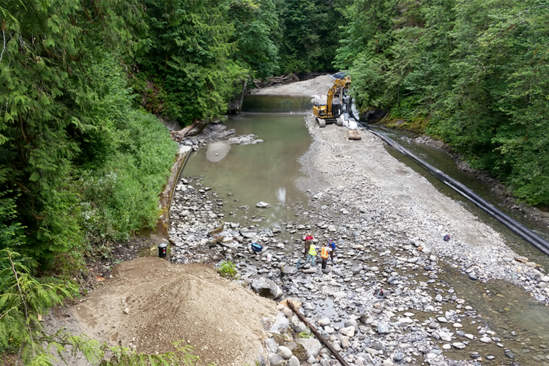
Another Dam Bites The Dust: Removal Of Pilchuck River Dam Will Open 37 Miles of Habitat For Salmon,Steelhead, Bull Trout
August 27th, 2020
Washington’s Pilchuck River is close to once again flowing freely after more than 100 years, thanks to a NOAA-supported effort to remove an obsolete dam. Once restoration work is complete, the project will reopen 37 miles of habitat for fish and help protect downstream communities from flooding.
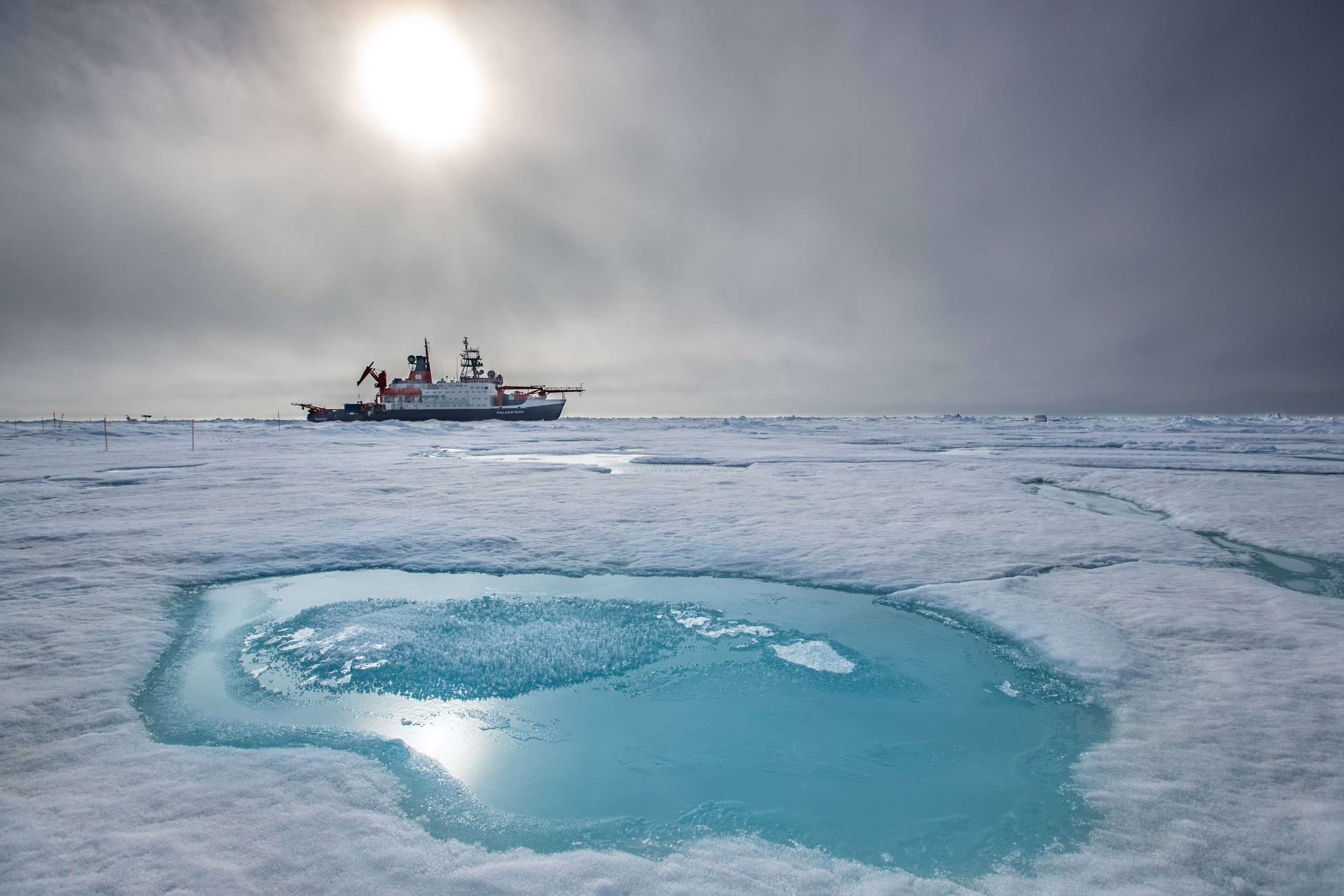
Arctic Sea-Ice Changing From Reliable Frozen Ice Cap To Open-Water Ocean: 2020 Will Be Close To Record In Sea-Ice Melt
August 27th, 2020
As the Arctic sea-ice melt season nears its peak, one community of scientists is poring over satellite images, running experimental forecast models, and asking the perennial question: How low will it go?
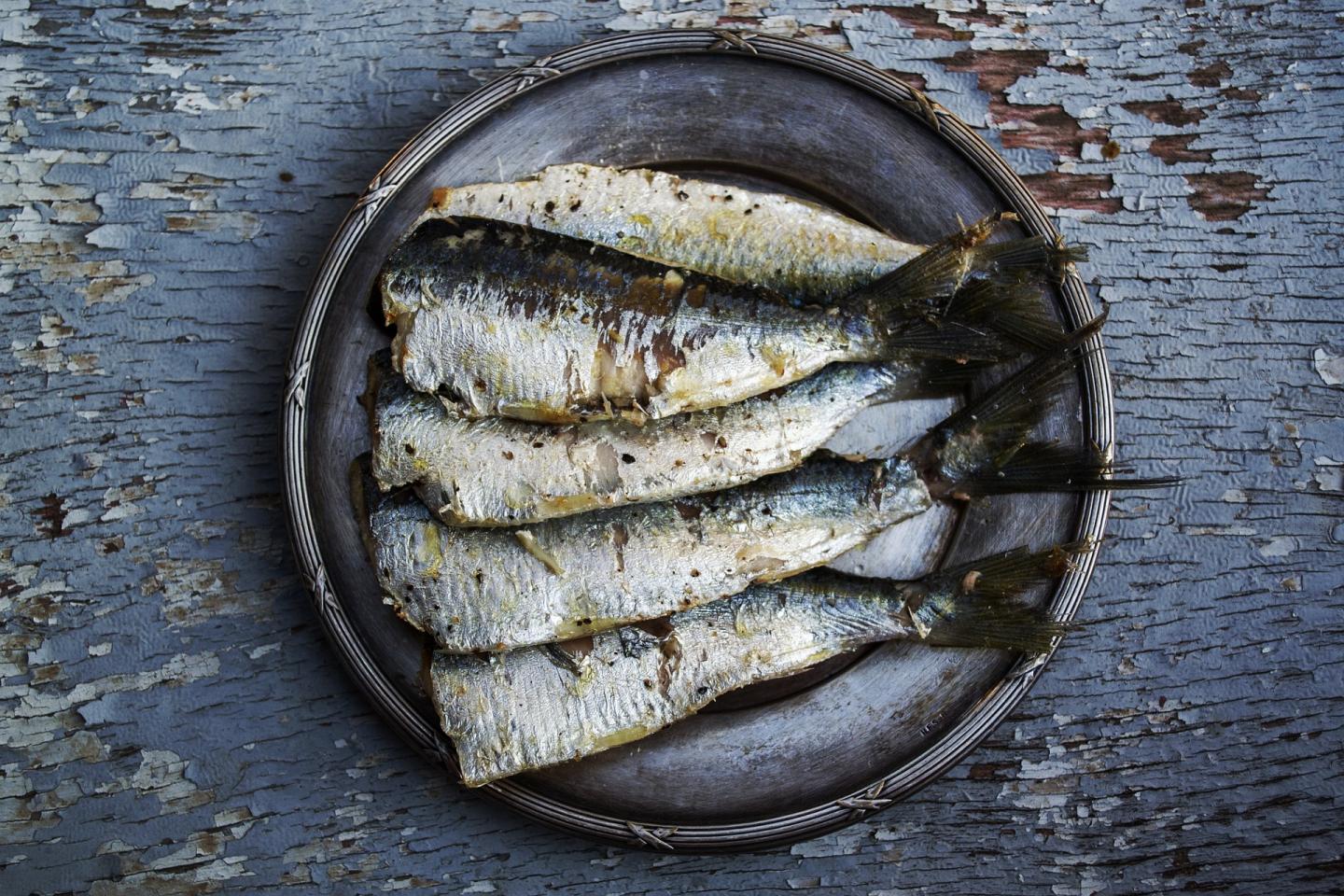
How Many People Will The Ocean Be Able To Feed By 2050? OSU Research Says Reforms, Technology Could Drive Up Seafood Production By 75 Percent
August 19th, 2020
Policy reforms and technological improvements could drive seafood production upward by as much as 75% over the next three decades, research by Oregon State University and an international collaboration suggests.
A Fifth Angler Wins $1,000 In Lake Pend Oreille Walleye Lottery Aimed At Protecting Other Species
August 18th, 2020
A fifth Idaho angler has won $1,000 in the Lake Pend Oreille walleye lottery.
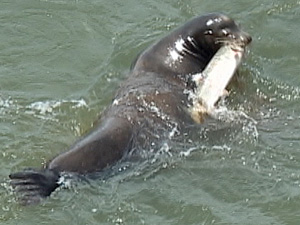
NOAA Fisheries Authorizes Expanded Lethal Removal Of Salmon-Eating Sea Lions In Columbia River From Portland To McNary Dam, Tributaries
August 14th, 2020
States and tribes can lethally remove up to 540 California sea lions and 176 Steller sea lions over the next five years from a management zone on the Columbia River and its tributaries where they prey on at-risk salmon, steelhead, lamprey, sturgeon, and eulachon, under a new authorization issued today by NOAA Fisheries’ West Coast Region.
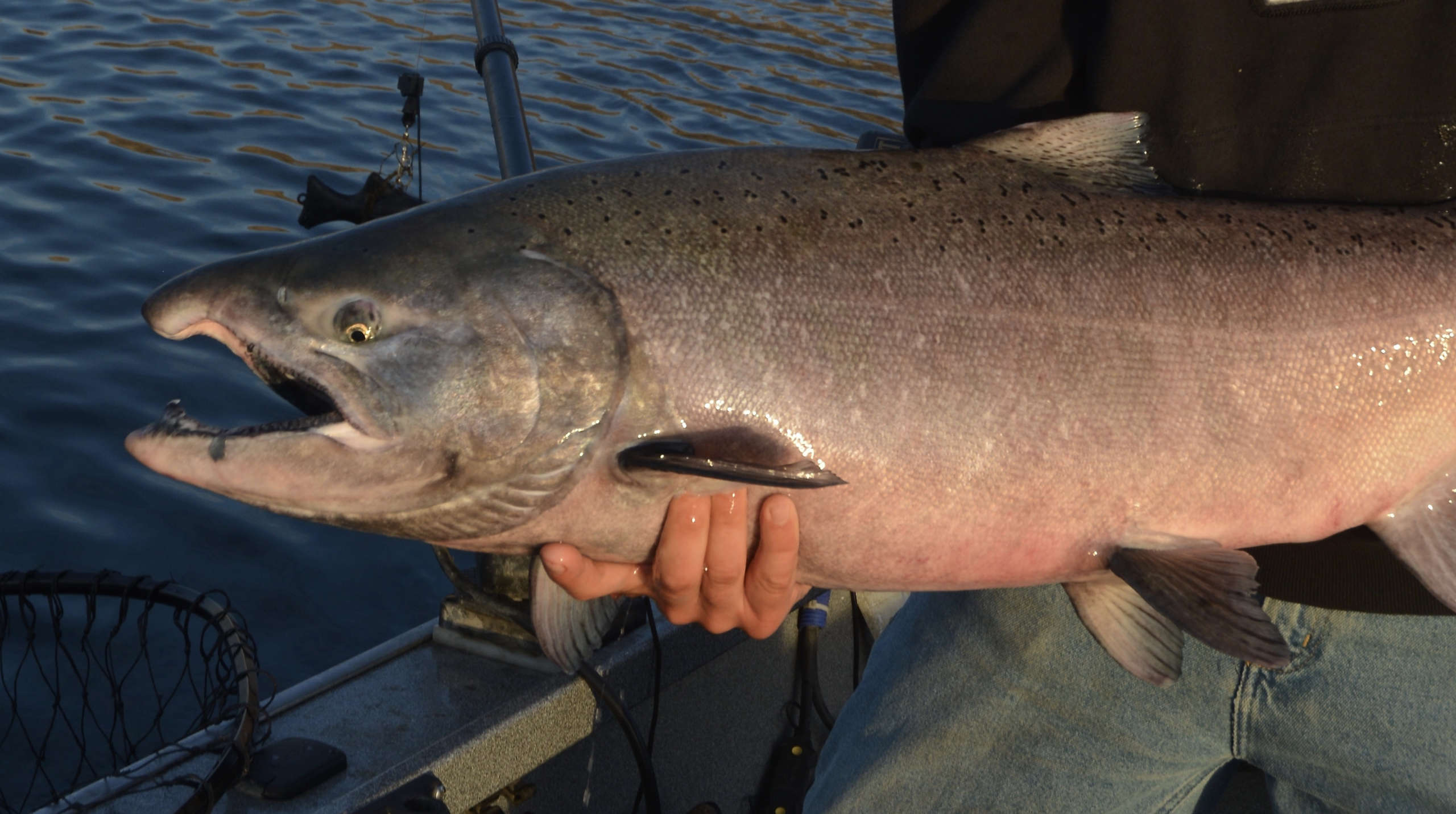
Snake River Fall Chinook Returns Of 15,000 To Lower Granite Allows Angling To Start Tuesday; Spring Chinook Fishing (Fish Gone) Closed Friday
August 13th, 2020
The Oregon Department of Fish and Wildlife will close the Snake River spring chinook fishery effective Friday while fall chinook harvest season begins on Tuesday, Aug. 18.
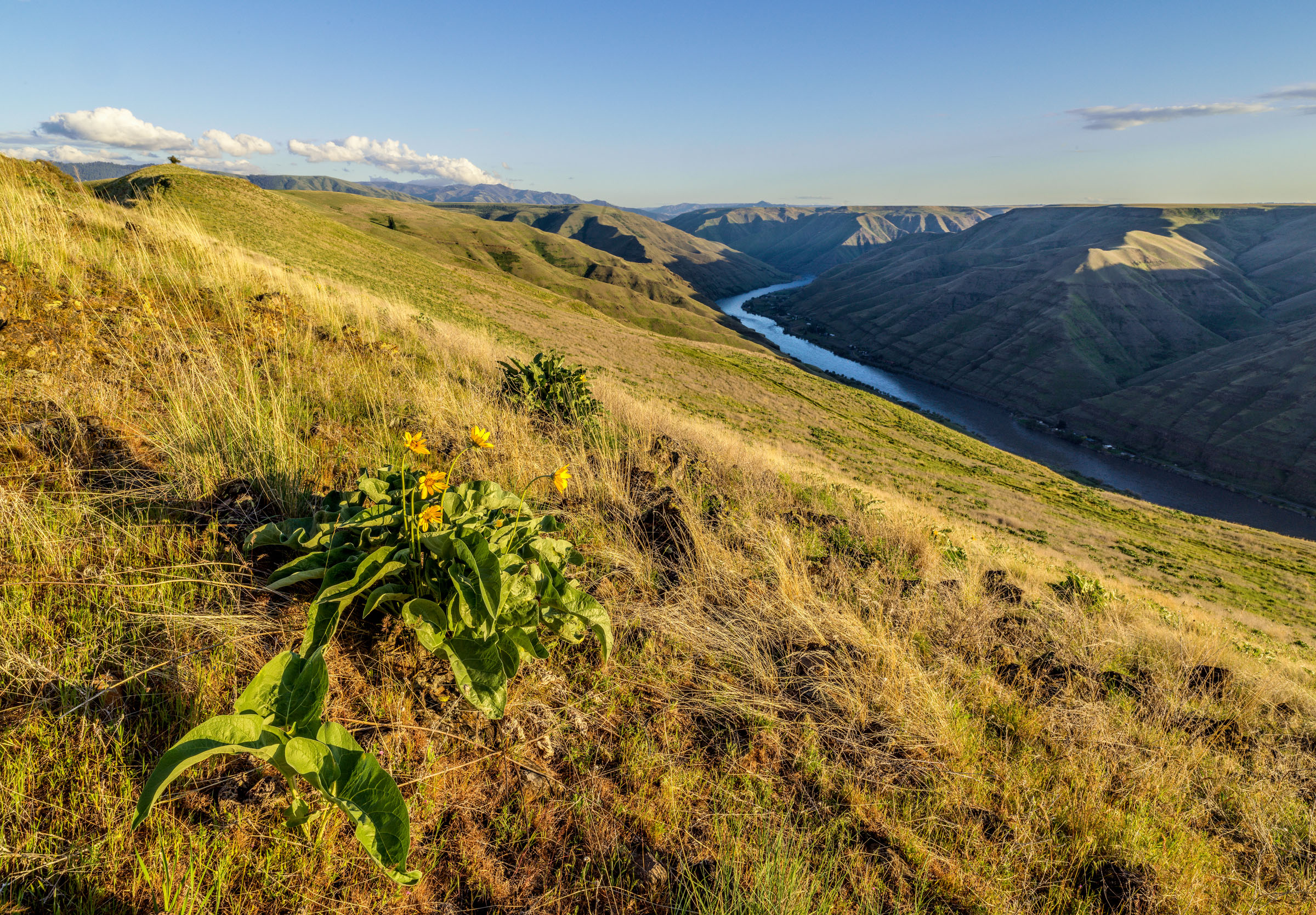
Key Habitat For Hells Canyon Bighorn Sheep Permanently Preserved Along Snake River
August 13th, 2020
A piece of the Northwest’s most important habitat for bighorn sheep was protected this week, thanks to a partnership between Western Rivers Conservancy and the Idaho Department of Fish and Game.
Multiple Pregnancies Among Southern Resident Killer Whales; Agencies Call For Boaters To Steer Clear During Critical Time
August 13th, 2020
With news of multiple pregnancies among the endangered Southern Resident killer whales, the Washington Department of Fish and Wildlife, NOAA Fisheries, whale watch leaders, and Soundwatch are calling for boaters to steer clear of the whales and give them extra space on the water at this critical time.
Science Policy Forum Article Argues That Trump Administration Changes To Clean Water Act Leaves Millions Miles Of Streams, Wetlands Unprotected, Distorts Science
August 13th, 2020
A new federal rule that determines how the Clean Water Act is implemented leaves millions of miles of streams and acres of wetlands unprotected based on selective interpretation of case law and a distortion of scientific evidence, researchers say in a new publication.

BPA CEO Mainzer To Leave Agency At End Of Month, Will Become New CEO Of California Independent System Operator
August 6th, 2020
Elliot Mainzer, who has served as administrator and Chief Executive Officer of the Bonneville Power Administration for the past seven years, will leave the agency at the end of August.
Application Period Begins For Oregon Fishing Businesses Seeking Relief For COVID-19 Impacts
August 6th, 2020
Oregon’s application period for potential assistance for COVID-19 impacts to fishing-related businesses is now open and extends through Sept. 8, 2020.

NOAA Fisheries Cancels Three West Coast Surveys Due To COVID-19
August 6th, 2020
Due to the uncertainties created by the COVID-19 pandemic and the challenges those are creating for NOAA Fisheries, the agency is cancelling three research surveys off the West Coast of the United States.

Washington State’s $9 Billion Shortfall Has WDFW Staff Proposing $30.8 Million In Service Reductions For 2021-23 Biennium Budget
August 6th, 2020
The Washington Fish and Wildlife Commission spent their July 31-Aug. 1 meeting considering upcoming legislative issues – service cuts, legislative priorities, and new funding requests – for the upcoming 2021 session.
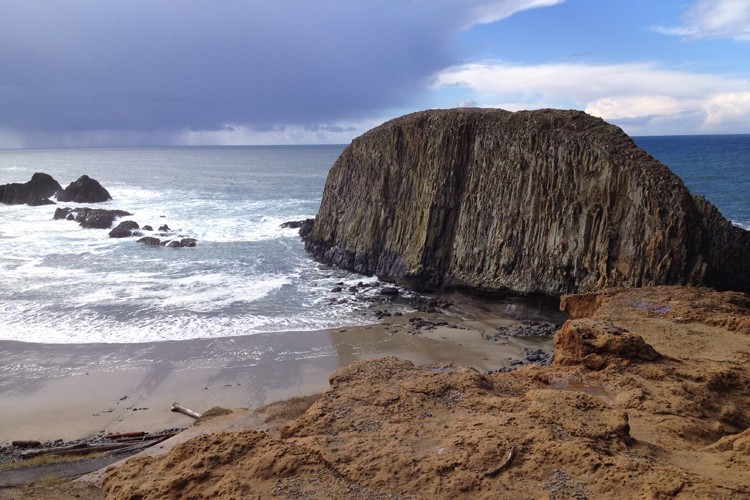
OSU Preparing To Solicit Bids For Nation’s First Full-Scale, Utility Grid-Connected Wave Energy Test Site Off Oregon Coast
August 6th, 2020
In preparation for a solicitation of bids for five 12-mile long subsea cables to support a wave energy testing facility, Oregon State University will host an information session for companies interested in the project.

Lower Columbia Estuary Partnership Gets New Executive Director
August 6th, 2020
Environmental conservation nonprofit Lower Columbia Estuary Partnership welcomed E. Elaine Placido as their new Executive Director. Placido replaces Debrah Marriott, who retired after leading the organization since its inception in 1995. Placido’s first day with the Partnership was July 18.

Final Plans Approved For Extensive Irrigation Infrastructure Modernization In Hood River Watershed; Piping 56 Miles Will Keep More Water Instream For Fish
July 30th, 2020
Plans to modernize East Fork Irrigation District’s irrigation infrastructure in Oregon’s Hood River watershed have been approved to move forward into construction.
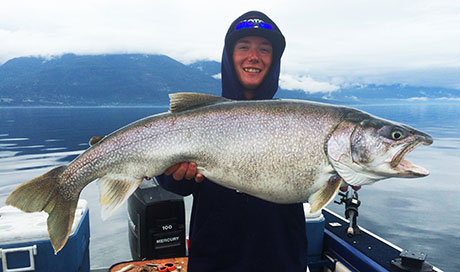
Confederated Salish And Kootenai Tribes ‘Mack Days’ To Reward Anglers ($300,000) For Pulling Out Of Flathead Lake As Many Lake Trout As Possible; Helps ESA-Listed Bull Trout
July 30th, 2020
Hundreds of trout anglers will head to Montana’s Flathead Lake this fall to compete in a fishing derby where the goal is not to catch the biggest trout, but to reel in the most. The daily bag limit for this contest may be surprising. Organizers encourage anglers to catch as many as 100 lake trout per day.

OSU Researchers Participate In Efforts, Study To Save Endangered Chinese Crested Terns, Now 100 Birds
July 30th, 2020
The global population of the critically endangered Chinese crested tern has more than doubled thanks to a historic, decade-long collaboration among Oregon State University researchers and scientists and conservationists in China, Taiwan and Japan.
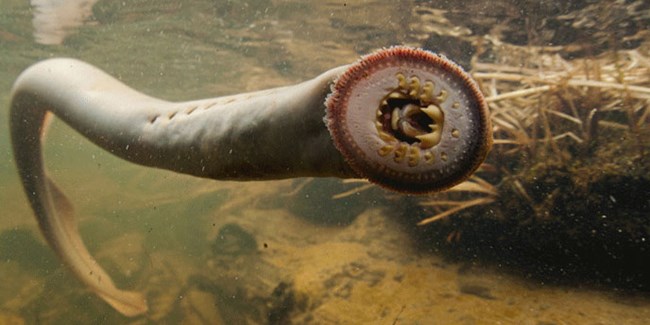
Lamprey Technical Workgroup Completes Guidance For Providing Passage For Pacific Lamprey At Road Crossings (Culverts)
July 30th, 2020
As part of its ongoing efforts to conserve Pacific Lamprey, the Lamprey Technical Workgroup recently completed a document to provide guidance for evaluating and providing passage for adult Pacific Lamprey at road crossings.
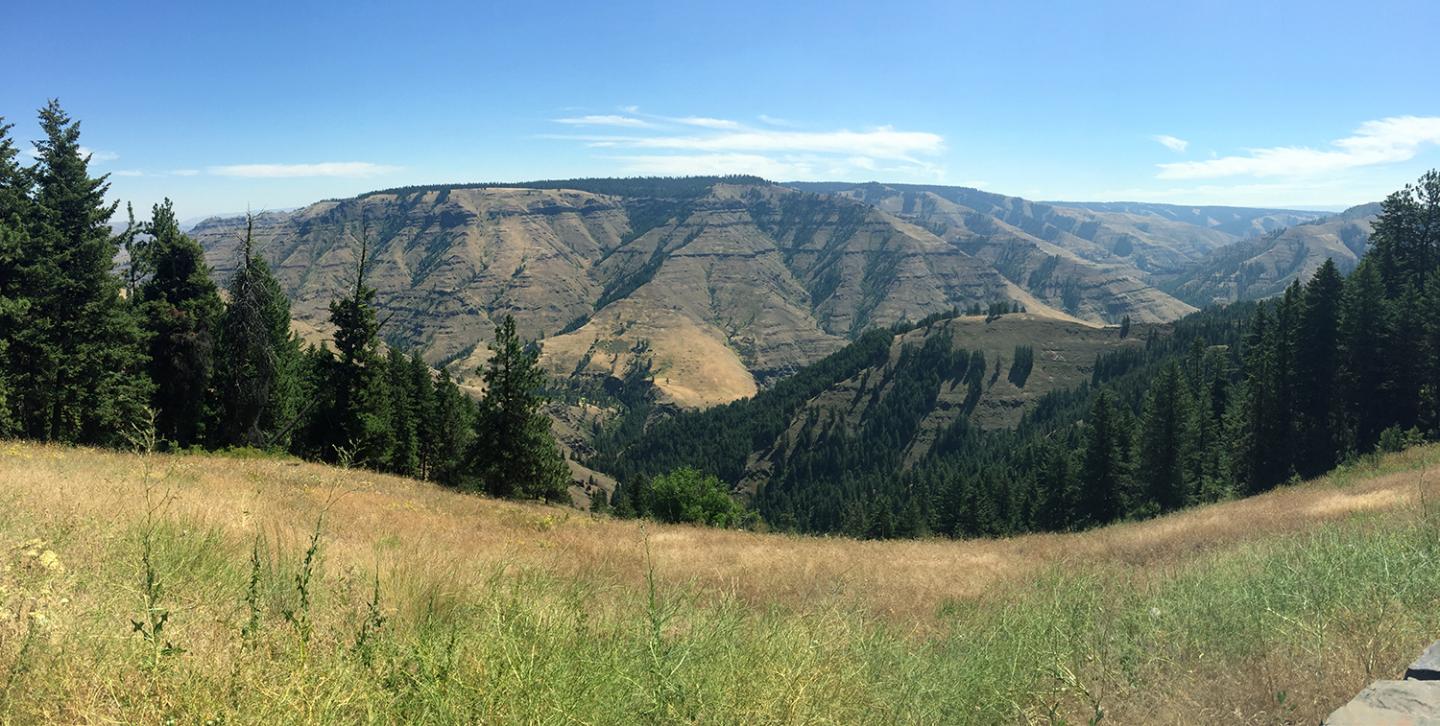
Study Looks At How Region Formed By Uplifting Of Columbia River Basalts, Youngest Flood Basalt Province On Earth
July 30th, 2020
Uplifting of Columbia River basalts has allowed University of Oregon researchers to better understand of how magma 14-16 million years ago shaped the region and why greenhouse gases released during a series of volcanic eruptions did not trigger a global extinction event.

With Better Than Expected Return, Lake Wenatchee Opens To Sockeye Retention, Expanded Bag Limit In Upper Columbia
July 30th, 2020
As returning sockeye salmon to the Columbia River continue to exceed preseason expectations, fishery managers with the Washington Department of Fish and Wildlife announced this week that Lake Wenatchee will open to sockeye retention beginning Monday, Aug. 3, while anglers will also be able to keep additional sockeye on the mainstem of the upper Columbia above Priest Rapids Dam.
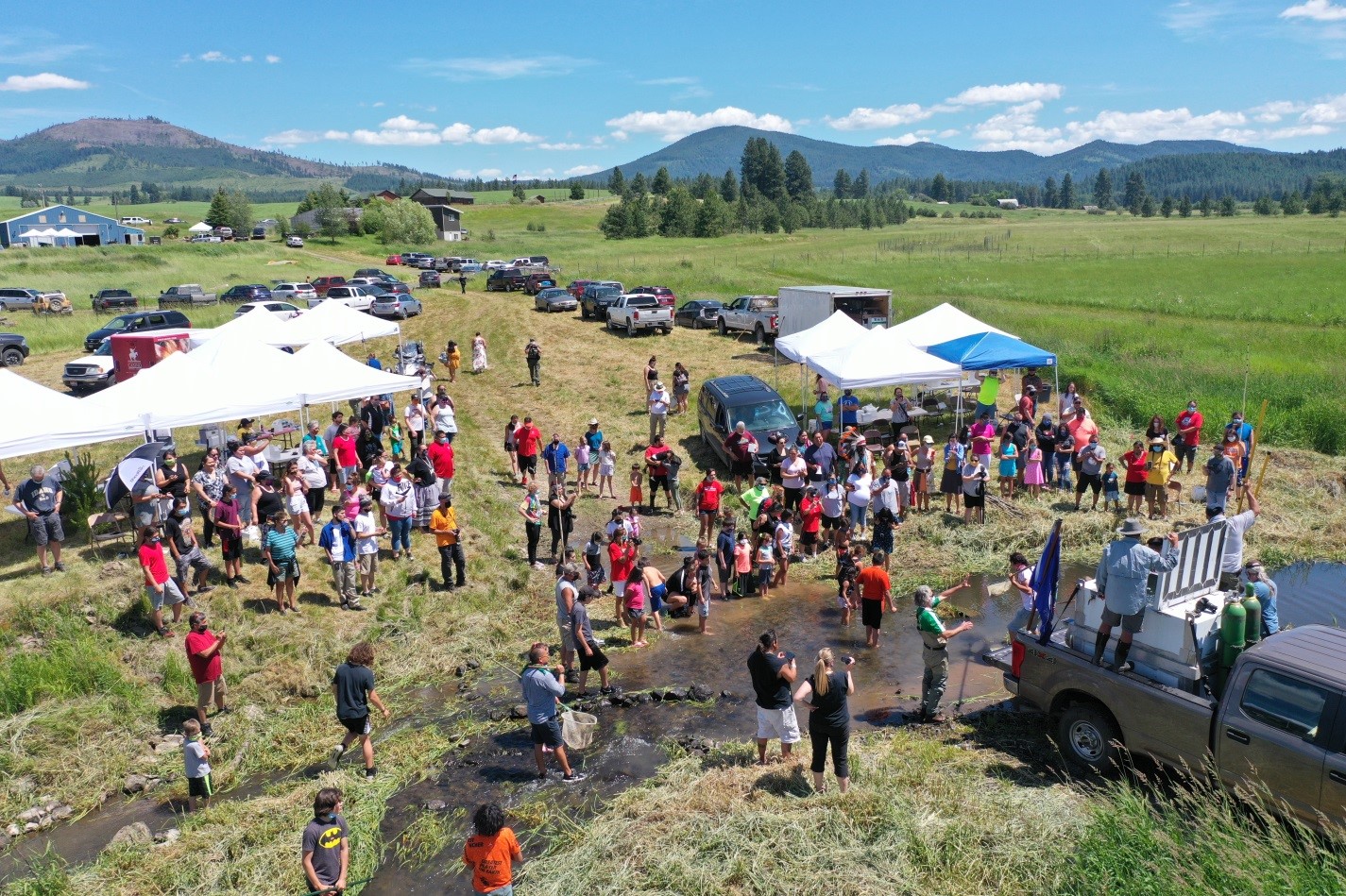
Coeur d’Alene Tribe Celebrates Return Of Chinook Salmon To Hangman Creek On Reservation For First Time In Over 100 Years
July 16th, 2020
Whoops and cheers erupted from the crowd – the sound of singing and hand drums alive in the background – as community members of the Coeur d’Alene Indian Reservation gathered at the edge of Hangman creek near Tensed, Idaho. All eyes were turned to the water and to the trucks full of chinook salmon.
Spears, Spear Guns Allowed in Oregon’s Coquille River System To Harvest Non-Native Smallmouth Bass Limiting Fall Chinook Returns
July 16th, 2020
The use of bait, spears, and spear guns to harvest smallmouth bass is now allowed in Oregon’s Coquille River system July 15 through October 31, 2020. The temporary rule aims to reduce impacts of illegally introduced smallmouth bass on native fall chinook salmon.

Removal Of Middle Fork Nooksack Dam Begins, Will Give ESA-Listed Salmon/Steelhead Access To 16 Miles Of Habitat
July 16th, 2020
The NOAA-supported effort to remove the Middle Fork Nooksack Dam will restore access to 16 miles of habitat for threatened salmon and steelhead.
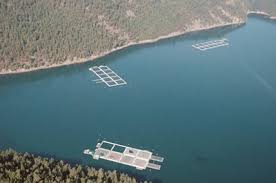
Wild Fish Conservancy Submits Applications To Lease State-Owned Sites Used For Open Water Net Pen Aquaculture, Would Restore To Natural State
July 16th, 2020
The Wild Fish Conservancy this week submitted formal applications to the Washington Department of Natural Resources to lease Puget Sound state-owned aquatic land sites used and leased for commercial open water net pen aquaculture.
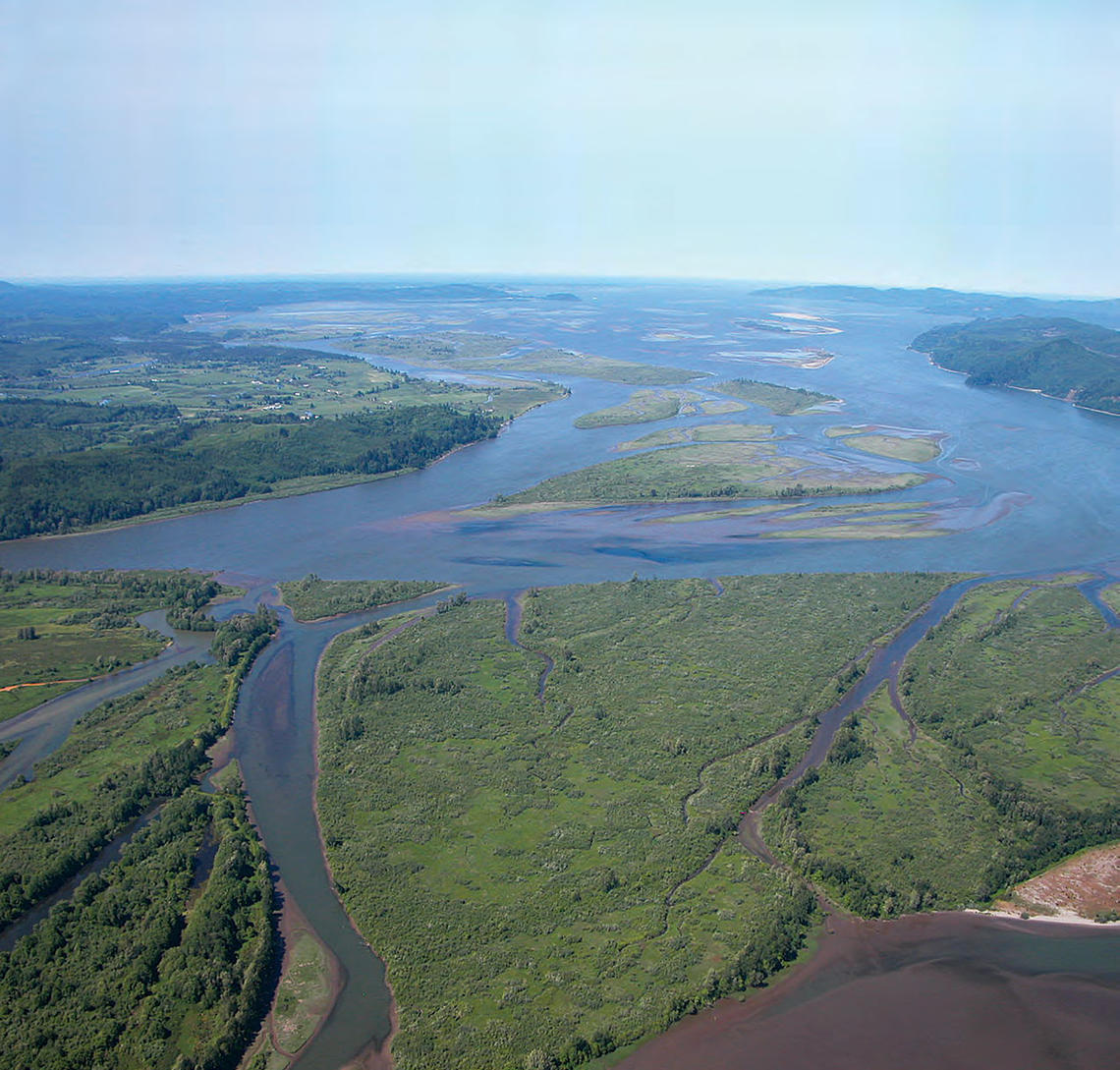
Columbia River Inter-Tribal Fish Commission Assumes Stewardship Of Ocean/Estuary Research Institution
July 9th, 2020
The Columbia River Inter-Tribal Fish Commission has assumed stewardship of a nationally renowned ocean and estuary research institution to better link knowledge of the Columbia River and Pacific Ocean.
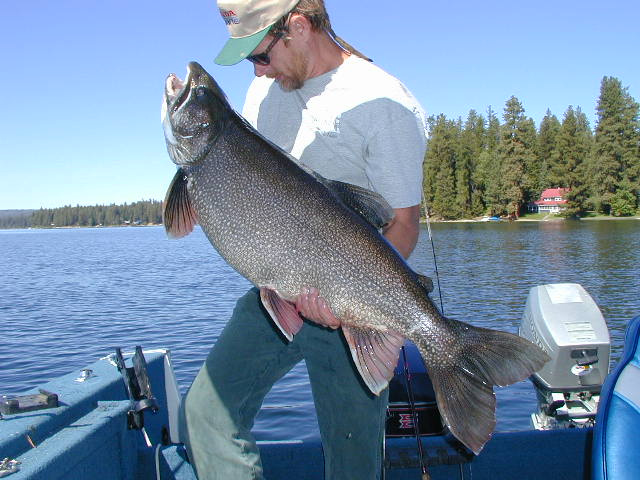
Following Successful Lake Trout Suppression, IDFG For First Time In 6 Years, Resumes Kokanee Stocking In Payette Lake
July 9th, 2020
For the first time since 2014, Idaho Fish and Game has stocked kokanee salmon into Payette Lake in McCall. Hatchery staff stocked a total of about 400,000 kokanee into the lake in late June, and will continue to stock that many kokanee every year until at least 2024.

Study: Rising Water Temperatures In Spawning Areas Threaten Mating Ability Of 60 Percent Of World’s Fish Species
July 9th, 2020
Because fish that are ready to mate and their young are especially sensitive to changes in temperature, in the future up to 60 percent of all species may be forced to leave their traditional spawning areas, says a new study.
Flathead Watershed Study Unlocks Mystery Of Subterranean Stoneflies In Alluvial Aquifers, Hotspots Of Biodiversity
July 2nd, 2020
In a new study, researchers from the University of Montana’s Flathead Lake Biological Station may have unlocked a mystery surrounding unique aquatic insects in the Flathead watershed.
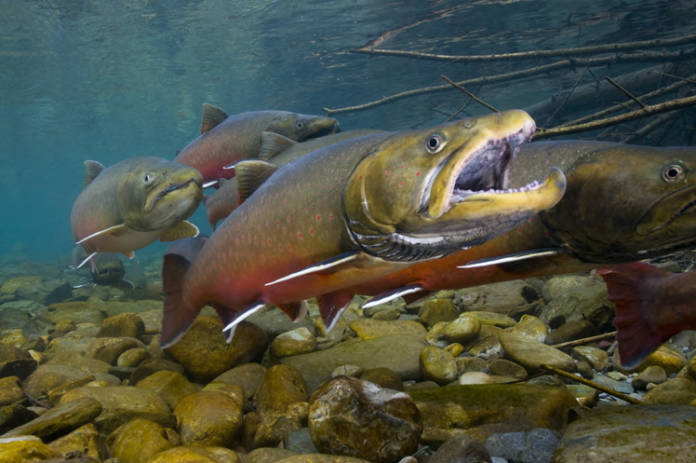
Biologists Track Bull Trout Travelling 200 Miles Between Hells Canyon and Central Idaho
July 2nd, 2020
Salmon and steelhead are famous for their migrations, but bull trout can also travel long distances.
WDFW Initiates Weekly Agency-Wide Employee Furloughs In Response To State Budget Shortfalls Due To COVID-19
July 2nd, 2020
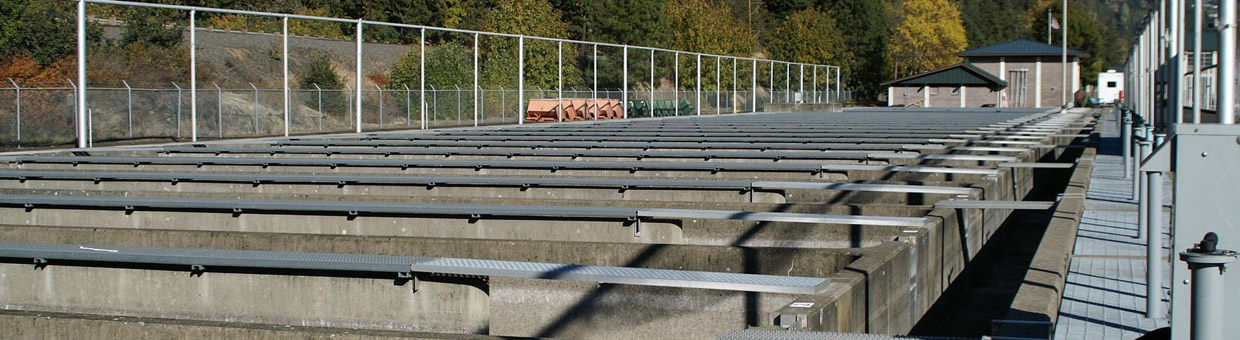
With Washington’s economy hard-hit by the COVID-19 pandemic, the Washington Department of Fish and Wildlife is planning agency-wide furloughs beginning this week.
Bonneville Power Offers Rate Relief For Customers Due To COVID-19 Impacts; Suspends Reserves Surcharge
July 2nd, 2020
The Bonneville Power Administration this week issued a decision to suspend its financial reserves surcharge through September 2021.
USFWS Biologist Injured By Grizzly Bear In Montana’s Centennial Valley
July 2nd, 2020
A biologist with the U.S. Fish and Wildlife Service was attacked by a grizzly bear in southwest Montana’s Centennial Valley last week. The individual suffered serious bite wounds but is expected to recover fully.
Wyoming Researchers Search For Answers On Why Western Bumblebees Declining in Western U.S. As USFWS Considers ESA-Listing
July 2nd, 2020
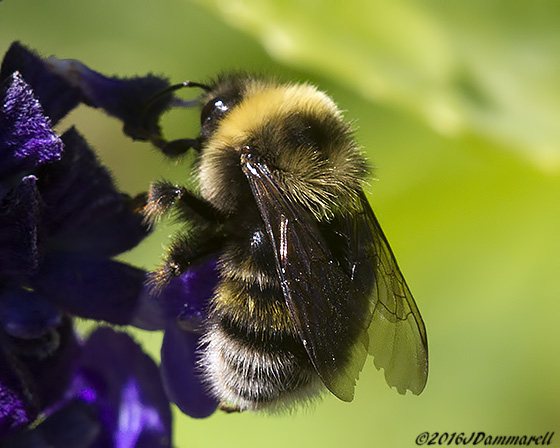
A University of Wyoming researcher and her Ph.D. student have spent the last three years studying the decline of the Western bumblebee. The two have been working with a group of bumblebee experts to fill in gaps of missing information from previous data collected in the western United States.
Corps Employees Create Debris Removal Device For Safer Passage Of Salmon/Steelhead At Little Goose Dam
June 25th, 2020
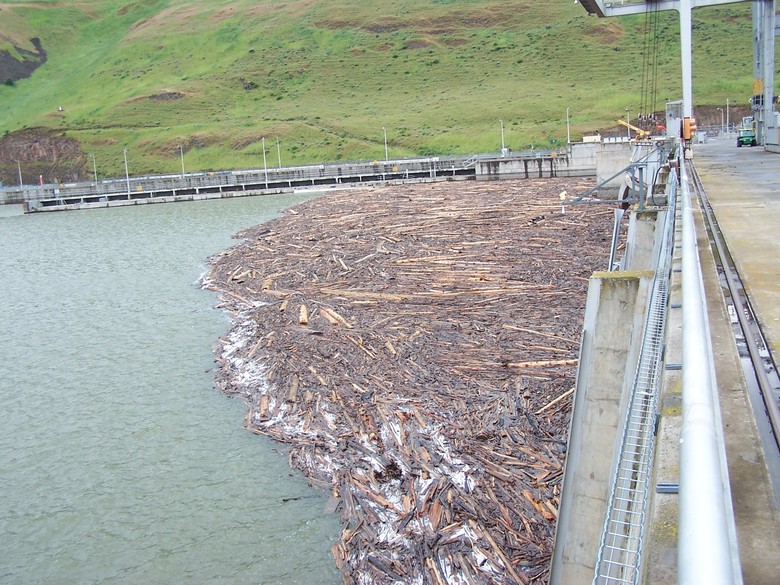
Two Army Corps of Engineers employees at Little Goose Dam on the lower Snake River created a device that removed debris blockages within the dam.

NW Power/Conservation Council Selects Northwest Natural’s Bill Edmonds As New Executive Director, Starts August 17
June 25th, 2020
The Northwest Power and Conservation Council this week named utility executive Bill Edmonds as its new Executive Director. Edmonds will replace Steve Crow, who will retire in August after serving 25 years in the position. Edmonds’ first day at the Council will be Monday, August 17th.

OSU Study Details Better Way To Keep Birds From Hitting Power Lines: ‘Flappers’ Show 70 Percent Lower Death Rate
June 25th, 2020
Suspended, rotating devices known as “flappers” may be the key to fewer birds flying into power lines, a study by Oregon State University suggests.

Scientists Warn Against Overly Optimistic Assessments On Reforestation As Mitigation For Climate Change
June 25th, 2020
Given the tremendous ability of forests to absorb carbon dioxide from the atmosphere, some governments are counting on planted forests as offsets for greenhouse gas emissions–a sort of climate investment. As with any investment, however, it’s important to understand the risks. If a forest goes bust–through severe droughts or wildfires, researchers say–much of that stored carbon could go up in smoke.

ODFW Opens Test Sturgeon Fishery On Lower Willamette River For Next Two June Saturdays
June 18th, 2020
Anglers will have an opportunity to retain a white sturgeon on the lower Willamette River the next two Saturdays, June 20 and 27 — the first retention opportunity in the lower Willamette since 2013.
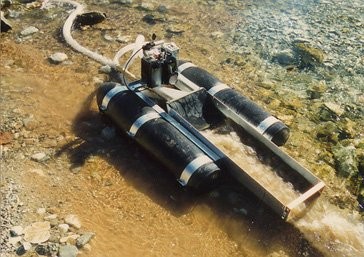
Washington State’s New Law Restricting Motorized Mining In Habitat For ESA-Listed Salmonids Goes Into Effect
June 18th, 2020
Starting last week, mineral prospectors in Washington state can no longer use motorized or gravity siphon equipment to search for gold in rivers and streams that are designated as critical habitat under the federal Endangered Species Act for salmon, steelhead, or bull trout, and all fresh waters in the state that salmonids use for spawning, rearing, and migration.
Idaho Closes Chinook Fishing On Lower Salmon; Fishing Restrictions In Oregon On Coastal Wild Chinook; Poor Ocean Conditions Lead To Low Forecasted Returns
June 18th, 2020
Idaho Fish and Game has closed the chinook salmon fishing season on the Lower Salmon River effective June 17, and the Little Salmon River effective at the end of fishing hours on June 20.

American Falls Reservoir Angler Nets New Catch-Release Record For Rainbow Trout In Idaho
June 18th, 2020
Brett Jones of Rock Springs Wyoming reeled in a new catch-and-release Idaho record for rainbow trout.

$4.7 Million In Grants Directed To Aquatic Habitat Restoration Projects In Washington’s Chehalis River Basin, Second Largest In State; Will Aid Salmonids
June 11th, 2020
A steering committee working to restore aquatic ecosystems in Washington’s Chehalis River Basin, second largest river basin in the state, is directing $4.7 million in grants to support local job capacity and fund 20 aquatic habitat restoration projects that will aid salmon and other fish species.
New Field Of Climate Change Refugia: Identifying Pockets Of Landscape (‘Lifeboats’) Supporting Biodiversity, Preserving Species
June 11th, 2020
Pockets of landscape less prone than adjacent areas to disturbances like fire and drought may hold the key for scientists, conservationists and land managers seeking to preserve vulnerable species in a changing climate.

WDFW Seeks Public Comment On Draft Strategic Plan For Avoiding Continued Fish/Wildlife Declines
June 11th, 2020
The Washington Department of Fish and Wildlife this week released a draft strategic plan the agency says is “designed to help WDFW invest in connections with communities and partners to improve fish, wildlife and habitat outcomes.”
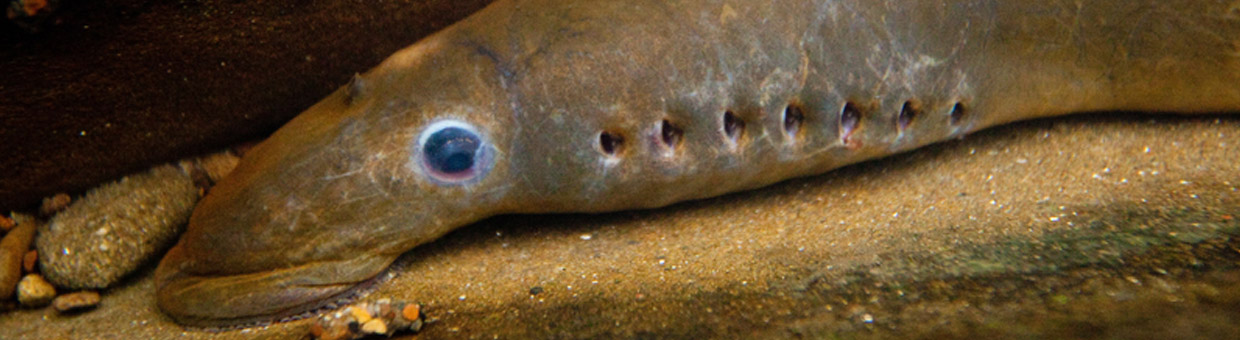
Lamprey Technical Workgroup Issues ‘Best Management Guidelines For Native Lampreys During In-Water Work’
June 11th, 2020
Pacific lamprey are an ecologically important, anadromous fish species, native to the Pacific Northwest, and culturally important to Native American Tribes. An ancient species, lampreys have been on earth since the time before dinosaurs.

Study Confirms Reintroduction Of Wolves In Yellowstone Means Less Elk, Recovery Of Tall Willows Along Streams
June 4th, 2020
The reintroduction of wolves into Yellowstone National Park is tied to the recovery of tall willows in the park, according to a new Oregon State University-led study.
For First Time, Commerce Measures ‘Marine Economy;’ $373 Billion, Tourism/Recreation (Including Fishing), $143 Billion
June 4th, 2020
America’s marine economy, including goods and services, contributed about $373 billion to the nation’s gross domestic product in 2018 and grew faster than the nation’s economy as a whole, according to the marine economy statistics released this week by two Department of Commerce agencies.

Warming Ocean Threatening Pacific Northwest’s Glass Sponge Reefs, Associated Marine Life; Only Known Reefs Of Their Kind
June 4th, 2020
Warming ocean temperatures and acidification drastically reduce the skeletal strength and filter-feeding capacity of glass sponges, according to new University of British Columbia research.
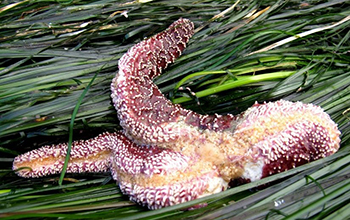
UW Researchers Look At Connection Between Warming Ocean Events (Pulse Heat Stress), Rise In Marine Parasites, Disease
June 4th, 2020
Warming events are increasing in magnitude and severity, threatening many ecosystems worldwide. As the global temperatures continue to climb, it also raises uncertainties as to the relationship, prevalence, and spread of marine parasites and disease.
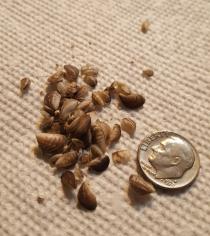
WDFW Detection Dog Sniffs Out Tiny Invasive Mussels On Boat Already Decontaminated At Three Previous Check Stations; Montana Flushing Ballast Tanks
May 29th, 2020
“Puddles,” Washington State’s first mussel detection dog, proved on Memorial Day weekend that a canine partner is invaluable in the fight against aquatic invasive species.

Some Recreational Fishing Reopens In Washington Coastal Waters; Guide, Charter Services Authorized
May 29th, 2020
After two months of closures due to concerns surrounding the COVID-19 pandemic in Washington, many of the state’s coastal waters reopened for fishing on May 26.
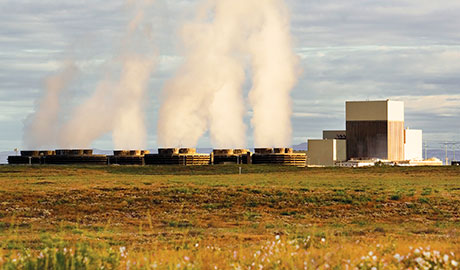
New Flexibility At Nuclear Plant Helps Bonneville Power Manage Power Oversupply During Spring Runoff
May 29th, 2020
BPA exclusively markets the power from the Columbia Generating Station located in southeastern Washington. Owned by Energy Northwest, the nuclear power plant is the third largest energy producer in the Northwest behind Grand Coulee and Chief Joseph dams.
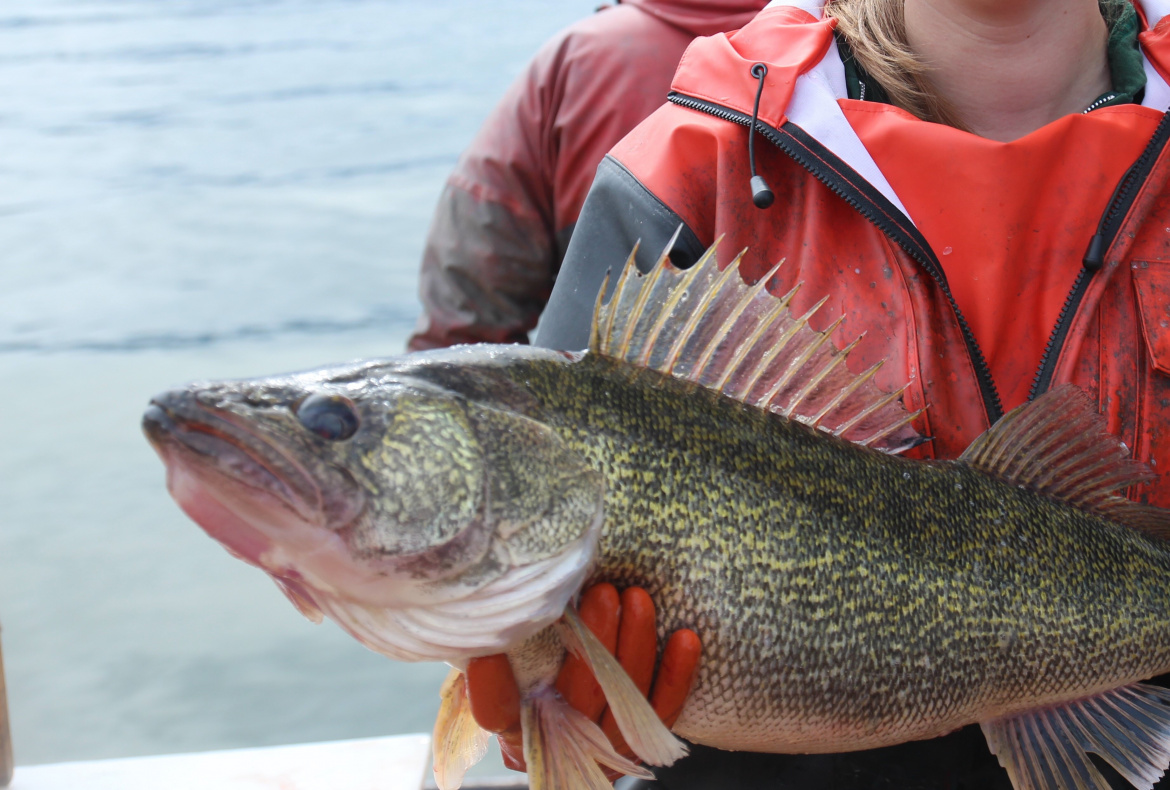
Lake Pend Oreille Walleye Lottery Showing Good Participation; This Year More $1,000 Reward Tags
May 29th, 2020
In March 2019, Idaho Fish and Game kicked off the first year of the walleye lottery program by announcing that $50,000 in reward money was swimming in Lake Pend Oreille. Nearly 200 anglers participated in the inaugural season and winners took home just under $9,000 in prize money.

Bering Sea Study: New Analytical Approach Improves Understanding Of How Environmental Variables Affect Juvenile Fish Survival
May 29th, 2020
Scientists have developed a novel analytical method that refines their understanding of how regional environmental and climate conditions affect juvenile fish survival.
Stanford Scientists Map Wildfire Fuel Moisture Across West With AI, Satellite Data; Could Help Fire Management Decisions
May 29th, 2020
As California and the American West head into fire season amid the coronavirus pandemic, scientists are harnessing artificial intelligence and new satellite data to help predict blazes across the region.

Can California’s Endangered Salmon Survive Continued Drought? Pools Serving As Drought Refuges Crucial
May 21st, 2020
Increased frequency and severity of droughts threatens California’s endangered salmon population–but pools that serve as drought refuges could make the difference between life and death for these vulnerable fish, according to a study by researchers from UC Berkeley and California Sea Grant, a partnership between NOAA and Scripps Institution of Oceanography at the University of California San Diego.
NOAA Selects UW To Host Institute For Climate, Ocean, Ecosystem Research, Will Partner With UAF, OSU; $300 Million Over 5 Years
May 21st, 2020
The National Oceanic and Atmospheric Administration this week announced it has selected the University of Washington to host NOAA’s Cooperative Institute for Climate, Ocean, and Ecosystem Studies.
WDFW Seeks Public Comment On Scope Of EIS For Rules For Commercial Viewing Of Killer Whales
May 21st, 2020
The Washington Department of Fish and Wildlife is seeking public comments on the scope of environmental impacts it should consider as part of its work to license commercial whale watching and develop rules for commercial viewing of Southern Resident Killer Whales.

Potential Landslide From Rapid Retreat Of Glacier Creates Threat Of Large, Dangerous Tsunami In Alaska’s Prince William Sound
May 21st, 2020
The threat of a large and potentially dangerous tsunami is looming in Prince William Sound, where an increasingly likely landslide could generate a wave with devastating effects on fishermen and recreationalists using the area, the state’s top geologist said this week.
ODFW Lead State Agency To Distribute $16 Million In Federal COVID-19 Relief Aid To Marine, Coastal Fishery Businesses
May 14th, 2020
The Oregon Department of Fish and Wildlife anticipates that nearly $16 million in federal relief aid will be available for Oregon’s marine-related and coastal fishery sectors experiencing significant economic impacts from the global COVID-19 pandemic.
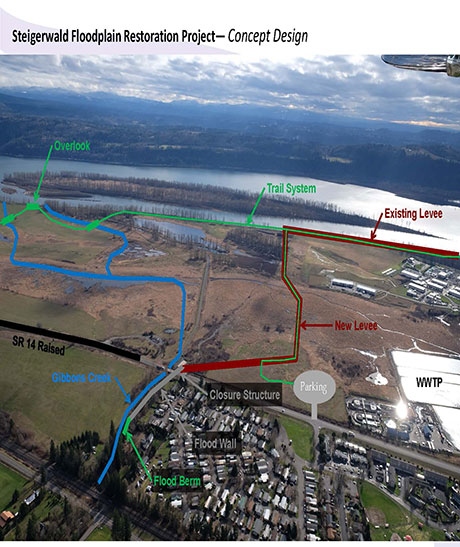
Construction To Begin On Largest Lower Columbia Habitat Project, Connects Floodplain To River
May 14th, 2020
Construction begins at Steigerwald Lake National Wildlife Refuge on June 1 as part of the largest habitat restoration project along the lower Columbia River to date. Salmon, lamprey, waterfowl, and many other species will benefit when a vast historic floodplain is reconnected to the Columbia River, providing fish with unobstructed passage to newly restored, high quality habitat in an area of the river where such habitat is lacking.
Washington Workgroup To Hold Public Webinar On Columbia River Salmon Management, Encourages Public Testimony
May 14th, 2020
The Columbia River Salmon Fishery Policy Workgroup will hold a virtual public meeting later this month to continue its work reviewing the Washington Fish and Wildlife Commission’s policy on salmon management in the Columbia River basin.
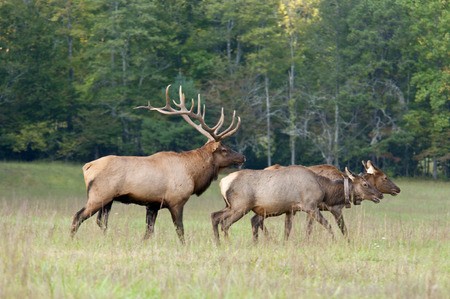
WDFW Confirms Elk Hoof Disease Case In Yakima Elk Herd, Affects 8 Of 10 Elk Herds In State
May 14th, 2020
The Washington Department of Fish and Wildlife announced today that test results from samples taken from a juvenile elk in the Yakima herd confirmed the presence of elk hoof disease, known scientifically as treponeme-associated hoof disease (TAHD).
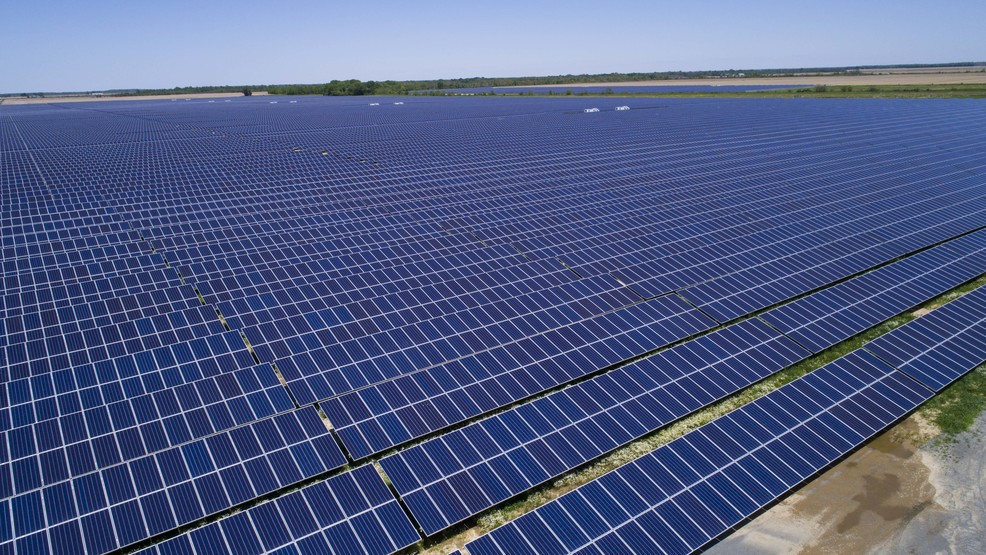
Interior Approves $1 Billion Plan For Largest Solar Project In U.S. North Of Las Vegas; Will Serve So.California Energy Markets
May 14th, 2020
The Department of the Interior and the Bureau of Land Management announced today the approval of a proposal to construct and operate the largest solar project in United States history.
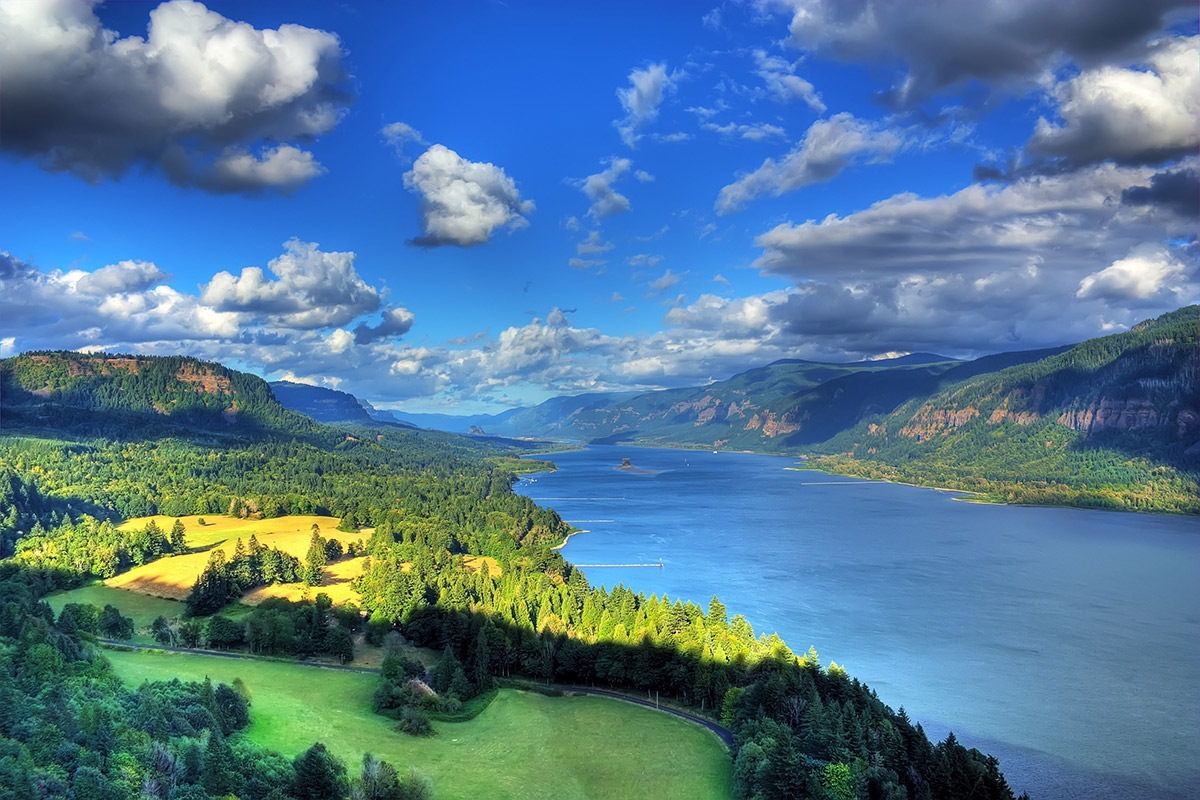
EDITOR’S NOTEBOOK: Year One Anniversary Of Subscription-Based Columbia Basin Bulletin, Still More To Do
May 14th, 2020
If someone had told me a year ago, when I was planning to launch the new subscription-based Columbia Basin Bulletin, that in nine months the nation would be dealing with a pandemic striking a hard blow to the economy, I might have questioned the wisdom of the enterprise.
Commerce Announces COVID-19 Impact Aid For Fishermen, Charters, Tribes, Seafood Industries; $50 Million Each For Alaska, Washington
May 8th, 2020
Secretary of Commerce Wilbur Ross this week announced the allocation of $300 million in economic relief to U.S. fishermen and seafood industries affected by the COVID-19 pandemic. The funds were allocated as part of the Coronavirus Aid, Relief, and Economic Security Act, signed into law on March 27 by President Trump.
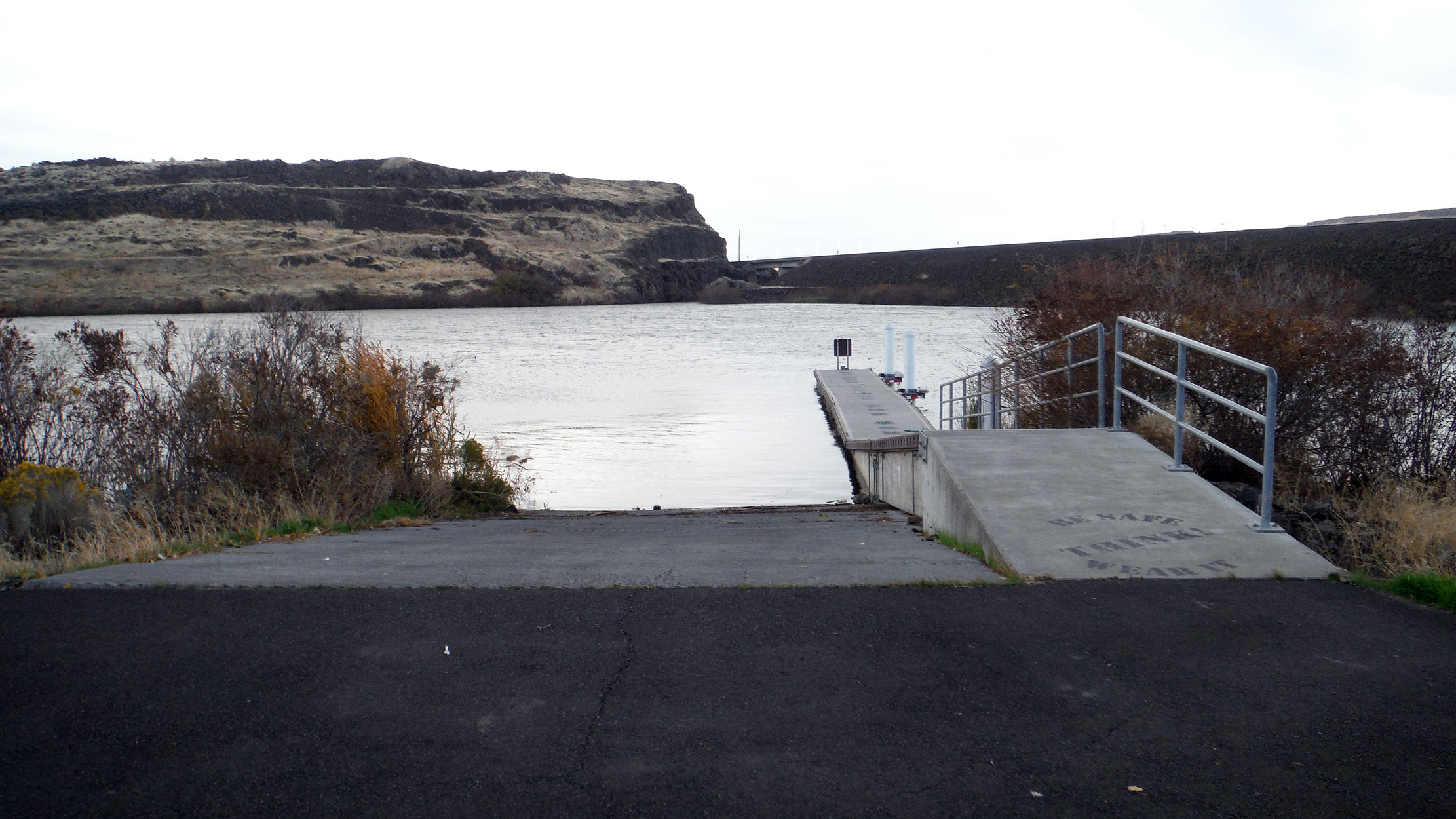
Fishing Reopens Across Washington State, Lower Snake River Open For Springers; Corps Relaxes Recreation Site Restrictions
May 8th, 2020
With fishing reopened under standard rules on May 5, following a statewide closure to help combat the spread of COVID-19, the Washington Department of Fish and Wildlife reminds anglers that a number of emergency rules remain in effect for state waters.
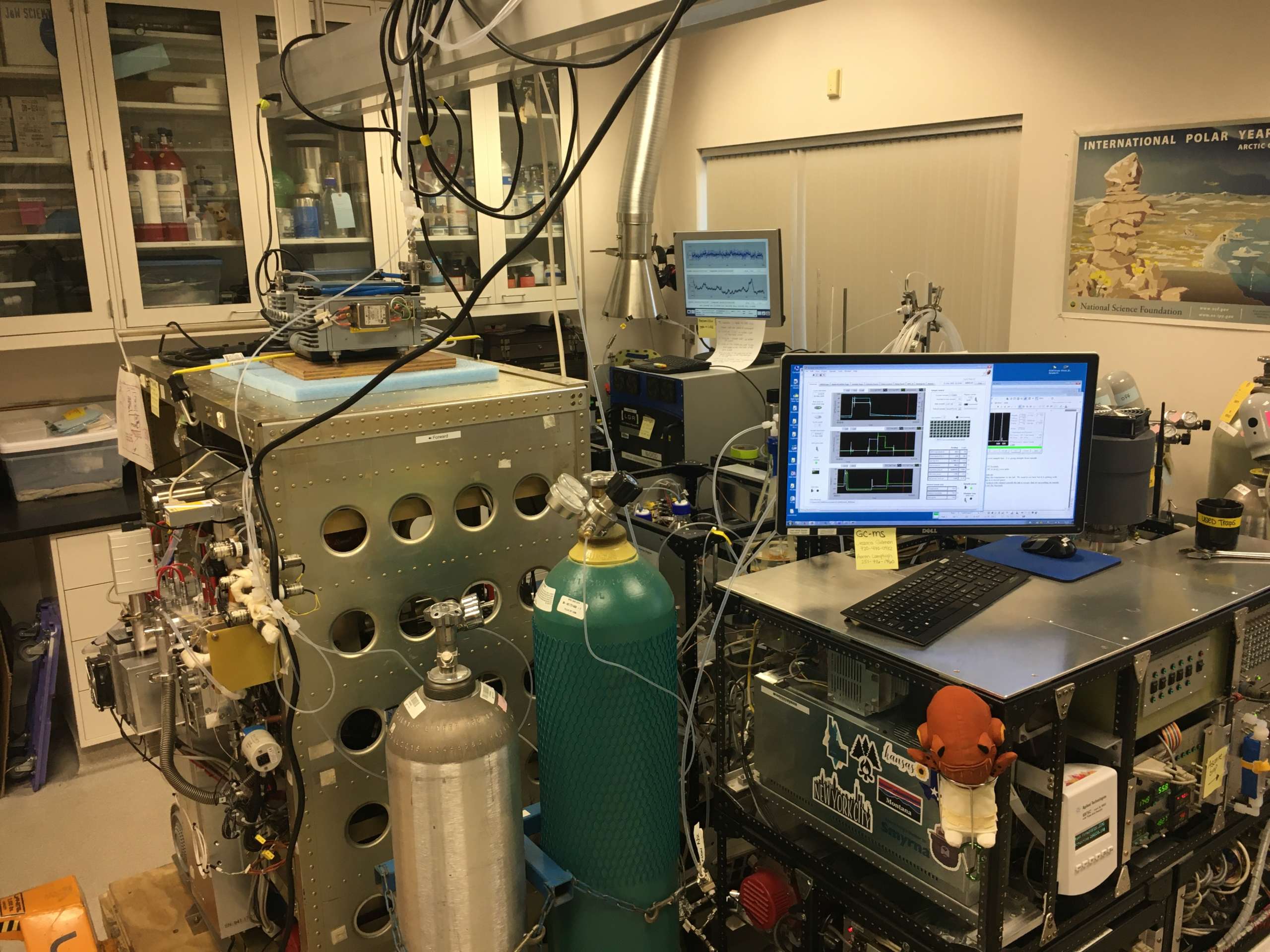
NOAA Launches Wide-Ranging Research Effort Exploring COVID-19 Impact On Environment; Reduced Traffic, Air Travel, Shipping
May 8th, 2020
The coronavirus pandemic response has reduced pollution from a large number of sources across many geographic regions. NOAA has launched a wide-ranging research effort to investigate the impact of reduced vehicle traffic, air travel, shipping, manufacturing and other activities on Earth’s atmosphere and oceans.

IDFG Netting Lake Trout In Upper Priest Lake To Reduce Predation On Bull Trout, Cutthroat
May 8th, 2020
Idaho Fish and Game staff will conduct annual lake trout removal efforts between May 11 and May 29 in Upper Priest Lake. This netting program keeps non-native lake trout numbers low, reducing predation and competition on native fish like bull trout and westslope cutthroat trout.

UW Study Indicates Pacific Oysters May Not Contain As Many Microplastics As Previously Thought
May 8th, 2020
Plastic pollution is an increasingly present threat to marine life and one which can potentially impact your dinner table.
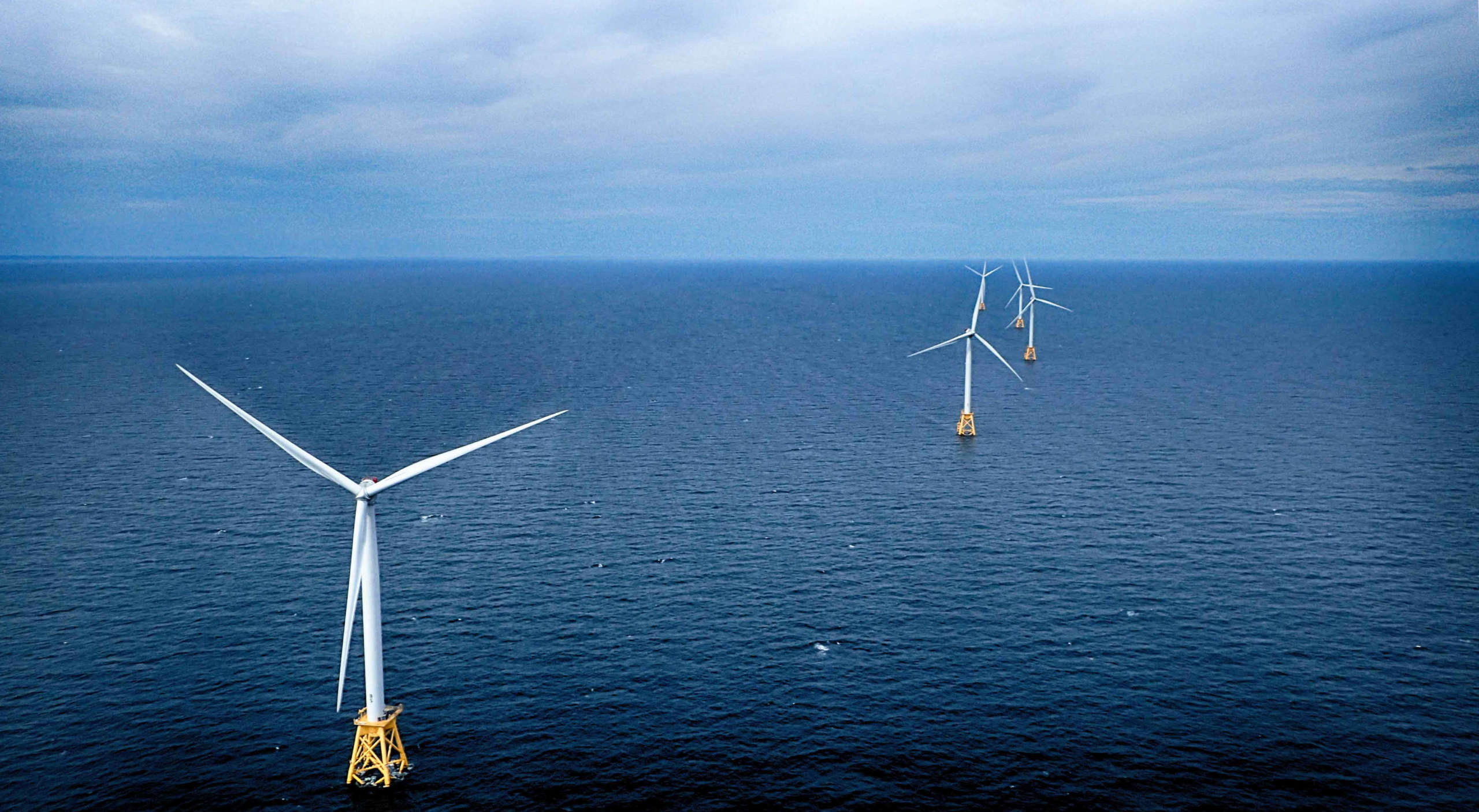
OSU Researchers Suggest ‘Green New Deal’ Should Include Some Blue By Including Ocean Policy
May 8th, 2020
The world’s oceans play a critical role in climate regulation, mitigation and adaptation and should be integrated into comprehensive “green new deal” proposals being promoted by elected officials and agency policymakers, a group of ocean scientists suggests in a new paper.
Lewiston Angler Breaks Smallmouth Bass Catch/Release State Record At Dworshak Reservoir
May 8th, 2020
Dustin Shepherd of Lewiston, Idaho broke the most recent catch and release state record for smallmouth bass.
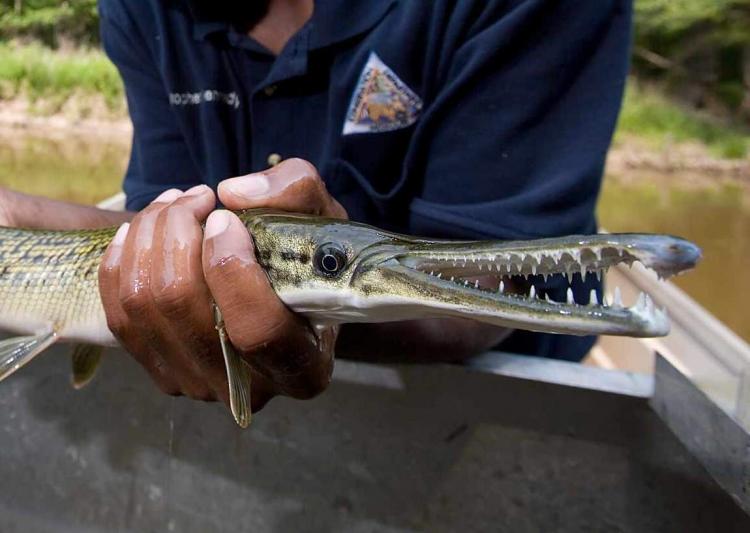
Fishermen Catch What Appear To Be Alligator Gar Fish In Yakima River Delta
May 8th, 2020
Two commercial fishermen fishing for carp last month in the Yakima River delta near Bateman Island reported catching what appear to be two alligator gars.
Washington To Open Some Recreational Fishing Tuesday, Asks People Do So Locally; Crowding Could Lead To Reclosures; Oregon Opens To Non-Residents
May 1st, 2020
The Washington Department of Fish and Wildlife announced this week it will reopen some recreational fishing and hunting in a phased approach following the state’s efforts to limit the spread of coronavirus. The department is asking hunters and anglers to enjoy these outdoor activities only if they can do so locally, while also practicing physical distancing.
2020 Pikeminnow Sport-Reward Fishery Delayed Due To COVID-19, Tentatively Set For May 11
May 1st, 2020
Due to the COVID-19 pandemic, the 2020 Northern Pikeminnow Sport-Reward Fishery will not open on May 1, as originally planned. The fishery is tentatively scheduled to open May 11, for registered anglers with licenses to fish in the Columbia and Snake rivers, says the Bonneville Power Administration, which funds the program.
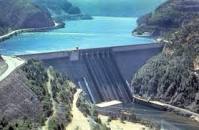
Guest Column: Low Willamette Valley Reservoirs Could Use Some Rain Soon; ‘Going To Be A Very Tough Year’
May 1st, 2020
Last spring, communities across the Willamette Valley watched rivers and reservoirs swell rapidly as a tropical storm delivered historic late-season rainfall. And as some battled flooding — and others the threat of I — the reality was abundantly clear: We had more water than we could handle.
Montana Finds Mussels On Sailboat Coming From Arizona, Headed For Idaho
May 1st, 2020
On April 22, the Montana Fish, Wildlife & Parks Dillon watercraft inspection station intercepted a sailboat coming from Lake Pleasant, AZ, carrying invasive mussels. The boat owner was traveling north on Interstates 15 and 90 in route to northern Idaho. The sailboat was not launching in Montana.

Alaska Study Looks At New Hazard In Warming World: Glacier Detachment
May 1st, 2020
On the evening of August 5, 2013, a startling event occurred deep in the remote interior of the United States’ largest national park. A half-kilometer-long tongue of Alaska’s Flat Creek glacier suddenly broke off, unleashing a torrent of ice and rock that rushed 11 kilometers down a rugged mountain valley into the wilderness encompassed by Wrangell-St. Elias National Park and Preserve.
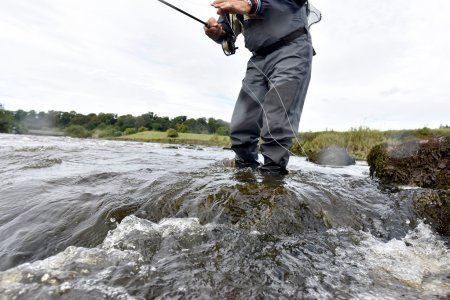
SIMMS Donates Repurposed Waders As PPE For Montana Fish, Wildlife, Parks Staff
May 1st, 2020
COVID-19 is requiring new solutions for fish and wildlife managers. One such solution is being implemented to help Montana Fish, Wildlife & Parks continue providing recreation opportunities across the state.
Study Looks At ‘Hyperstability’ Where Recreational Fishing Catch Rates High As Fish Abundance Declines
May 1st, 2020
Fishery collapses can be difficult to forecast and prevent due to hyperstability, a phenomenon where catch rates remain high even as fish abundance declines.

Pacific Fishery Management Council’s Final Southern Resident Killer Whale Risk Assessment Due In June
May 1st, 2020
In March the Pacific Fishery Management Council approved the ad hoc Southern Resident Killer Whale Workgroup’s draft risk assessment. A final version, incorporating an executive summary and minor edits, is expected by June.
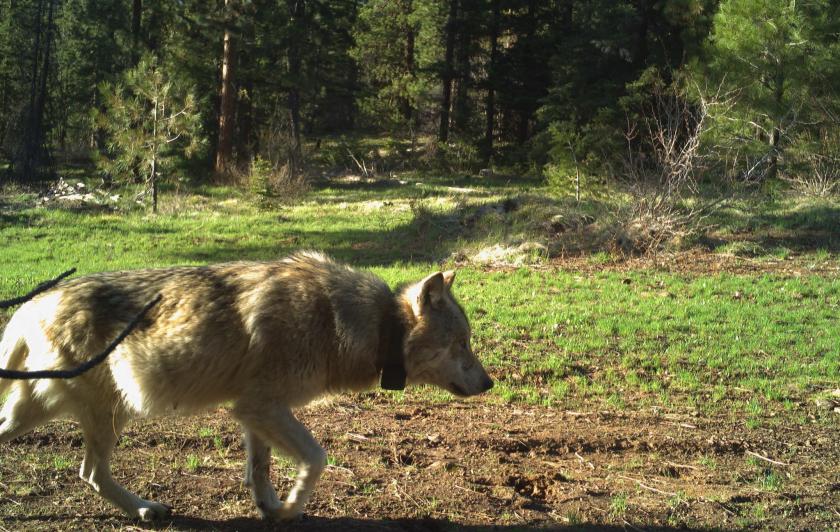
Washington Wolf Report: Overall Numbers Up Compared To 2018, Packs, Breeding Pairs Lower
April 23rd, 2020
Washington’s wolf population continued to grow in 2019 as the minimum count of wolves reached their highest levels since wolves were essentially eliminated from the state in the 1930s.
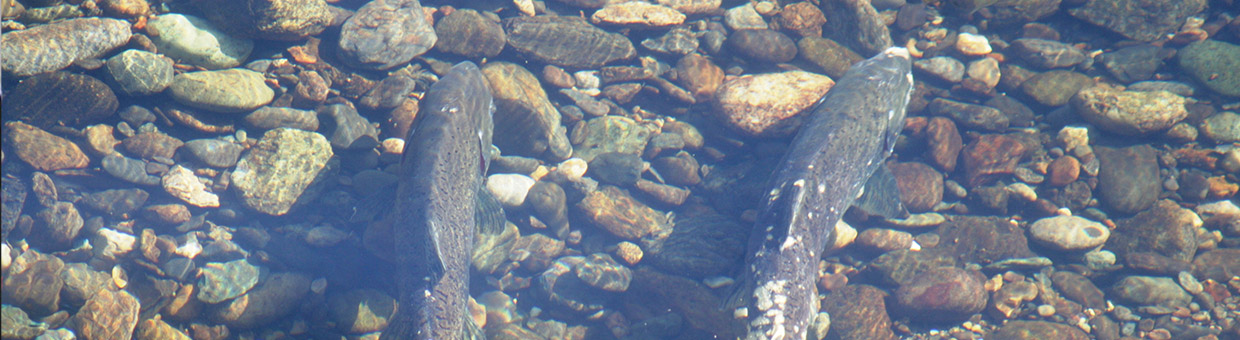
Spring Chinook Fishing Opens Saturday (April 25) In Hells Canyon; Below Average Run Won’t Be Getting There For Awhile
April 23rd, 2020
Spring chinook season will open in Hells Canyon on April 25 from the Dug Bar boat ramp to the boundary below Hells Canyon Dam, said the Oregon Department of Fish and Wildlife this week.

To Limit Out-Of-Towners During COVID-19 Restrictions, California Delays Trout Fishing Opener In Three Counties, Some Closures In Another
April 23rd, 2020
As requested by county officials, California Department of Fish and Wildlife Director Charlton H. Bonham, in consultation with California Fish and Game Commission President Eric Sklar, delayed the start of the trout opener in Alpine, Inyo and Mono counties.
IDFG Confirms Fresh Grizzly Bear Tracks Near Grangeville, Match Bear Collared Near Idaho-Canada Border
April 23rd, 2020
Fresh grizzly bear tracks were confirmed by an Idaho Fish and Game conservation officer in the Fish Creek Meadows winter recreation area about 7 miles south of Grangeville on April 18, 2020.
Scientists Create New Database To Track Climate Change Impacts On Freshwater Fish; Searchable Directory Of Journal Articles
April 23rd, 2020
Scientists have created a new database to help track the impacts of climate change on fish living in rivers, lakes and other inland waters throughout the world.
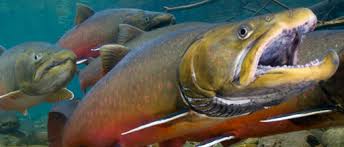
Post Falls Man Sets New Idaho Catch/Release Record For Bull Trout; 30.5 Inches
April 23rd, 2020
A Post Falls, Idaho man set a new Idaho catch/release record for bull trout, catching the monster while fishing the Kootenai River near Bonner’s Ferry on April 8.
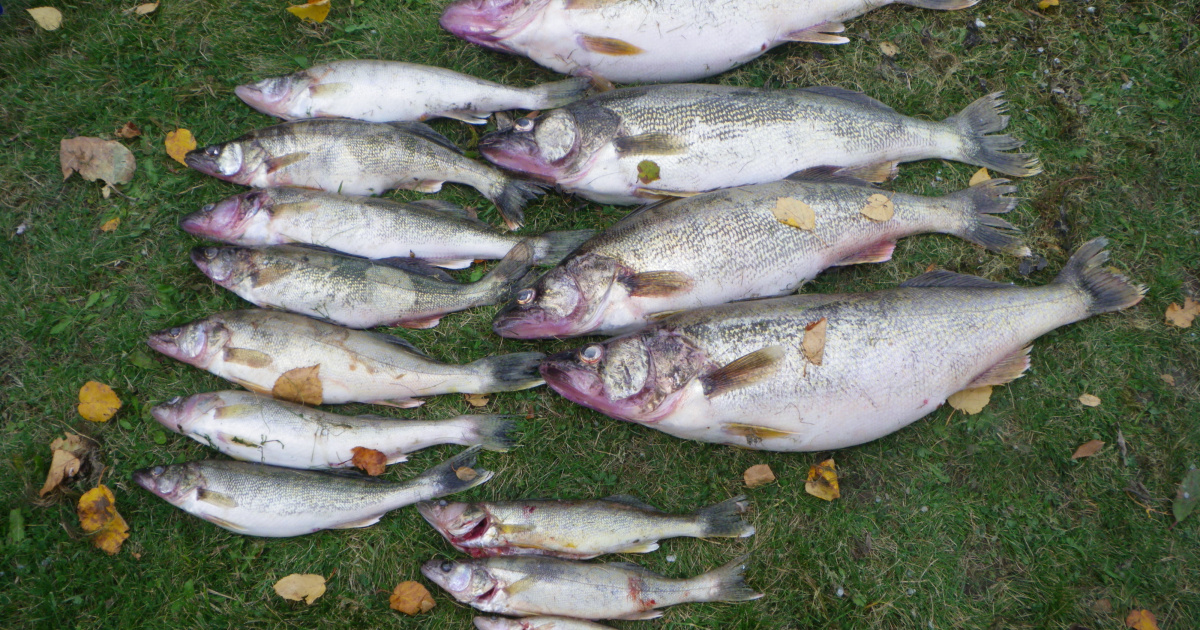
IDFG Again Netting Non-Native Walleye In Lake Pend Oreille To Protect Other Fisheries
April 16th, 2020
A growing walleye population in Lake Pend Oreille poses a threat the lake’s ecosystem and multi-million dollar recreational fishery. Idaho Fish and Game biologists are concerned that if left unchecked, walleye numbers will continue to increase to the point of collapsing the keystone kokanee population, also hurting growth rates of trophy fish like rainbow trout, bull trout and smallmouth bass.

California Fish/Game Commission Votes To Allow Temporary Fishing Closures Where Locals Fear Spread Of COVID-19 From Out-Of-Towners
April 16th, 2020
The California Fish and Game Commission Wednesday agreed to allowing state fisheries managers to temporarily close recreational fishing in areas where local officials request such action to avoid the spread of COVID-19.
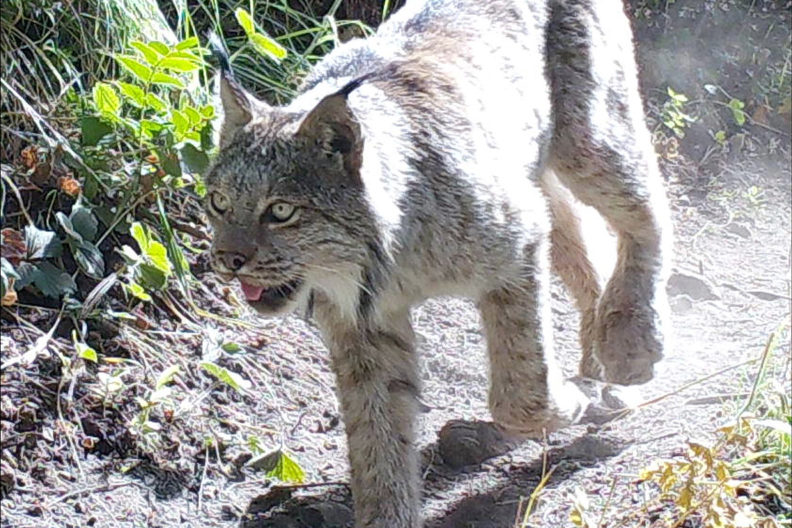
Study Details How ESA-Listed Canada Lynx Disappearing In Washington State; Found In Only 20 Percent Of Potential Habitat
April 16th, 2020
Canada lynx are losing ground in Washington state, even as federal officials are taking steps to remove the species’ threatened status under the Endangered Species Act.